


Hamburg
Hamburg Is a Water City With a Northern Temper
Hamburg feels larger and more open than many European city breaks. The port gives it scale, the canals and warehouses give it texture, and the lake at the center keeps the city from feeling sealed in by buildings. Its appeal is less ceremonial than Berlin or Munich. Hamburg is about music, design, shipping, restaurants, and the quiet confidence of a city that knows where its money came from.
Three nights is enough to understand the main districts and the relationship between the river, Speicherstadt, HafenCity, and the Alster. Four nights gives the itinerary more room for galleries, a concert, or a slower day outside the port-facing center.
Know before you go
- Fly into: Hamburg Airport, code HAM. Public transport links the airport with the city, while a private transfer is useful when the day begins with a meeting or a large amount of luggage.
- Trip length: Three nights for a first stay. Four nights if music, design, food, or the harbor deserves more than a single afternoon.
- Best months: May through September for the water, parks, and long evenings. Autumn and winter suit museums, concerts, and restaurants, but the weather can turn quickly.
- Getting around: The center is walkable, with U-Bahn, S-Bahn, ferries, and taxis covering the wider route. A harbor ferry can be useful transport as well as a view.
- What to reserve: The Elbphilharmonie or another concert, a small dining room, and any private port or architecture visit. Hamburg’s most interesting reservations are often tied to a specific evening.
- Pack for: Wind, rain, and changing light. Hamburg is easier when the weather is treated as part of the city rather than an interruption.
Start with the Speicherstadt, then follow the water
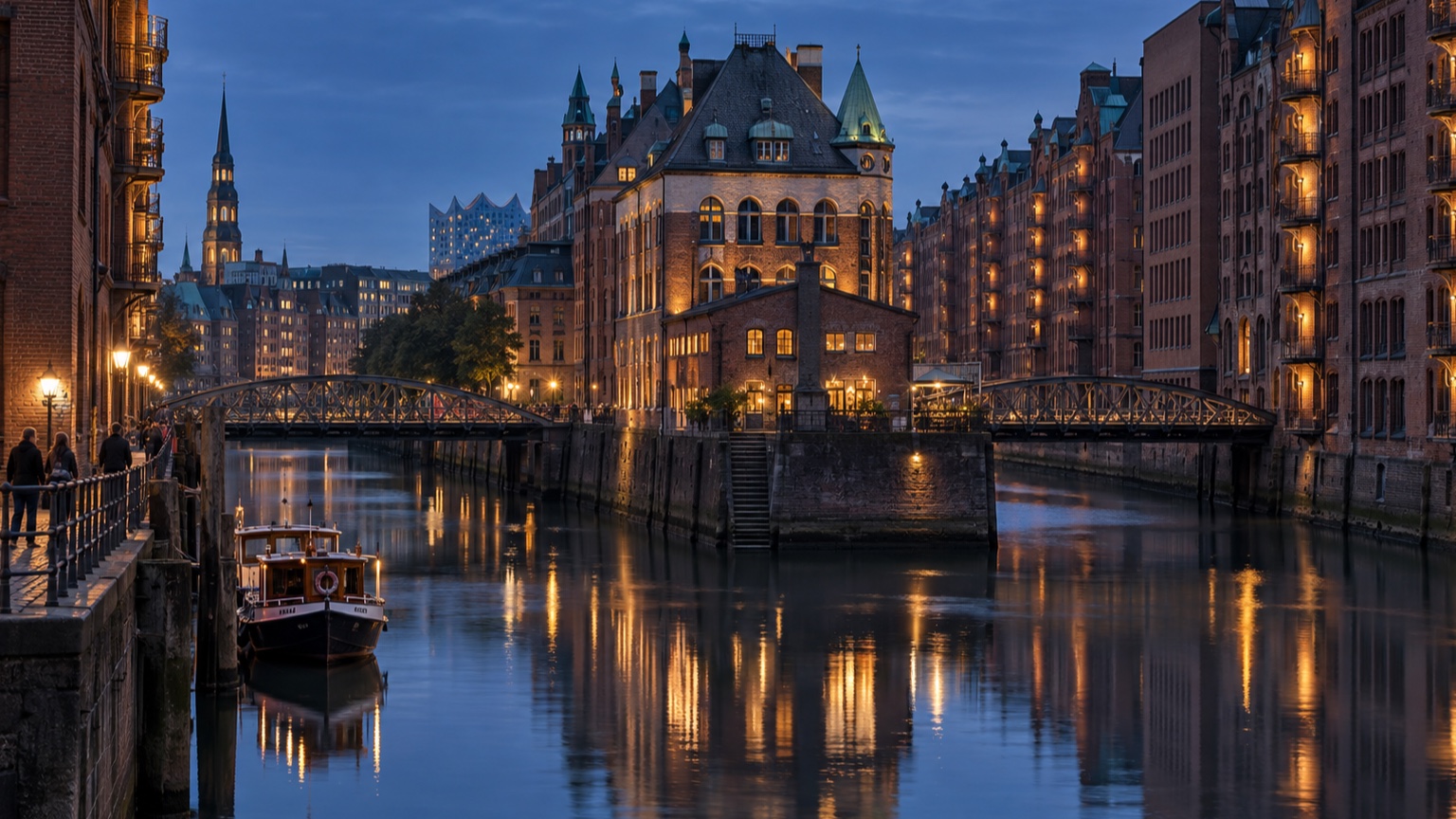
The red brick warehouses of Speicherstadt explain Hamburg better than a standard city loop. Walk the canals early, when the reflections and bridges have space around them, then continue toward HafenCity and the Elbphilharmonie. The contrast between the old warehouses and the newer waterfront is the city’s central conversation.
Do not spend the entire day looking at the port from a distance. A harbor cruise, a ferry across the Elbe, or a private guide who can explain the working city gives the water more meaning. Hamburg is a commercial city first, and that is what makes the atmosphere feel different.
Give music and design their own evening
Hamburg’s music story is broader than one famous street. The Elbphilharmonie gives the city an extraordinary contemporary room, but smaller venues and cultural spaces may fit the travelers better. Book the performance before building the dinner plan, then keep the evening on one side of the river where possible.
For design, move through HafenCity, the old center, and quieter residential districts with a guide who can distinguish good architecture from a list of new buildings. Hamburg is best read in contrasts.
Where to stay depends on the evening
Choose the Altstadt or HafenCity for access to the water and the main first-visit sights. St. Pauli brings more nightlife and edge. Eppendorf and the outer neighborhoods feel more residential and may suit longer stays, though they require more transport planning at night. The right hotel is the one that lets the itinerary end naturally rather than creating a second commute.
Hamburg pairs well with Copenhagen, Amsterdam, or a northern European route that keeps the water and design thread intact. It also makes a useful contrast with Paris, where the city is organized around monuments rather than the working harbor.
Planning brief
Hamburg suits travelers who want a city with substance, weather, music, and a visible working life.
- Best suited to: couples, design and music travelers, food-focused weekends, business extensions, and repeat European visitors.
- Settle early: hotel neighborhood, concert or performance, harbor experience, and one restaurant that shows the city beyond the waterfront.
- Useful pairing: combine with Copenhagen or Amsterdam, or build a wider Germany route around Berlin and Munich.
Let the weather change the plan
Hamburg becomes more memorable when a sunny harbor walk and a rainy museum afternoon are both allowed to be good. Tell us whether the stay is about music, design, food, business, or the water itself.
Our luxury leisure travel planning can coordinate the hotel, concert tickets, harbor experiences, private guiding, restaurants, and rail route.
How many nights should we spend in Hamburg?
Three nights gives you Speicherstadt, HafenCity, the harbor, one cultural evening, and enough time for a good meal away from the main sights. Four nights works better when music, design, or a wider neighborhood plan is central to the trip.
Which area is best for a first stay in Hamburg?
Altstadt or HafenCity is the easiest base for a first visit, with the water and main cultural sights nearby. St. Pauli suits travelers who want more nightlife and edge. Eppendorf and other residential areas work well for longer stays when a quieter evening matters more than walking out of the hotel into the center.
Do we need a harbor cruise in Hamburg?
It is useful when the port is part of the reason for coming, particularly on a first visit. A ferry can provide a simpler version of the same perspective, while a private port guide adds context about the working city. Choose one water experience and give it enough time rather than booking several identical loops.
Is Hamburg a good destination in winter?
Yes for travelers who like museums, concerts, restaurants, and a more atmospheric city. The light is limited and wind and rain are common, so build the itinerary around strong indoor anchors. December brings festive demand, and major performances should be reserved early.
CONTINUE EXPLORING