

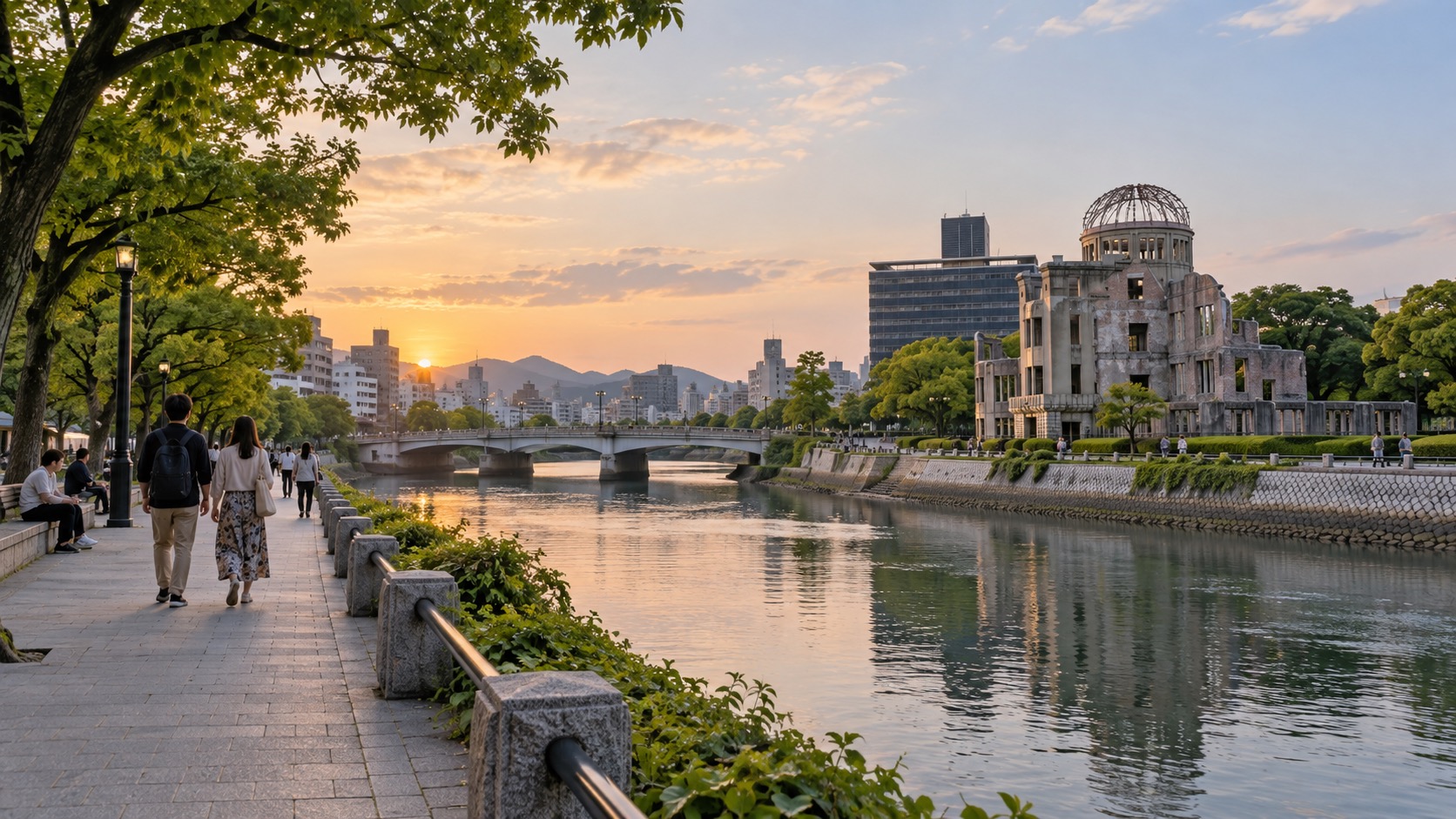

Hiroshima
Hiroshima, A City of Memory and Forward Motion
Hiroshima is a city that asks for attention without asking visitors to stay in the past. The Peace Memorial Park and museum are essential, while the wider city brings rivers, food, contemporary life, and an easy route to Miyajima.
Two or three nights gives the subject matter room and makes the city more than a hurried stop between Kyoto and the coast.
Know before you go
- Fly into: Hiroshima Airport for domestic connections, or arrive by Shinkansen from Kyoto, Osaka, or Tokyo. The train is often the cleaner choice within a wider Japan route.
- Trip length: Two nights for Hiroshima and Miyajima. Add a third night for a slower museum visit, food, or the wider Setouchi coast.
- Best months: Spring and autumn are the easiest seasons for walking. Summer is hot and humid. Winter is quieter and can be very clear.
- Getting around: Streetcars, trains, ferries, and short taxis cover the main route. Plan Miyajima around the ferry and the tide.
- Money: Japan uses the yen. Cards work in larger hotels and restaurants, while smaller food counters and local transport still reward cash.
- What to reserve: A private historian or local guide, the Peace Memorial Museum if timed entry is in use, Miyajima accommodation, and the restaurants that matter.
Give the Peace Memorial Museum the time it needs
The museum is difficult, necessary, and not something to fit between two casual stops. Go when the group has the attention for it, leave the afternoon clear, and allow the memorial park to be walked rather than photographed from a car. A thoughtful local guide can add history without taking over the experience.
Look at the city beyond the memorial
Hiroshima is a living regional capital with broad rivers, a serious baseball culture, good contemporary architecture, and a food tradition that is its own. Okonomiyaki is the obvious entry point, but oysters, lemons, sake, and small neighbourhood restaurants give the city more range than a single dish suggests.
Make Miyajima a full chapter
Miyajima is easily reduced to the torii gate and a crowded afternoon. Stay overnight if the route allows, walk beyond the main approach, and use the quieter hours around the shrine. The island becomes far more legible after the day visitors leave. Check tide times before deciding how to structure the waterfront.
Use the city as a Setouchi gateway
Hiroshima links naturally with Miyajima, Naoshima, Onomichi, and the wider Setouchi coast. It also works as a westward finish after Kyoto and Osaka. Keep the rail route simple and send larger luggage ahead when the trip includes islands.
Planning brief
Hiroshima suits travellers who want to understand a consequential city, eat well, walk beside water, and give Miyajima more than a rushed afternoon.
- Best suited to: thoughtful first time visitors to Japan, families with older children, history travellers, food lovers, and anyone building a Setouchi route.
- Settle early: museum timing, guide support, Miyajima night or day trip, ferry sequence, and the onward rail route.
- Useful pairing: Miyajima, Naoshima, Kyoto, Osaka, Onomichi, or the Setouchi coast.
Respect the subject and let the city continue
Hiroshima is not a single day of history. Give the memorial sites their proper weight, then stay long enough to meet the city that grew around them.
Our luxury leisure travel planning can arrange the guides, museum timing, Miyajima stay, rail connections, and the rest of western Japan.
How many nights do you need in Hiroshima?
Two nights is the minimum for the Peace Memorial sites and Miyajima without rushing. Three nights is better when the group wants time for food, a guide, or a wider Setouchi route.
Should we stay overnight on Miyajima?
Yes, when the schedule allows. The island is busiest in the middle of the day, while the early morning and evening reveal a quieter, more atmospheric place. Staying overnight also removes the pressure of catching the last useful ferry back.
Do we need a guide for the Peace Memorial Museum?
A good local guide is valuable, particularly for a first visit or a family group. The museum itself needs time and attention, while a guide can give context before or after without turning the visit into a lecture.
Can Hiroshima be combined with Kyoto and Naoshima?
Yes, and the route can be very coherent. Kyoto and Osaka give the historic city experience, Hiroshima and Miyajima add memory and regional food, and Naoshima brings contemporary art and the Setouchi landscape. Rail and luggage planning matter more than the distances suggest.
CONTINUE EXPLORING