


Johannesburg
The City Most Travelers Fly Through and Should Not
Johannesburg is the economic engine of South Africa and the busiest air hub on the continent, which means an enormous number of travelers pass through it on the way to a safari camp or to Cape Town without ever leaving the terminal. That is a defensible use of a connection and a poor use of a city. Johannesburg holds the most important museums about apartheid and the liberation struggle anywhere, a contemporary art scene with real weight, the Cradle of Humankind fossil sites on its doorstep, and a restaurant and design culture that has grown up fast. Two nights here on either end of a safari changes the whole meaning of the trip.
The planning decision: connection, context, or business
There are three honest reasons to be in Johannesburg. As a connection, where the only question is whether you overnight near the airport or go into the northern suburbs. As context, where two or three nights are spent on Soweto, the Apartheid Museum, Constitution Hill and the galleries before or after the bush. Or as business, since this is where corporate South Africa sits and Sandton is the address. The three want different bases and different amounts of time, and the context version is the one most travelers skip and later regret skipping.
Dry winter for game, wet summer for the city
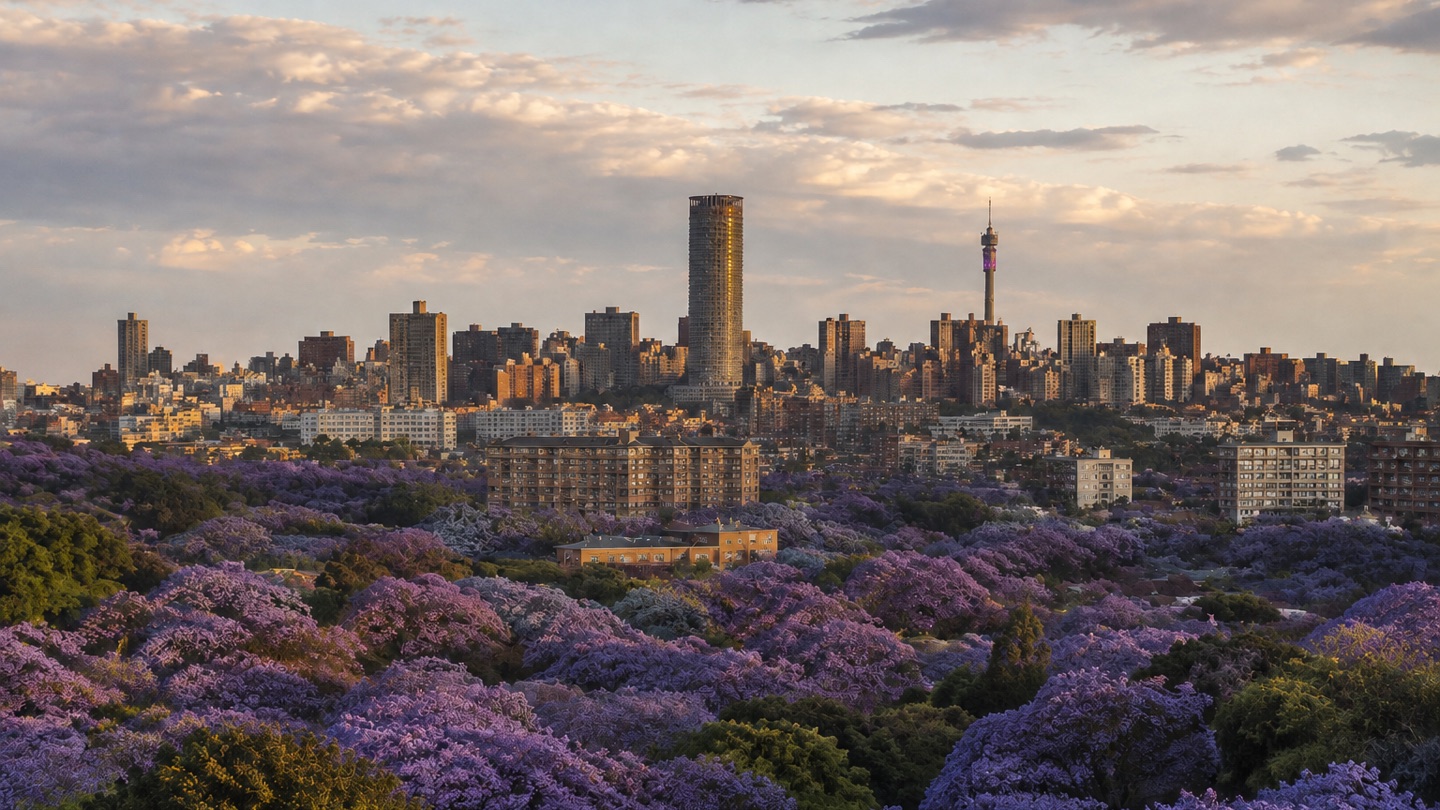
The season that matters here is usually the safari season rather than the city one. May through September is the southern winter: dry, cool to cold at night, sparse vegetation and concentrated game around water, which is why it is the prime window for Kruger and the surrounding private reserves. Johannesburg itself in those months is bright, dry and cool, with cold mornings and comfortable days. October through April is the summer wet season: warm, green, with dramatic afternoon thunderstorms, excellent birding and newborn game, and lower rates in the bush. The jacarandas bloom across the city in October and November and are worth seeing. High altitude matters too, since the city sits above five thousand feet and is cooler and drier than most visitors expect from Africa.
Where to base, and how to route onward
Sandton is the modern business district, secure, walkable within its precinct and where most corporate travel stays. Rosebank is nearby, slightly more relaxed, with galleries and a good Sunday market. Melrose and Houghton are leafy and residential. Maboneng and the reviving parts of the inner city are worth visiting by day with a guide rather than staying in. OR Tambo International is the continent's main hub, roughly twenty minutes from Sandton by the Gautrain, which is the sensible transfer. From here, Cape Town is two hours by air, the Kruger reserves are an hour by light aircraft or four to five by road, and Victoria Falls, Botswana and Zimbabwe are all short flights.
Where to stay when the neighborhood is the decision
Four Seasons Hotel The Westcliff sits on a ridge above the zoo and the botanical gardens with the best views and grounds in the city, and it feels a world away from the traffic. Saxon Hotel in Sandhurst is a discreet, high walled property with a strong spa and a long association with Nelson Mandela's post prison years. The Michelangelo and the Leonardo sit in the heart of Sandton for pure business convenience. For a single night on a connection, an airport property is the honest choice and there is no shame in it. Security shapes the hotel decision here more than in most cities, and the good properties handle it quietly and well.
When to begin
The city itself is easy at two to three months. The safari camps are the constraint and drive everything: the best private reserve lodges in the dry season are booked nine to twelve months out, and the small camps with four or six rooms go further ahead still. If Kruger, Sabi Sand or the Waterberg are part of the plan, start there and fit the Johannesburg nights around the camp availability rather than the other way around.
Four experiences worth building the days around
- The Apartheid Museum and Constitution Hill in a single guided day, which is the most important history available anywhere in the country.
- Soweto with a guide who lives there, including the Hector Pieterson Museum and Vilakazi Street, taken slowly rather than as a drive by.
- The Cradle of Humankind and the Sterkfontein Caves, about an hour out, where some of the most significant hominin fossils in the world were found.
- The contemporary galleries and design studios of Rosebank and Braamfontein, which is where South African art is actually traded now.
Who this trip suits
Johannesburg suits anyone taking a South African safari, which is most of its visitors, and it suits them best as two nights of context rather than a terminal transit. It suits history travelers seriously. It suits art collectors. It suits business travelers by necessity. And it suits families with older children, for whom the museums and the fossil sites make the safari mean more.
When another plan may fit better
If you want beauty, coastline and wine, Cape Town is the reason most people come to South Africa and it deserves the majority of your nights. If the trip is purely about game, spend the time in the reserves and take Johannesburg as a connection. And travelers who want a relaxed city to wander freely on foot will find this one asks for more planning than that.
Plan it with one accountable advisor
Start with the safari dates, because the camps decide the calendar, and we will build the Johannesburg nights, the guiding and the internal flights around them. Our luxury leisure travel planning handles the full southern African sequence, and our executive and private office travel team covers the working trips into Sandton.
Continue Exploring