

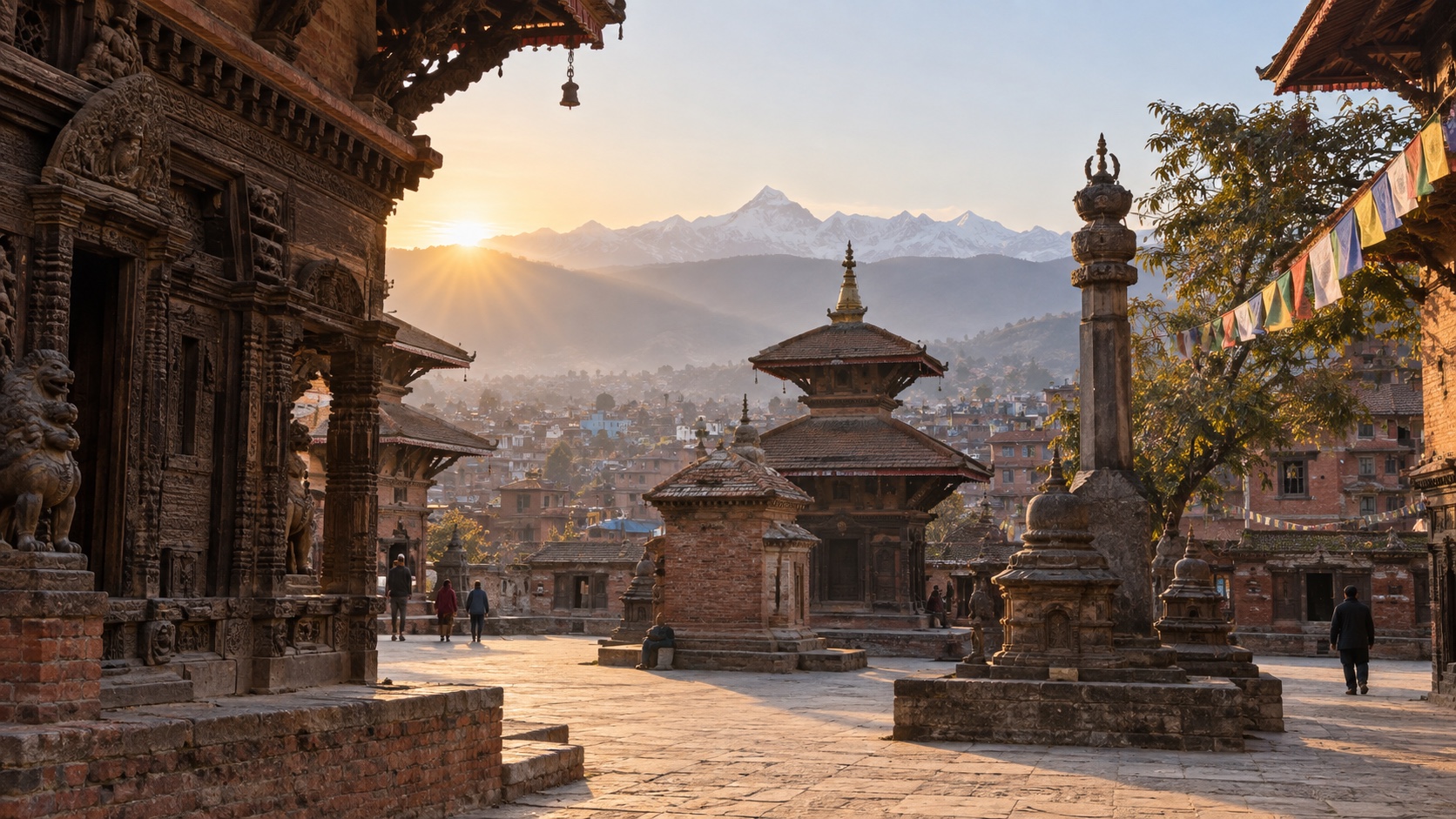

Kathmandu
Kathmandu, Valley Culture and Mountain Beginnings
Kathmandu is a city of temples, courtyards, incense, traffic, and daily life unfolding around some of the most important religious sites in the Himalaya. It can feel intense at first, but a thoughtful guide and a well-chosen hotel reveal the valley's depth.
Two or three nights is a useful first stay. Use the city as an arrival, cultural, and recovery chapter before moving toward the mountains, and keep the first day light if the journey has crossed several time zones.
Know before you go
- Fly into: Tribhuvan International Airport in Kathmandu. Allow time for traffic and airport formalities before planning a fixed evening.
- Trip length: Two nights for the main valley sites. Three nights gives more room for Patan, Bhaktapur, food, and a slower arrival.
- Best months: October through November and March through April are generally comfortable and clear. The monsoon months are wetter, while winter mornings can be cold.
- Getting around: A private car and local guide are the most comfortable option. Walking works well within selected areas, but traffic makes short distances unpredictable.
- Money: Nepal uses the Nepalese rupee. Cards work in larger hotels and restaurants, while cash is important for smaller businesses, guides, and markets.
- What to reserve: Airport transfer, a private valley guide, the hotel, museum or heritage timing, and any onward trekking or mountain flight arrangements.
Begin with the valley, not the traffic
Kathmandu's best introduction is a carefully timed visit to one or two historic areas. Patan brings courtyards and metalwork, Bhaktapur opens into a more preserved urban fabric, and the great religious sites each ask for a different kind of attention. Let the guide shape the order around the light and the group's energy.
Stay somewhere calm
The right hotel gives Kathmandu a sense of relief. A quiet courtyard, a thoughtful breakfast, and a room away from the busiest streets matter after a day of dust, horns, and temples. Choose a base that makes the first morning easy rather than one that looks convenient only on a map.
Eat with local context
Newari food, momos, dal bhat, tea, and the valley's small cafés give the city an appetite of its own. A local food guide can connect the dishes to the valley's communities and history, while a hotel restaurant can provide an easy first meal after arrival.
Use Kathmandu as a threshold
The city is often the beginning of a Nepal journey, but it can also be a satisfying cultural destination in its own right. Build in a night before a trek, another after returning from the mountains, and enough margin for weather or flight changes.
Planning brief
Kathmandu suits travellers who want living history, strong religious and architectural culture, and a practical beginning to a Himalayan route.
- Best suited to: culture travellers, first time visitors to Nepal, trekkers, photographers, and families with older children.
- Settle early: the hotel, private guide, valley route, airport transfer, and the buffer around onward mountain travel.
- Useful pairing: Nepal Himalayas, Pokhara, Bhutan, India, or a wider Nepal route.
Give the valley time to come into focus
Kathmandu rewards a slower first look. Choose the neighbourhoods that matter, listen to the guide, and let the city be more than a transit point.
Our luxury leisure travel planning can arrange the hotel, private guides, airport transfers, heritage visits, and the rest of the Nepal journey.
How many nights should we spend in Kathmandu?
Two nights covers the main valley sites, while three nights gives Patan, Bhaktapur, food, and arrival time a more comfortable rhythm.
Is Kathmandu worth visiting before a trek?
Yes. The valley's temples, courtyards, food, and history make a strong cultural beginning, and an extra night can provide useful recovery time before the mountains.
Do we need a private guide in Kathmandu?
A good local guide is valuable because the historic sites are dense with meaning and daily life. The right guide adds context without turning the city into a checklist.
When is the best time to visit Kathmandu?
October through November and March through April are generally comfortable and clear. Monsoon months are wetter, while winter mornings can be cold but often bright.
CONTINUE EXPLORING