

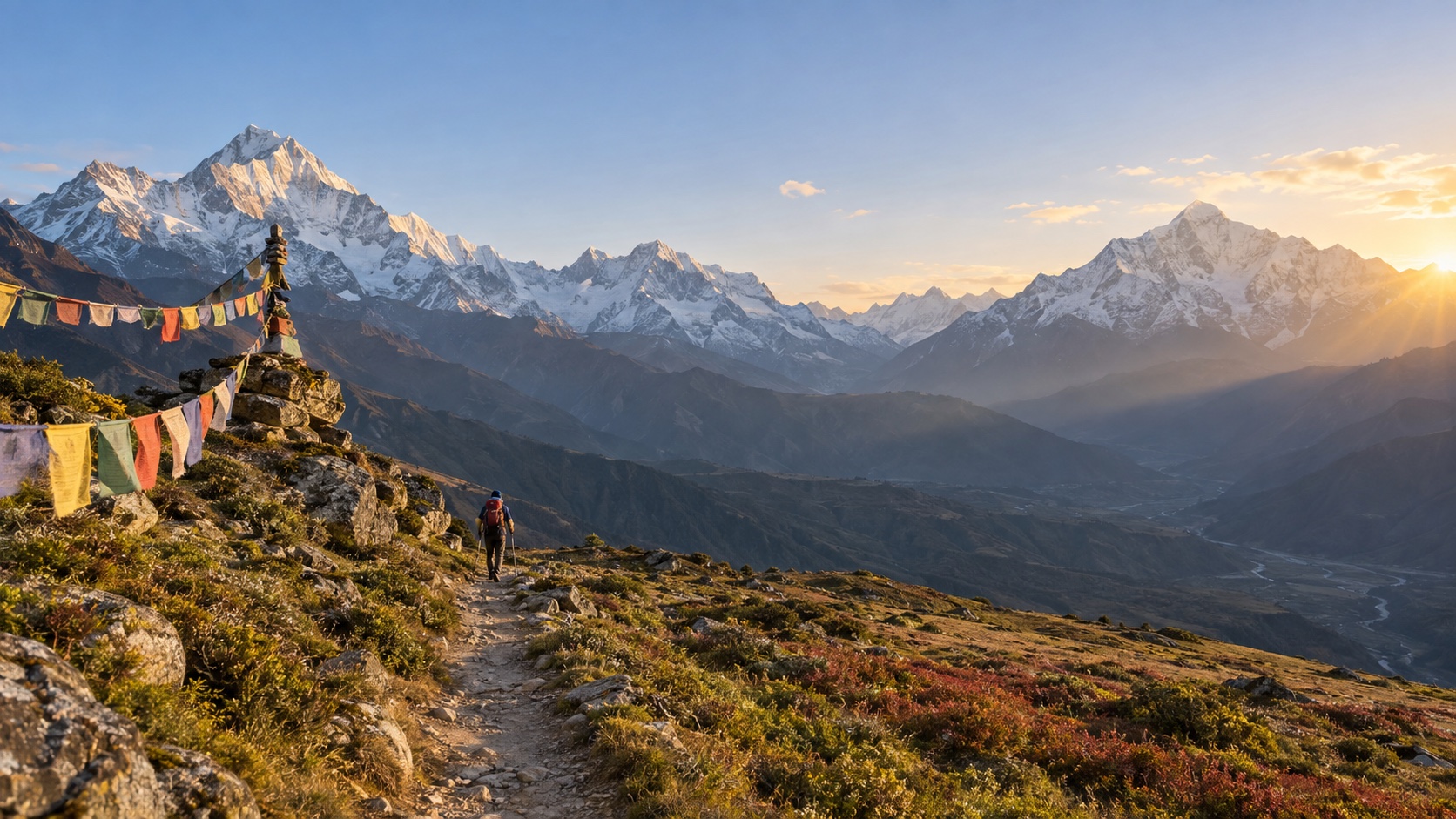

Nepal Himalayas
Nepal Himalayas, A Mountain Journey with Meaning
The Nepal Himalayas are not a single view or a single trek. They are a vast collection of valleys, passes, villages, monasteries, weather systems, and trails where the quality of the guide and the pace of the journey matter as much as the scenery.
Plan at least seven nights for a focused mountain experience, with more time for a serious trek. The right route follows fitness, season, altitude tolerance, and the kind of comfort the group wants each night.
Know before you go
- Fly into: Kathmandu, then continue by domestic flight, road, or helicopter depending on the region and the route.
- Trip length: Seven nights for a shorter mountain programme. Ten to fourteen nights gives a trek, acclimatisation, and weather margin more room.
- Best months: October through November and March through April are generally the clearest trekking periods. Winter is colder at altitude, while monsoon affects many trails.
- Getting around: Use experienced guides, porters, and local operators. Mountain flights and roads are weather dependent, so keep the itinerary flexible.
- Money: Nepal uses the Nepalese rupee. Carry cash for villages and trekking routes, with a reserve for delays or extra nights.
- What to reserve: The guide team, permits, domestic flights, acclimatisation days, the right lodges, insurance, and emergency planning.
Choose the route around the group
Everest, Annapurna, Langtang, and other regions each bring a different combination of altitude, access, scenery, and lodge style. A useful decision starts with the group's experience and preferred pace, not with the name most familiar from a map.
Respect acclimatisation
Altitude cannot be negotiated by enthusiasm. Build in rest days, walk slowly, drink water, and make sure every traveller understands the signs of altitude illness. A strong guide will adjust the plan rather than reward a fixed schedule.
Let the villages remain villages
The mountains are home, not a stage set. Travel with local guides, ask before photographing people, use refillable water where possible, and choose operators who support the communities along the route. The most memorable encounters are usually the least staged.
Keep the beginning and ending gentle
Kathmandu and Pokhara can hold the arrival and recovery days, while weather buffers protect the route from a missed connection. A little time on either side often makes the mountain journey feel calmer and more generous.
Planning brief
The Nepal Himalayas suit travellers who want a genuine mountain journey, expert guiding, cultural depth, and the physical reward of moving through a high landscape.
- Best suited to: active travellers, experienced hikers, families with older teenagers, photographers, and guests who value landscape over speed.
- Settle early: route, guide team, permits, altitude pacing, lodges, flights, insurance, and weather margin.
- Useful pairing: Kathmandu, Pokhara, Bhutan, Tibet where appropriate, or northern India.
Plan for the mountain you actually want to walk
The Himalayas reward preparation, patience, and respect. Choose the route around the group, then let the landscape do what it does best.
Our luxury leisure travel planning can arrange experienced guides, permits, lodges, flights, transfers, acclimatisation, and the wider Nepal route.
How many nights do we need in the Nepal Himalayas?
Seven nights works for a shorter mountain programme, while ten to fourteen nights allows a trek, acclimatisation, and weather margin to sit comfortably together.
Which Nepal Himalayan region is best?
Everest, Annapurna, Langtang, and other areas each offer different scenery, altitude, access, and lodge styles. The best route follows the group's fitness, season, and appetite for comfort.
How important are acclimatisation days?
They are essential on higher routes. A slower pace, rest days, hydration, and a guide who watches the group carefully are part of a safe and enjoyable plan.
What happens if a mountain flight is delayed?
Weather can change flight schedules, so build buffer nights at both ends of the trek and keep onward connections flexible. A reputable local operator should manage the adjustments.
CONTINUE EXPLORING