

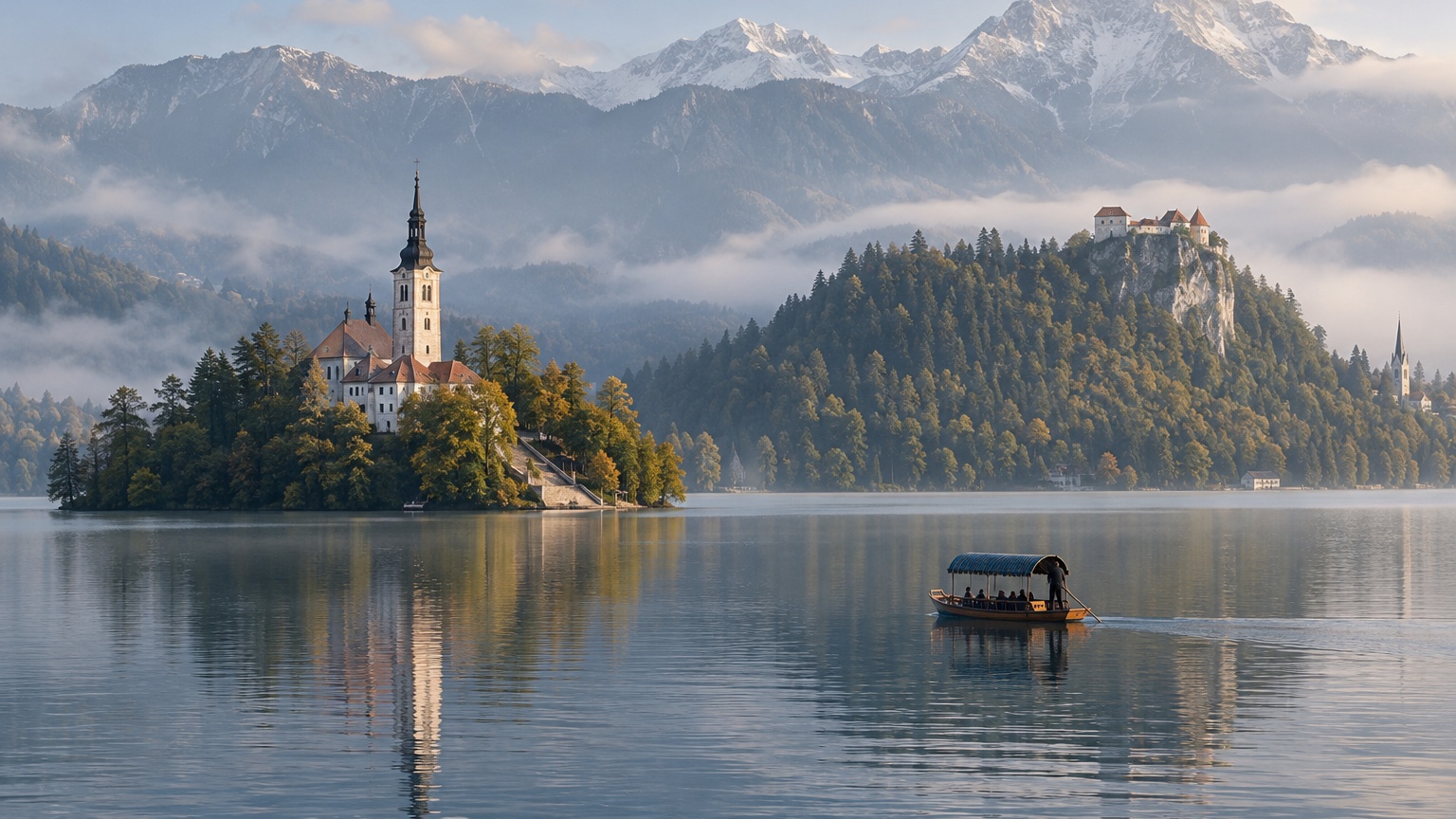

Lake Bled
Lake Bled Is Better When the Lake Is Not the Whole Plan
Lake Bled has one of Europe’s most recognizable views: an island church, a castle above the water, and mountains behind them. The view is real, but a good stay needs another layer. Walk the lake early, take the water slowly, then use Bled as an entry point into the Julian Alps, the surrounding valleys, and the food and culture of Slovenia.
Two nights works for the lake and castle. Three or four nights gives the landscape time to expand and leaves room for weather, a private guide, or a day beyond the usual circuit.
Know before you go
- Fly into: Ljubljana Airport, code LJU, then continue by private transfer, taxi, or rental car. The route from the airport is straightforward but worth arranging ahead with luggage.
- Trip length: Two nights for the lake, island, and castle. Three or four for the Julian Alps, Bohinj, or a wider Slovenia route.
- Best months: May through September for lake days and hiking. Spring and autumn bring softer light and fewer visitors. Winter can be quiet and atmospheric, with more limited outdoor operations.
- Getting around: Walk the lake in sections, use boats and local transfers, and book a driver for the wider region. The road network is easy but the best days still need a clear route.
- What to reserve: The hotel, a pletna boat or lake experience, dinner, and any mountain or food day that matters.
- Pack for: Comfortable walking shoes, a layer for the water, and flexibility around rain or mountain cloud.
Walk the lake before breakfast
Early morning is when Bled feels most like a place rather than a view. The water is calmer, the paths have space, and the church and castle appear in layers rather than as a single image. Walk as much as the travelers enjoy, then return to the hotel before planning the next move.
The island crossing is worth doing when the boat, weather, and pace align. The castle is a separate visit and works best when treated as history and viewpoint rather than another quick stop.
Give the surrounding Alps their own day
Lake Bohinj, the Julian Alps, and the villages beyond Bled can provide a more spacious counterpoint to the lakefront. Choose one route with a guide who understands the walking level, the weather, and the lunch stop. A mountain day should feel like a day in the country, not an extended transfer.
Food is another reason to look beyond the view. Ask for local producers, a countryside table, or a route that connects the lake with Slovenia’s broader culinary identity.
Planning brief
Lake Bled suits travelers who want a beautiful lake stay with easy access to Slovenia’s mountains and food culture.
- Best suited to: couples, families, photographers, active travelers, and clients building a first Slovenia route.
- Settle early: hotel position, lake timing, boat, castle, and the wider day beyond Bled.
- Useful pairing: combine with Ljubljana once that guide is live, the Julian Alps, or the Adriatic coast.
Do not rush the famous view
The lake is best before and after the middle of the day. Tell us whether you want a short stay around Bled, a mountain route, or a wider Slovenian itinerary.
Our luxury leisure travel planning can arrange the hotel, boat, private driver, mountain guide, restaurants, and the route through Slovenia.
How many nights should we spend at Lake Bled?
Two nights is enough for the lake, island, castle, and a measured stay. Three or four nights works when you want to add Lake Bohinj, the Julian Alps, a food route, or weather flexibility.
Is Lake Bled too crowded for a luxury trip?
It can feel busy in the middle of the day during high season, which makes timing and hotel location important. Walk the lake early, return after the day visitors leave, and use a private guide or boat to give the stay more depth.
Do we need a car at Lake Bled?
Not for the lake itself. Walking, local transfers, and the boat cover the central experience. A private car or driver becomes useful for Bohinj, the Julian Alps, villages, and a wider Slovenia route.
When is the best time to visit Lake Bled?
May through September is easiest for lake days and hiking. Spring and autumn bring softer light and fewer visitors. Winter can be quiet and beautiful, but check seasonal opening hours and expect more weather flexibility.
CONTINUE EXPLORING