


Ljubljana
Ljubljana Makes a Small Capital Feel Generous
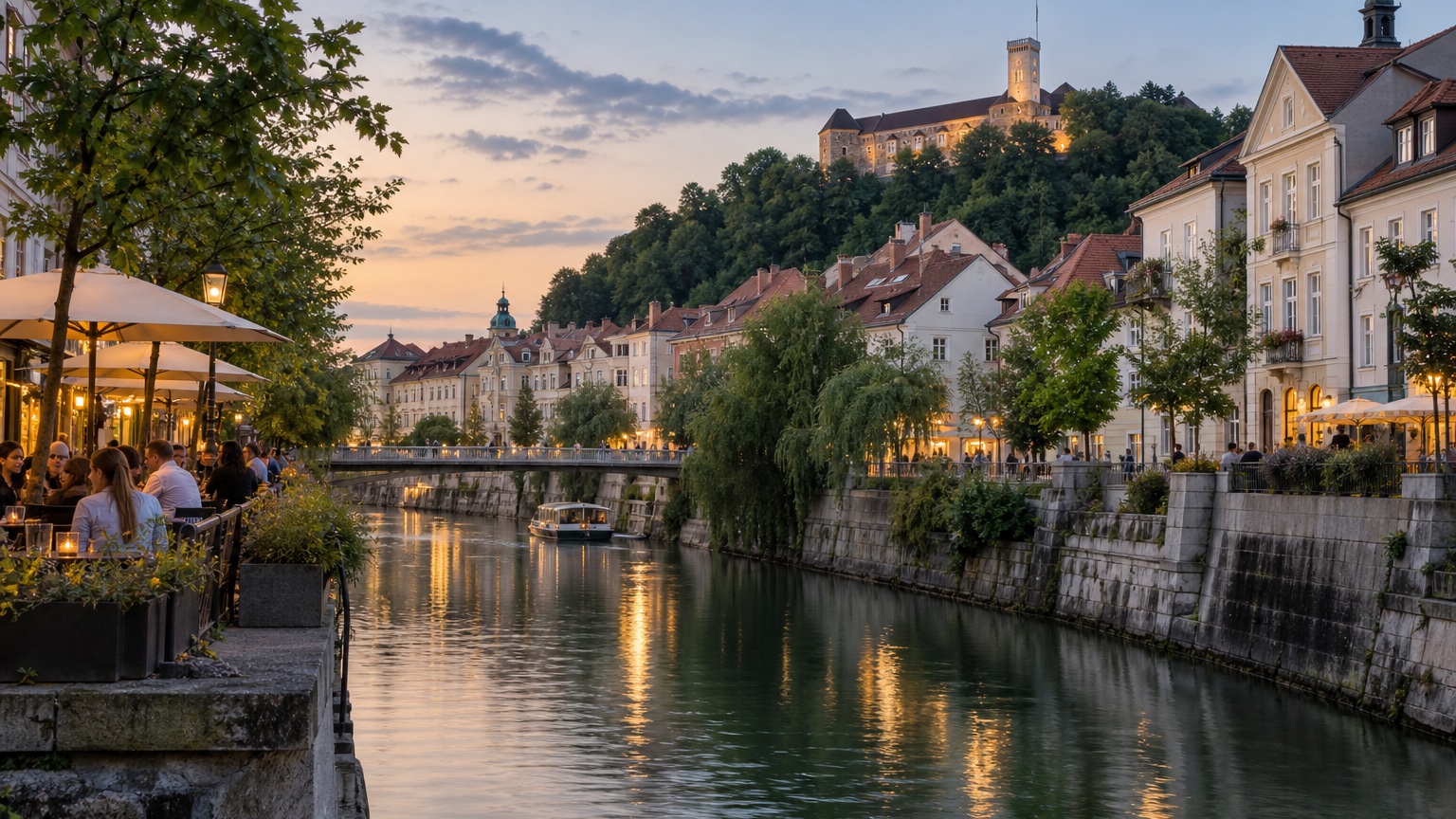
Ljubljana is the kind of city that settles quickly. The river runs through the center, the old streets are easy to walk, the castle gives the skyline a point, and the cafes keep the public life close to the water. It feels composed without becoming precious. A few days here can hold architecture, food, green space, and the beginnings of a wider Slovenian route.
Two nights works for a first taste. Three nights is better if you want the city to feel like a destination rather than a pause between the Alps and the coast. Ljubljana is particularly useful for mixed-interest groups because the distances are short and the days can remain light.
Know before you go
- Fly into: Ljubljana Jože Pučnik Airport, code LJU, or arrive overland from a neighboring country. A private transfer is useful when the route continues to Lake Bled, the Alps, or the coast.
- Trip length: Two nights for the center and castle. Three or four for food, museums, and a wider Slovenian route.
- Best months: May through September for the river, terraces, and outdoor days. April and October are quieter and can be beautiful, with more changeable weather.
- Getting around: The center is easy on foot and largely car free. Taxis and private drivers cover the airport and countryside.
- Money: Slovenia uses the euro. Cards are normal, while a little cash remains useful at markets and smaller counters.
- What to reserve: A food-focused guide, one strong restaurant, and the driver or route beyond the city if the stay includes lakes, caves, or the coast.
Start on the river
Walk the Ljubljanica before the cafe terraces become busy. The bridges, market area, and riverside streets show how much of Ljubljana’s character comes from scale rather than spectacle. The city’s architecture is strongest when seen as part of daily life, with people crossing the same spaces on their way to work or lunch.
Take the funicular or walk toward Ljubljana Castle when the light is good. The view helps explain the relationship between the capital, the hills, and the wider country, but the castle should not take the whole day.
Give food and design equal attention
Ljubljana’s dining scene makes the city feel larger than it is. Ask for a route that includes the market, a contemporary kitchen, and a restaurant that takes Slovenian ingredients seriously. A food guide can connect the city to the countryside without sending the group on a formal tasting circuit.
For design and architecture, focus on Jože Plečnik’s work and the public spaces that carry it. The best route is short enough to leave room for coffee.
Use the capital as a Slovenian hinge
Ljubljana is a natural base for a route toward Lake Bled, the Julian Alps, the Karst, or the Adriatic once those guides are live. The distances look easy, but the itinerary improves when one driver or guide owns the day and the route has a single purpose.
Planning brief
Ljubljana suits travelers who want a small capital, strong food, and an easy bridge into Slovenia’s landscape.
- Best suited to: couples, food and design travelers, families, and clients building a first Slovenian itinerary.
- Settle early: hotel position, food focus, castle timing, and the route beyond the city.
- Useful pairing: combine with Lake Bled, the Alps, the coast, or a wider Adriatic route.
Let the river set the pace
Ljubljana is best when the itinerary stays light. Tell us whether your priority is food, architecture, family time, or using the capital as the start of a wider Slovenian route.
Our luxury leisure travel planning can arrange the hotel, private guiding, restaurants, airport transfers, and the route into the mountains or along the coast.
How many nights should we spend in Ljubljana?
Two nights covers the river, old center, castle, and one cultural or food-focused route. Three nights gives the city more room and makes it easier to add a day toward Lake Bled, the Alps, the Karst, or the coast.
Is Ljubljana a good base for Slovenia?
Yes for a first route, particularly when the itinerary mixes city, food, lakes, and mountains. The country is compact, but a private driver or guide helps the day stay coherent. Avoid collecting distant stops simply because they fit on one map.
Do we need a car in Ljubljana?
No for the city. The center is walkable and much of it is car free. A car or private driver becomes useful for Lake Bled, the Julian Alps, the Karst, the wine country, and the Adriatic coast.
When is the best time to visit Ljubljana?
May through September is easiest for the river, terraces, and outdoor routes. April and October are quieter and can be beautiful, though the weather needs more flexibility. Winter suits short cultural stays and food-focused weekends.
CONTINUE EXPLORING