


Munich
Munich Knows How to Make a City Feel Civilized
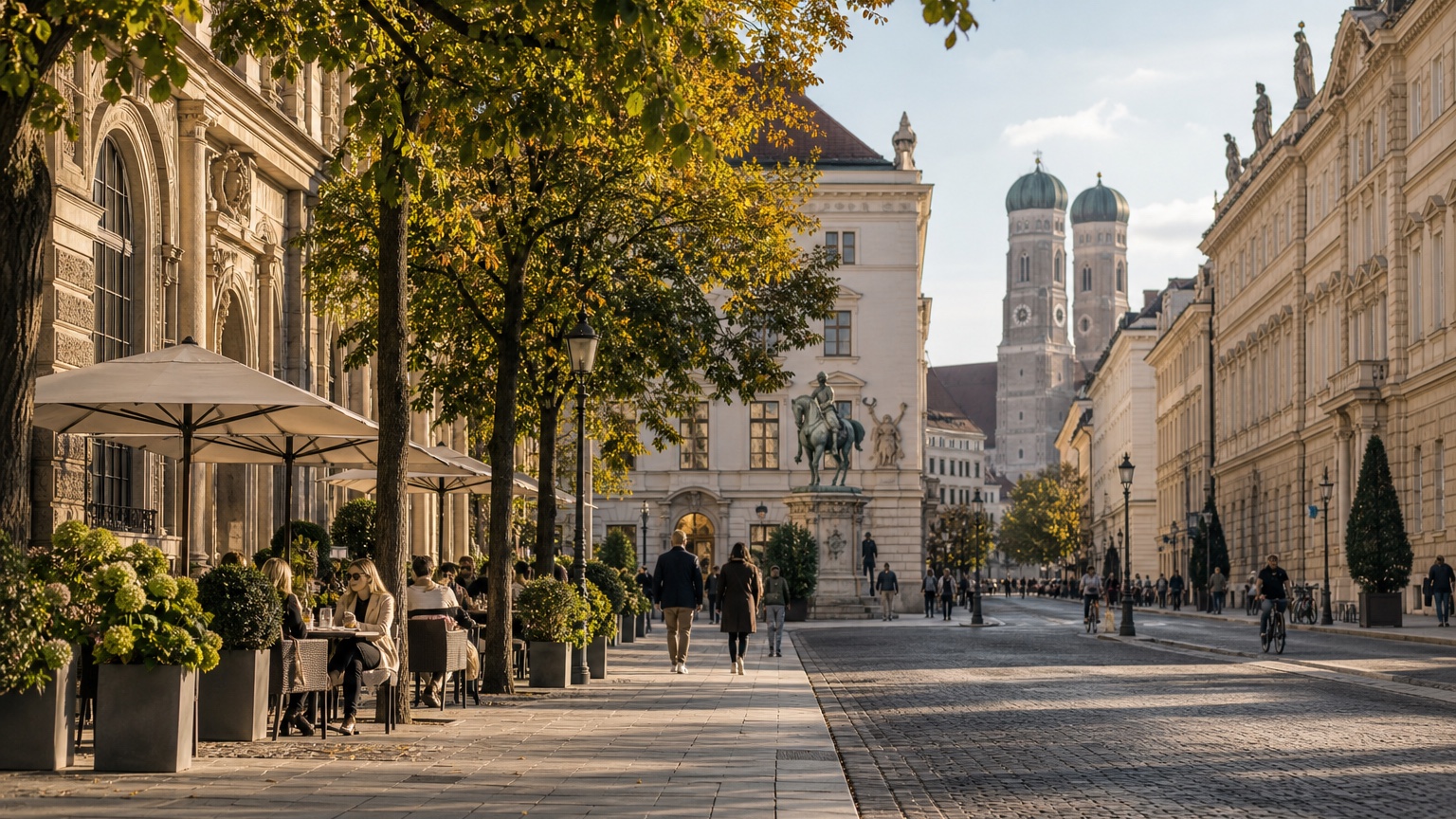
Munich has the confidence of a capital and the ease of a smaller city. The old center is formal, the museums are excellent, and the parks are close enough to change the temperature of a day. It is also a city with an appetite for ordinary pleasures: a good bakery, a table in the sun, a walk beside the Isar, and a late afternoon that does not need another sight.
Use Munich as a cultural stay, an Alpine gateway, or a first taste of Bavaria. Three nights gives you the historic center, one concentrated museum day, and time for the neighborhoods beyond the postcard. Four nights allows a day outside the city without making the trip feel like a transport plan.
Know before you go
- Fly into: Munich Airport, code MUC. The airport is well connected to the city by public transport, while a private transfer is useful for families, luggage, or a same-day onward route.
- Trip length: Three nights for a first stay. Four or five if the itinerary includes Nymphenburg, a countryside day, or the foothills of the Alps.
- Best months: May through September for parks, gardens, and outdoor tables. October brings a different energy and heavy demand around Oktoberfest. December is atmospheric but busy.
- Getting around: The center is walkable. The U-Bahn, S-Bahn, trams, and taxis make the wider city simple, so a rental car is unnecessary for a city-based stay.
- What to reserve: The museum that anchors the trip, a serious restaurant, and any castle or countryside day. Dates around major events should be treated as a separate planning season.
- What to pack: Layers and shoes that can handle a long walk. Munich rewards a day that moves between interiors, parks, and a table outside.
Give the old center one unhurried morning
Begin at Marienplatz, then move through the Residenz and the surrounding streets before lunch. The formal center is easy to cover, but the better approach is to choose one interior and see it properly. The Residenz has the scale and ceremony of a royal collection, while the churches and smaller courtyards explain how the city’s public face was built.
Munich is a city where the pause matters. Sit down for coffee, look at the people moving through the square, and resist the feeling that every hour needs a new address.
Make the museums your own
Maxvorstadt gives Munich a strong cultural center, with the Pinakothek museums and other collections within a manageable area. Choose according to the travelers. Old Masters, modern art, design, and technical history each lead to a different day, and there is no prize for treating the museums as one long corridor.
Afterward, walk toward the English Garden or take a table in a neighborhood where the evening is less formal. Munich is at its best when the cultural morning gives way to normal city life.
The green spaces are part of the answer
The English Garden is not a side trip from Munich. It is one of the ways the city works. A walk through the park can reset the day after a museum, while the Isar offers a more local edge and a chance to understand why the city feels open despite its formal architecture. A private guide can link the gardens, river, and neighborhoods without turning the walk into a list of trivia.
For a wider route, Munich pairs naturally with Venice, Rome, or a quieter journey through the Alps. Keep the city days separate from the mountain days. Munich is strongest when it is allowed to be itself.
Planning brief
Munich is an easy recommendation when a trip needs museums, food, parks, and reliable logistics in equal measure.
- Best suited to: couples, families, art travelers, business extensions, and travelers using Bavaria as a gateway to the Alps.
- Settle early: hotel neighborhood, museum focus, restaurant reservations, and whether a countryside or castle day belongs in the route.
- Useful pairing: combine with Salzburg, the Austrian Alps, or a wider Central European itinerary by rail.
Leave room for the city between the sights
Munich does not ask to be conquered. Walk the center, choose one museum, spend time in the park, and let dinner happen at a sensible hour. Tell us whether the trip leans toward art, food, family time, or the mountains beyond the city.
Our luxury leisure travel planning can arrange the hotel, museum visits, private guiding, restaurant sequence, and onward route through Bavaria.
How many nights should we spend in Munich?
Three nights works well for a first visit, with time for the historic center, one museum day, the English Garden, and several good meals. Four nights makes sense if you want Nymphenburg, a countryside outing, or a day toward the Alps without squeezing the city.
Is Munich a good base for the Bavarian Alps?
Yes for a city and mountain combination, though the exact routing depends on the valleys and properties you want to reach. Keep at least three nights in Munich before moving on. A private driver is useful when the route includes several scenic stops or a fixed hotel arrival.
Do we need a car in Munich?
No for the city itself. Public transport and taxis cover the museums, old center, parks, and wider neighborhoods. Add a car or private driver only for Bavaria beyond the city, particularly when the day includes a castle, lake, or mountain property.
When is Munich busiest?
Demand rises sharply around Oktoberfest and during the Christmas market season, while summer weekends are also popular. If the trip falls in one of those periods, secure the hotel and central restaurant reservations early. May, June, September, and early October usually offer a more balanced city stay.
CONTINUE EXPLORING