

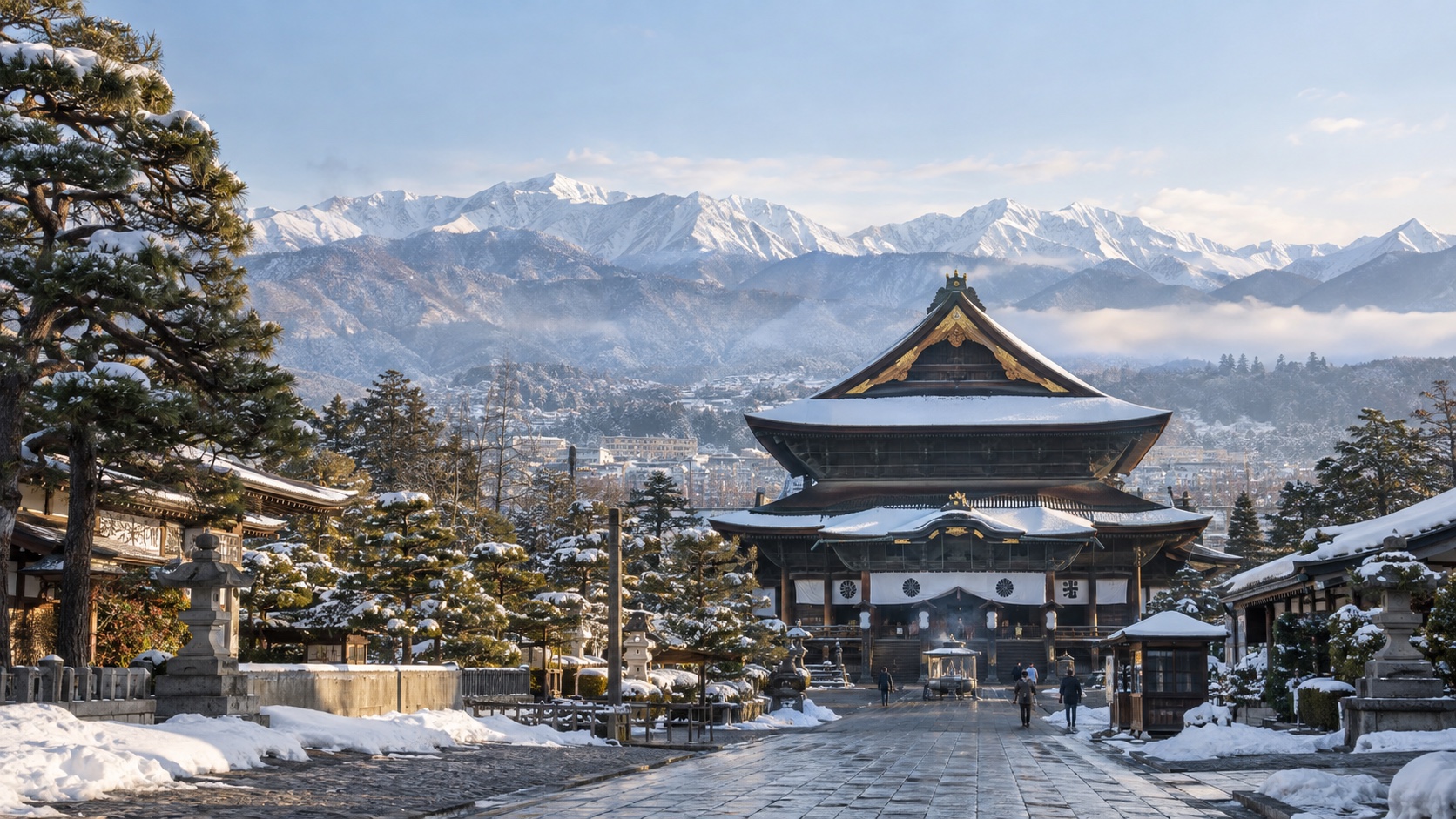

Nagano
Nagano, Temple Town and Alpine Gateway
Nagano has the calm confidence of a regional city that knows its history. Zenkoji anchors the centre, while the wider prefecture opens toward mountain villages, forested trails, snow country, and some of Japan's best food traditions.
Use Nagano as more than a rail interchange. Two or three nights creates a useful pause between Tokyo and the Japanese Alps, or gives a winter route enough time for snow, temples, and a thoughtful excursion beyond the city.
Know before you go
- Fly into: Tokyo's Haneda or Narita airports, then take the Hokuriku Shinkansen to Nagano. The rail journey is simple and scenic enough to feel like part of the route.
- Trip length: Two nights for Zenkoji and the city. Add a third night for Togakushi, snow-country villages, or a longer Alpine connection.
- Best months: Spring and autumn are excellent for walking and temple visits. Winter suits snow routes and mountain stays. Summer is greener and cooler outside the city.
- Getting around: Walk the centre and use local buses for Zenkoji and Togakushi. A private car is useful for wider prefecture journeys.
- Money: Japan uses the yen. Cards are widely accepted in hotels and larger restaurants, though cash remains useful for buses, temple offerings, and small shops.
- What to reserve: A local guide for Zenkoji, a restaurant known for regional produce, transport to Togakushi, and any temple lodging or mountain stay.
Give Zenkoji the first morning
Zenkoji is both a major Buddhist temple and a living part of Nagano's daily life. The approach from the station is lined with shops and restaurants, and the precinct has enough detail to reward a slow visit. Go early, before the day has filled the main path, and let the temple set the tone for the stay.
Walk the old approach and eat locally
Nagano's centre is easy to cover on foot, with small food shops, sake, miso, apples, and soba shaping the local palate. The best meals often feel modest rather than showy. Ask for a table that reflects the season and leave room for a second stop after the temple.
Make room for Togakushi
The cedar avenue to Togakushi Shrine is one of the region's most evocative walks. Weather, snow, and bus timing matter, so the outing needs a proper half day rather than a casual detour. Pair it with soba and a clear plan for the return journey.
Use Nagano to reach the mountains
Nagano connects naturally with the Japanese Alps, snow country, and cultural stops further west. It can lead toward Matsumoto, the Tateyama Kurobe route, or smaller hot spring towns. The route becomes easier when luggage is sent ahead and each transfer is given a little margin.
Planning brief
Nagano suits travellers who want a grounded city base with direct access to temples, mountain scenery, and a less hurried side of Japan.
- Best suited to: culture-led travellers, food lovers, families, winter travellers, and anyone building a route through the Japanese Alps.
- Settle early: Zenkoji timing, Togakushi transport, the right mountain connection, and the balance between city and countryside.
- Useful pairing: Tokyo, Kanazawa, Hakone, Nagano's mountain towns, or the wider Alps.
Stay long enough to feel the change in altitude
Nagano is valuable because it changes the pace of a Japan itinerary. Begin with the temple, eat well, and let the mountains pull the route outward.
Our luxury leisure travel planning can connect Nagano with private guides, seasonal mountain experiences, rail, road, and the right stays beyond the city.
How long should we stay in Nagano?
Two nights is a good starting point for Zenkoji, the city centre, and one well-planned outing. Three nights gives Togakushi or a wider Alpine excursion the time it deserves.
Is Nagano easy to reach from Tokyo?
Yes. The Hokuriku Shinkansen connects Tokyo and Nagano directly, which makes the city an easy addition to a broader Japan itinerary.
Should we visit Togakushi from Nagano?
Yes, especially for travellers who enjoy forest walks and shrine architecture. Allow a half day, check seasonal bus schedules, and do not treat the cedar avenue as a quick photo stop.
What should we eat in Nagano?
Soba is the obvious starting point, but the region also has strong apples, miso, sake, mountain vegetables, and other seasonal produce. A local recommendation is more useful than a fixed restaurant list.
CONTINUE EXPLORING