


Nikko
Nikko, Forest, Shrines, and Mountain Air
Nikko is where Japan's architectural drama meets a deep, quiet landscape. The great shrines and temples deserve their reputation, but the cedar forests, hot springs, and high mountain roads are what make the destination worth more than a quick excursion from Tokyo.
Stay two nights when possible. That gives the heritage area its quiet hours, leaves room for Lake Chuzenji and the waterfalls, and makes a ryokan or onsen stay feel like part of the story rather than an add-on.
Know before you go
- Fly into: Tokyo's Haneda or Narita airports, then continue by rail. Nikko is a straightforward addition to a Tokyo itinerary.
- Trip length: Two nights for the shrines, forest, and one mountain outing. One night works as a focused cultural stop.
- Best months: Spring and autumn are especially rewarding for walking. Summer is greener and cooler in the mountains. Winter is quiet, cold, and sometimes snowy.
- Getting around: Trains and local buses cover the main sights. A private car is useful for Lake Chuzenji, Kegon Falls, and the wider Okunikko area.
- Money: Japan uses the yen. Cards are common in larger hotels and restaurants, but carry cash for buses, smaller shops, and rural stops.
- What to reserve: A private guide for the shrine complex, a ryokan or onsen room, transport for the mountain roads, and any seasonal dining experience.
Start with the sacred heart of Nikko
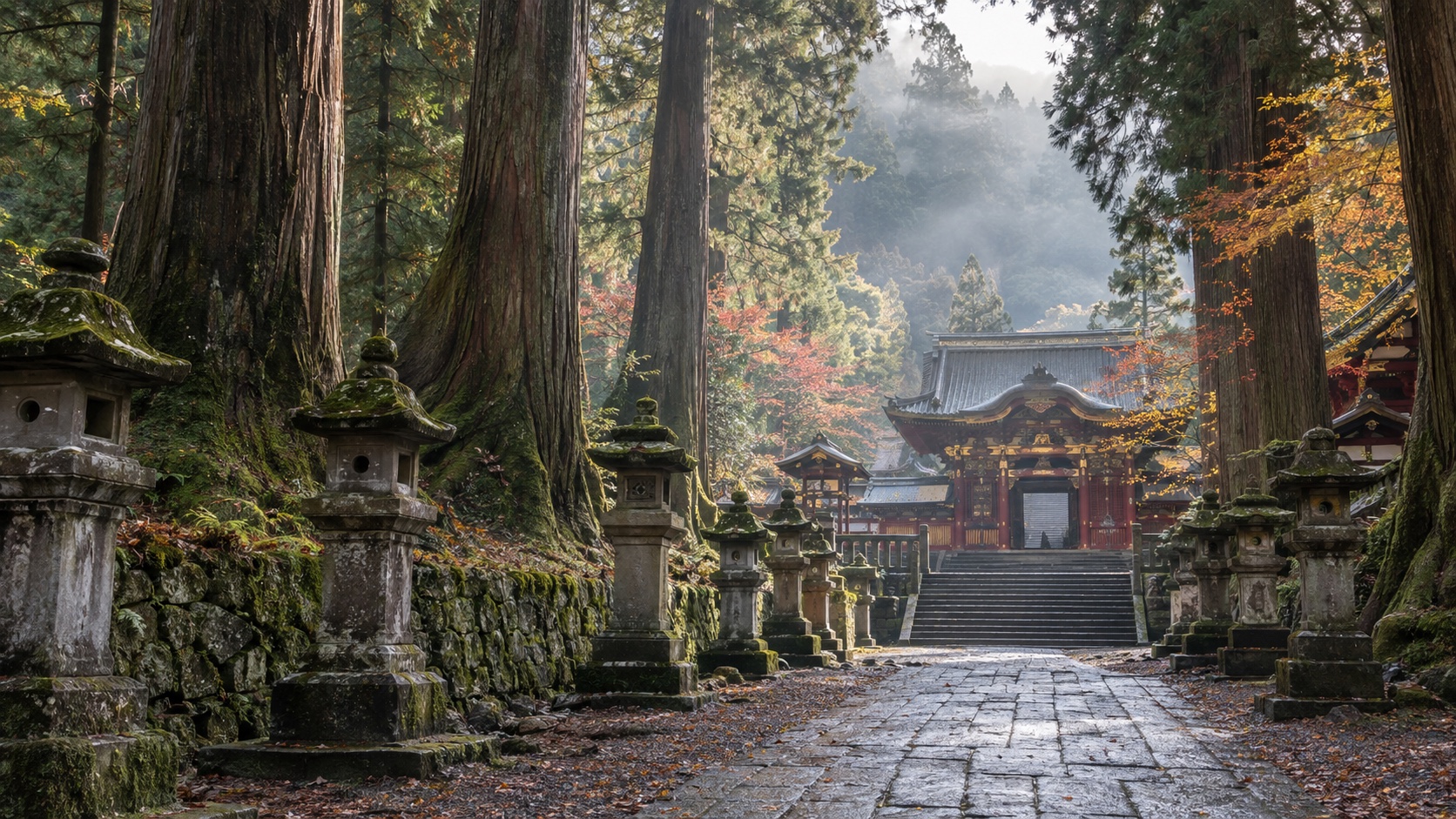
Nikko Toshogu is ornate, layered, and more theatrical than most visitors expect from a Japanese shrine. Give it time. Walk slowly through the gates, look up at the carved details, and leave room for Rinnoji and Futarasan Shrine rather than treating the complex as one photograph and a departure.
Let the cedar forest set the pace
The approach through the trees is part of the experience. The scale of the cedar avenue changes the way the monuments feel, making the transition from town to sanctuary gradual. Early morning is best for a calmer walk and softer light. Comfortable shoes matter more than an ambitious checklist.
Go higher into Okunikko
Above the heritage area, Nikko becomes a mountain destination. Lake Chuzenji, Kegon Falls, and the winding road through the hills make a natural second day. Weather and traffic can change the timing, so build the route around one or two meaningful stops rather than trying to collect every viewpoint.
Stay somewhere with hot water
A night in a traditional inn or a hotel with a good onsen changes the rhythm of the visit. The destination is particularly well suited to a bath, an early dinner, and a morning without a train to catch. Kinugawa Onsen can also work as a separate stay when the route continues north.
Planning brief
Nikko suits travellers who want important cultural sites with a strong sense of landscape, and who prefer a destination that rewards walking, weather, and a little unplanned time.
- Best suited to: first time visitors to Japan, culture-led travellers, families with older children, photographers, and anyone adding mountain air to a Tokyo stay.
- Settle early: shrine timing, mountain transport, the right onsen base, and whether the visit works better as one night or two.
- Useful pairing: Tokyo, Hakone, Kanazawa, or a wider route through the Japanese Alps.
Give Nikko enough quiet to become itself
The monuments are the reason most people arrive. The forest, mountain weather, and unhurried evening are what make them memorable.
Our luxury leisure travel planning can arrange the private guiding, rail or car transfers, onsen stay, and the wider Japan itinerary around Nikko.
Can Nikko be visited as a day trip from Tokyo?
Yes, but a day trip usually means choosing between the heritage area and the mountain sights. One or two nights gives the shrines, forest, and onsen experience much more room.
How many nights should we stay in Nikko?
Two nights is the best balance for a first visit. One night works for the shrines and temples, while a third night helps if the route includes Lake Chuzenji, Kinugawa Onsen, or a slower cultural programme.
Do we need a guide for Nikko Toshogu?
A good guide is useful because the shrine complex is dense with history and symbolism. The right person will add context while leaving enough quiet for the architecture and forest to speak for themselves.
What is the best season for Nikko?
Nikko works throughout the year. Autumn is the most sought-after season for foliage, spring brings fresh colour, summer offers greener mountain walks, and winter has a quieter atmosphere with colder conditions at higher elevations.
CONTINUE EXPLORING