

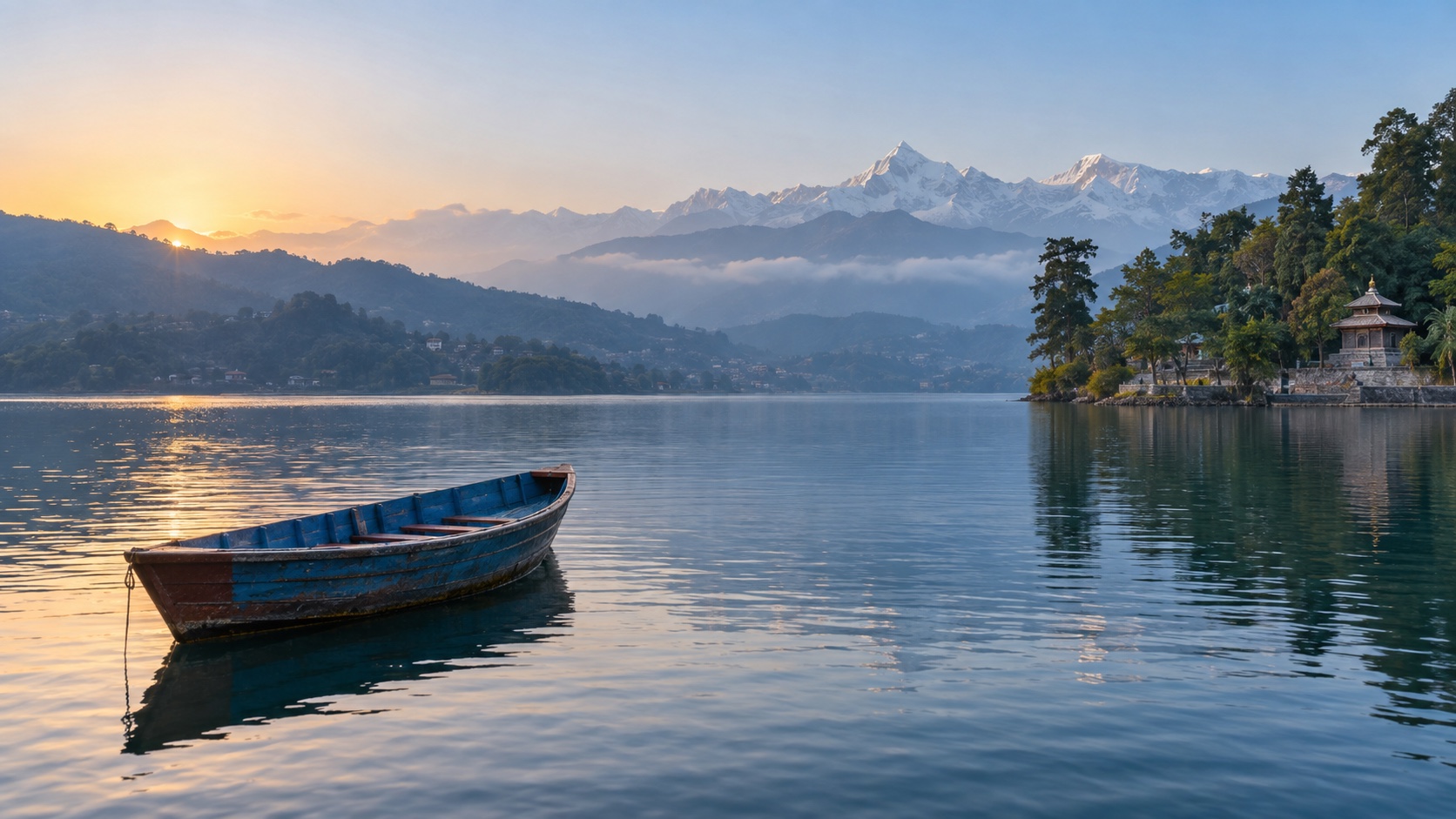

Pokhara
Pokhara, Lake Light and the Annapurna View
Pokhara is Nepal's softer landing. Phewa Lake, forested hills, mountain air, and the Annapurna range give the city a generous setting, while the waterfront and surrounding countryside make it easy to move between quiet mornings and active days.
Three nights works well for a first visit. Add time when Pokhara is the beginning or end of a trek, or when the group wants boating, walking, paragliding, or a longer recovery before the next flight.
Know before you go
- Fly into: Pokhara International Airport or Kathmandu, depending on the route and current flight schedule. Road transfers can be slow.
- Trip length: Three nights for the lake, viewpoints, and one active day. Four nights gives a trek or recovery period more space.
- Best months: October through November and March through April are generally clear. Monsoon is greener and wetter, while winter mornings can be crisp and bright.
- Getting around: Private driving and short boat rides cover the main sights. Use trusted operators for paragliding, trekking, and adventure activities.
- Money: Nepal uses the Nepalese rupee. Cards work in larger hotels, while cash is useful for boats, guides, small restaurants, and countryside stops.
- What to reserve: Airport or road transfer, a lakeside hotel, private guide, boating, mountain activities, and any onward trekking logistics.
Let the lake introduce the city
Phewa Lake is the reason many people remember Pokhara. Take a boat early, walk the shore, or find a quiet view from the hills. The water and the mountains make the city feel spacious even when the waterfront is busy.
Choose one clear mountain view
Sarangkot and the surrounding hills are often used for sunrise and sunset, but weather decides what the Annapurna range will reveal. Keep the timing flexible and make the outing worthwhile even if the peaks stay behind cloud.
Use the city as an active pause
Pokhara can hold a gentle day of cafés and lake time, or a more active programme of walking, cycling, boating, and paragliding. The best mix alternates effort and rest rather than treating every hour as an excursion.
Prepare for the next altitude
For trekkers, Pokhara is a practical place to check equipment, meet guides, and settle into a slower rhythm. Keep the evening before the onward route light and build a buffer after returning from the mountains.
Planning brief
Pokhara suits travellers who want lake and mountain scenery, easy active days, and a more relaxed counterpoint to Kathmandu.
- Best suited to: trekkers, families with older children, active couples, photographers, and travellers needing a recovery base.
- Settle early: the lakeside hotel, transfers, mountain view timing, adventure operators, and trekking logistics.
- Useful pairing: Kathmandu, Nepal Himalayas, Bhutan, or northern India.
Keep the lake open in the schedule
Pokhara works because the view is close and the pace can be gentle. Give the lake a morning, leave room for weather, and let the mountains decide how much the day can hold.
Our luxury leisure travel planning can arrange the hotel, private driving, lake experiences, mountain activities, and the wider Nepal itinerary.
How many nights should we spend in Pokhara?
Three nights is a good introduction to the lake, viewpoints, and one active day. Four nights is better when Pokhara sits before or after a trek.
Can we see the Annapurna range from Pokhara?
Yes, when weather and visibility cooperate. Sunrise viewpoints such as Sarangkot are popular, but the best plan keeps the timing flexible and makes the outing worthwhile even when cloud appears.
Is Pokhara good for non-trekkers?
Yes. Boating, walking, cafés, lake views, gentle cycling, and carefully chosen adventure activities give non-trekkers a full stay.
Is it better to fly or drive to Pokhara?
Flying saves road time when the schedule is reliable, while driving can make sense for a wider overland route. Weather and road conditions should be checked close to travel.
CONTINUE EXPLORING