

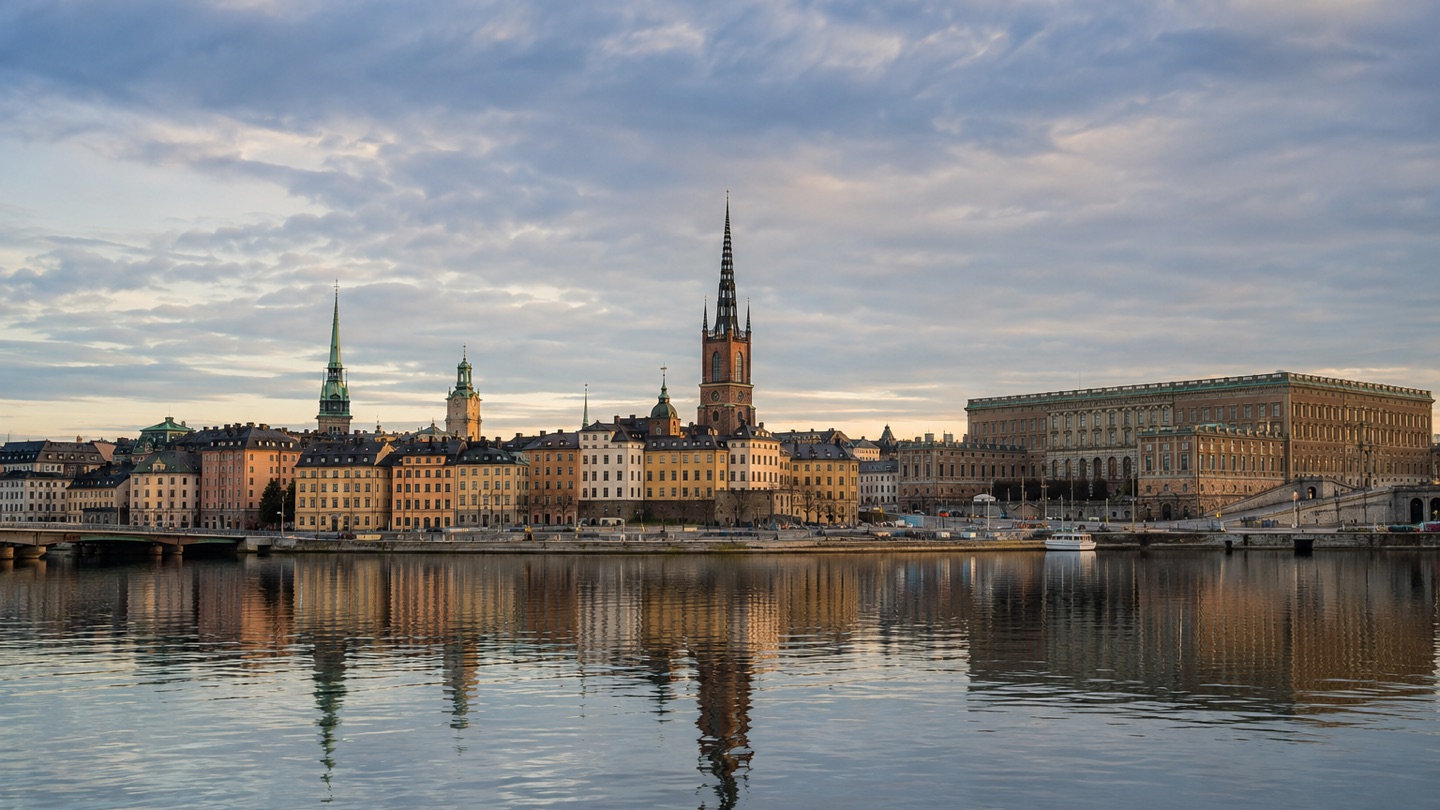

Stockholm
A Capital Built on Water
Stockholm is spread across fourteen islands where a lake meets the Baltic, and beyond it lies an archipelago of tens of thousands more, which makes Sweden's capital one of the few cities where the water is not a feature but the actual structure. You cross it constantly, by bridge, by ferry, by foot. The old town sits on one island, the museums on another, the restaurants and shops on a third. The consequence is a city that feels much larger and more varied than its population suggests, and a trip that should always include at least one day on a boat, because Stockholm without the water is only half of it.
The planning decision: the summer light or the winter dark
Sweden gives you two completely distinct products and both are worth having. The summer, particularly June and July, is the famous one: light that barely leaves, the archipelago open, the city outdoors and swimming, and Midsummer as the single most important date in the Swedish year. The winter is the other trip: short blue days, a serious cultural season, the Nobel week in December, and, if you continue north into Swedish Lapland, snow, ice hotels, dog sledding and the northern lights. What does not work is arriving in November expecting either, because late autumn is the one genuinely flat stretch of the calendar here.
Midsummer, the Nobel week and the flat months
Late May through August is the main window, with June and July the peak of the light and the archipelago season in full swing. Midsummer, falling on the weekend nearest the solstice, effectively closes the city as Swedes head to the country, which is either an authentic experience or a logistical problem depending on your plan. September is still lovely and much quieter. December brings the Nobel ceremonies, the Christmas markets and a genuinely festive city despite the very short days. January through March are cold, bright when clear, and the right months for anything in Lapland. October and November are the two months to be careful with: dark, wet and without the compensations of proper winter.
Where to base, and how to reach the islands
Östermalm is the elegant, residential, restaurant heavy district and the choice for most travelers. Gamla Stan, the old town on its own island, is the most atmospheric and the most touristed. Norrmalm is the commercial center and convenient. Södermalm is the creative, younger, hillier island with the best views back across the water. Arlanda sits about twenty minutes from the center by express train. For the archipelago, ferries run from the city all summer, and a private boat for a day is one of the better investments in Swedish travel. Vaxholm, Sandhamn and Grinda are the accessible names, and the further out you go the quieter it becomes.
Waterfront rooms and one very good island alternative
Grand Hôtel Stockholm faces the Royal Palace across the water and is the historic address, home of the Nobel laureates each December. Ett Hem, in Östermalm, is a converted 1910 townhouse run more like a private house than a hotel and is the most distinctive stay in the city. Bank Hotel is a former bank in Norrmalm with a strong rooftop. Hotel Diplomat sits on the waterfront in Östermalm. For a night or two, an archipelago property in summer is a genuine alternative to a third night in town and usually the more memorable half of the trip.
When to begin
Four months for summer, five or six for the Midsummer weekend and the peak archipelago season, when the good island properties and boats are limited and go early. Nobel week in December is a hard week for hotels in the city center. Anything in Lapland, including the ice properties and the northern lights lodges, should be started nine to twelve months out, because those are very small operations with short seasons.
Four experiences worth building the days around
- A full day in the archipelago by private boat, out past the inner islands to somewhere with a jetty, lunch and nobody else on it.
- The Vasa Museum, which holds a warship raised almost intact from the harbour after three hundred and thirty years, and rewards a guide.
- Gamla Stan walked early in the morning before the day visitors arrive, then across to Södermalm for the views and the coffee.
- A Swedish table properly booked, whether a modern tasting kitchen in the city or a summer lunch on an island, arranged in advance rather than on the day.
Who this trip suits
Stockholm suits travelers who want water, boats and open space attached to a capital city. It suits design and architecture people. It suits families in summer, when the islands, the swimming and the museums make an easy week. It suits winter travelers heading north for Lapland, for whom the city is the natural first and last stop. And it suits anyone who has done the obvious European capitals and wants somewhere calmer.
When another plan may fit better
Travelers who want a compact walkable city with everything in one place will prefer Copenhagen, which is a shorter and easier trip. Those wanting warmth and long outdoor evenings without weather risk should look south. And nobody should book October or November here for a first visit.
Plan it with one accountable advisor
Tell us summer or winter and how much time you want on the water, and we will set the city nights, the archipelago days and the boat, or the northern connection if Lapland is part of it. Our luxury leisure travel planning handles the whole Scandinavian sequence rather than one capital in isolation.
Continue Exploring