


Vilnius
Vilnius Is a City of Courtyards and Churches
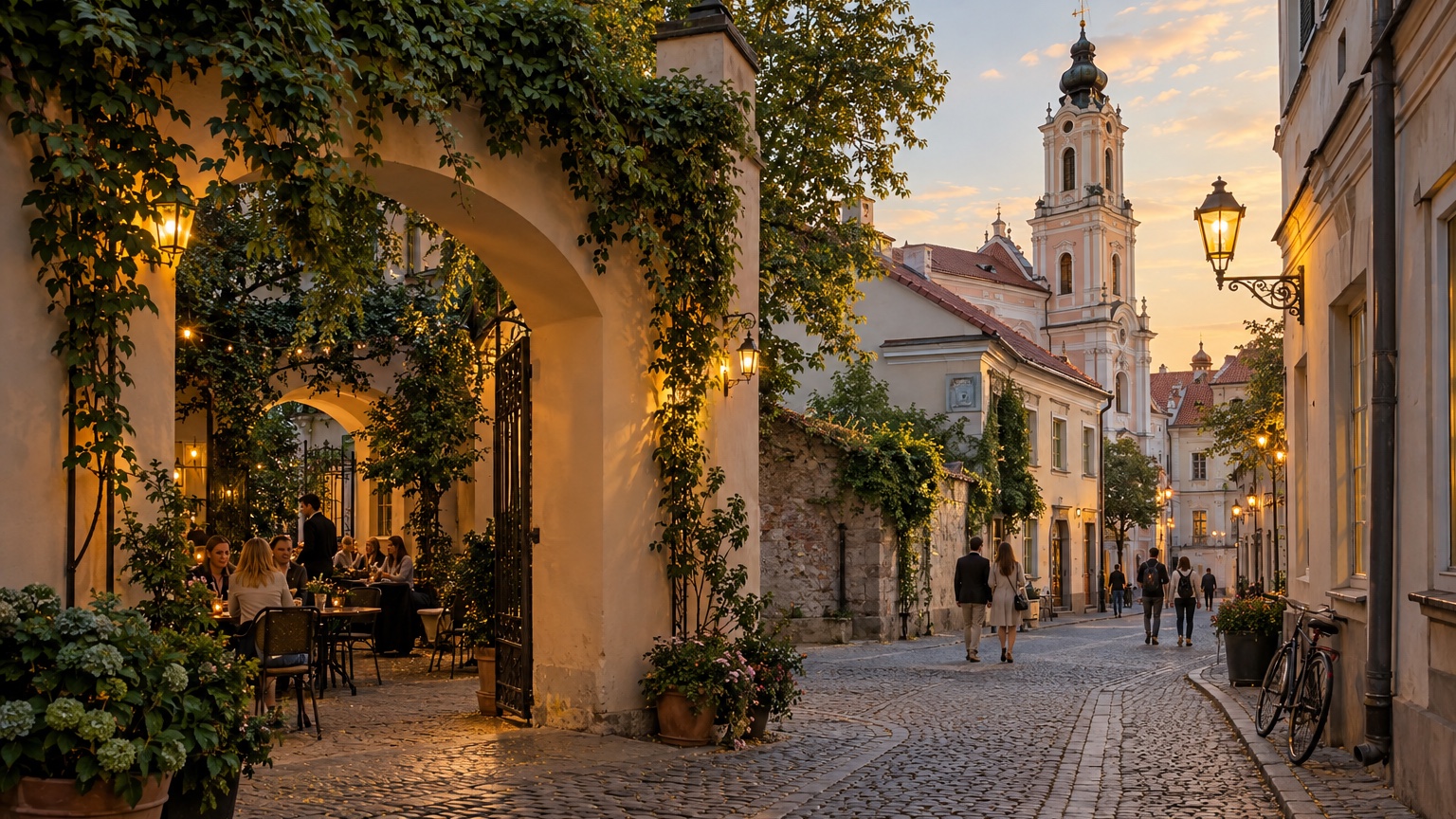
Vilnius has a softer, more open character than many northern European capitals. Baroque churches, narrow old-town streets, wooded hills, courtyards, and a lively restaurant scene sit close enough for a slow walk. The city feels cultured without needing to announce itself, which makes it a good place for travelers who prefer detail to spectacle.
Three nights is the right starting point. Two works for the old town and one museum, while four gives the city’s neighborhoods, food, and history more space.
Know before you go
- Fly into: Vilnius Airport, code VNO. The airport is close to the center, and a private transfer is useful for late arrivals or onward travel.
- Trip length: Three nights for the old town, museums, food, and one route beyond the center.
- Best months: May through September for gardens and long walks. October brings color. Winter is quiet and atmospheric but cold and dark.
- Getting around: The old town is walkable. Taxis and public transport cover the wider city.
- Money: Lithuania uses the euro. Cards are common, with a little cash useful for markets and small purchases.
- What to reserve: A history or food guide, one strong restaurant, and any day trip to a nearby estate, lake, or town.
Let the old town remain human
Vilnius is beautiful in the formal sense, but its best details are often private. Walk the old town early, look into courtyards, and choose a guide who can connect architecture with the city’s communities and changing history. The route should leave time for coffee and a second look at whichever church or street holds your attention.
Make food part of the introduction
Vilnius has a confident modern dining scene, while traditional dishes and markets provide a link to the country beyond the capital. Ask for a sequence that combines both. One strong dinner and a food-led neighborhood walk often say more than several formal tastings.
Use Vilnius as a wider route
The capital is a natural first or last chapter in a Baltic itinerary. Riga, Tallinn, and Copenhagen provide useful contrasts, while a private driver can take the group toward lakes, estates, or the countryside. Keep the city’s three-night core intact.
Planning brief
Vilnius suits travelers who want baroque streets, food, courtyards, and a capital with a relaxed cultural rhythm.
- Best suited to: couples, food and history travelers, families, and Baltic route planners.
- Settle early: hotel position, guide, restaurant, and any countryside day.
- Useful pairing: combine with Riga, Tallinn, or a wider Baltic route.
Leave space for the courtyards
Vilnius gives more to the traveler who does not hurry from square to square. Tell us whether the trip is about history, food, architecture, or the wider Baltic.
Our luxury leisure travel planning can arrange the hotel, private guiding, restaurants, transfers, and onward route.
How many nights should we spend in Vilnius?
Three nights is a good first stay, with time for the old town, one museum or guided route, food, and a neighborhood beyond the center. Four nights allows a countryside or lake day.
Is Vilnius good for a luxury city break?
Yes for travelers who prefer history, architecture, food, and a calmer capital. The experience is strongest with a well-placed hotel, one thoughtful guide, and restaurants chosen for the whole sequence rather than one famous table.
Do we need a car in Vilnius?
No for the city. The old town is walkable and public transport and taxis cover longer moves. A private car or driver is useful for estates, lakes, and countryside beyond Vilnius.
Can Vilnius be combined with other Baltic capitals?
Yes. Riga and Tallinn make natural additions, though the route should allow enough time for each city to have its own character. Three nights in Vilnius is a sensible starting point.
CONTINUE EXPLORING