

Boston Destination Guide

The American City You Can Actually Walk
Boston is the rare city in the United States where the walking is the point. The Freedom Trail is a red line in the pavement, not a metaphor, and it connects four centuries of American history across ground you can cover on foot in a morning. Add the Charles River, a working harbor, and a compact core of brick and gaslight, and you have a city that suits travelers who would rather wander than shuttle. What Boston asks in return is that you plan around its academic year, because the universities do not just shape the culture here, they control the hotel inventory.
The planning decision: history, coast, or a base for New England
Boston works three ways, and choosing early saves you money and days. As a standalone city break it wants three or four nights, enough for the historic core, the Isabella Stewart Gardner Museum and the Museum of Fine Arts, and a night in the North End. As a gateway it is the natural start for Cape Cod, the Berkshires, coastal Maine or the Vermont and New Hampshire foliage routes, which changes the car and hotel decisions entirely. As a working trip, it is a biotech, finance and university city, and the Seaport and Kendall Square are where those days actually happen. Tell us which of the three you are planning and the rest follows quickly.
Foliage, graduation, and the winter you should not fear
September and October are Boston at its best. The air turns crisp, the students return, and New England foliage generally peaks in the northern mountains through early to mid October and reaches the coast later, though timing shifts each year with the weather. May and June are lovely and busy. The two weeks around late May are the hardest of the year to book, because Harvard, MIT, Boston University and a dozen more institutions hold commencement within days of one another and every good room in the city goes. July and August are warm and pleasant with the harbor islands and Cape traffic in full swing. Winter is cold and honest, and it is also the best value of the year, with excellent restaurants, a serious symphony season and museums you nearly have to yourself.
Where to base, and how to route onward
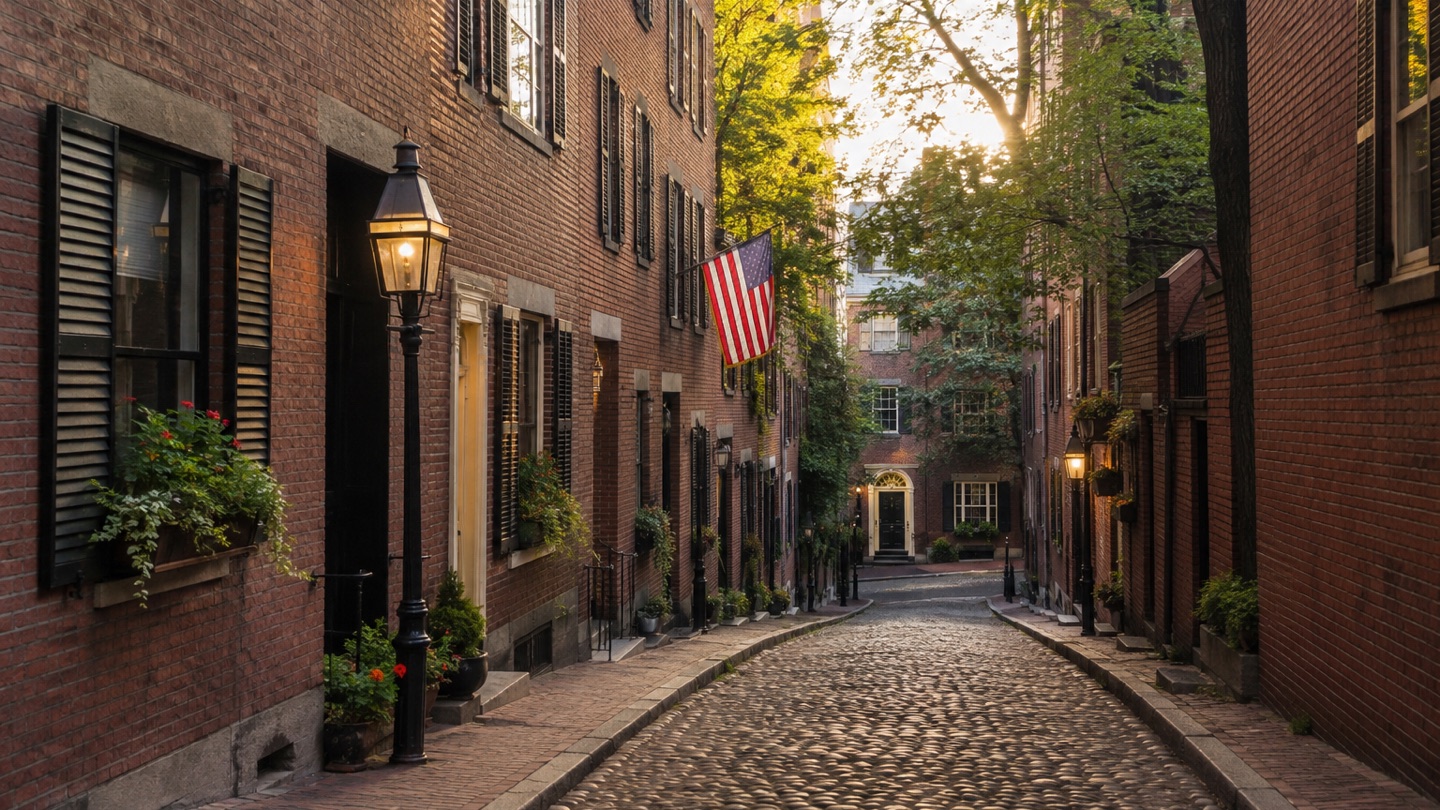
Back Bay puts you on Newbury Street with the Public Garden at one end and easy reach of everything. Beacon Hill is quieter, prettier and more residential. The Seaport is modern, close to the convention center and the choice for most business travel. The North End is where you eat rather than where you sleep. Logan Airport is remarkably close, often fifteen to twenty minutes from downtown, which is a genuine luxury after a long flight. Amtrak reaches New York in roughly three and a half to four hours. For Cape Cod, Maine or the mountains, a private car and driver for the transfer days usually beats a rental, particularly in foliage season when the roads are full.
Choosing a hotel by neighborhood, not by brand
Four Seasons Hotel Boston looks across the Public Garden and remains the classic choice for families and first visits. Four Seasons Hotel One Dalton Street is the newer, taller, more contemporary option in Back Bay with a serious spa. The Newbury Boston sits on the corner of the Public Garden with a rooftop that locals actually use. The Langham occupies the old Federal Reserve building downtown. XV Beacon is small and clubby on Beacon Hill. The right answer depends almost entirely on which neighborhood you want to walk out into each morning.
When to begin
Three months covers most of the calendar comfortably. Foliage travel in late September and October wants five to six months. Late May graduation weekends want a year, and that is not an exaggeration. If your dates touch a major marathon weekend in April or a championship run for one of the city's teams, tell us early, because Boston is a sports town and inventory reacts accordingly.
Four experiences worth building the days around
- The Isabella Stewart Gardner Museum in the first hour of the day, before the courtyard fills, followed by lunch nearby rather than a rushed second museum.
- A private sail or charter on Boston Harbor in season, which reframes the whole city from the water and suits families who have had enough of walking.
- Guided walking of the Freedom Trail and the North End with someone who reads the history properly, then dinner at a table booked weeks ahead.
- A day trip north to Salem, Concord or the Cape with a driver, arranged so the return lands before dinner rather than in traffic.
Who this trip suits
Boston suits families with school age and college age children, particularly those touring universities, which is one of the city's genuine specialties. It suits couples who want a walkable long weekend with excellent food and no resort pacing. It suits history readers and first time visitors to the United States who want something more human in scale than New York. And it suits executives and academic travelers, for whom the airport proximity alone justifies the choice.
When another plan may fit better
Boston is not a nightlife city, and travelers who want late energy will find it closes earlier than they expect. It is also small, and a full week here without onward travel starts to feel long. If you want scale, theater and restaurants running until two in the morning, New York is the honest answer. If you want warm water in the same country, look south to Miami.
Plan it with one accountable advisor
Give us your month, your travelers and whether Boston is the trip or the doorway to New England, and we will build the sequence, the hotel and the driver days around it. Our luxury leisure travel planning handles the pacing, the restaurant bookings that need lead time and the onward routing when the coast or the mountains are part of the plan.