

Seychelles Destination Guide

The Seychelles, Where Nature Outranks the Hotels
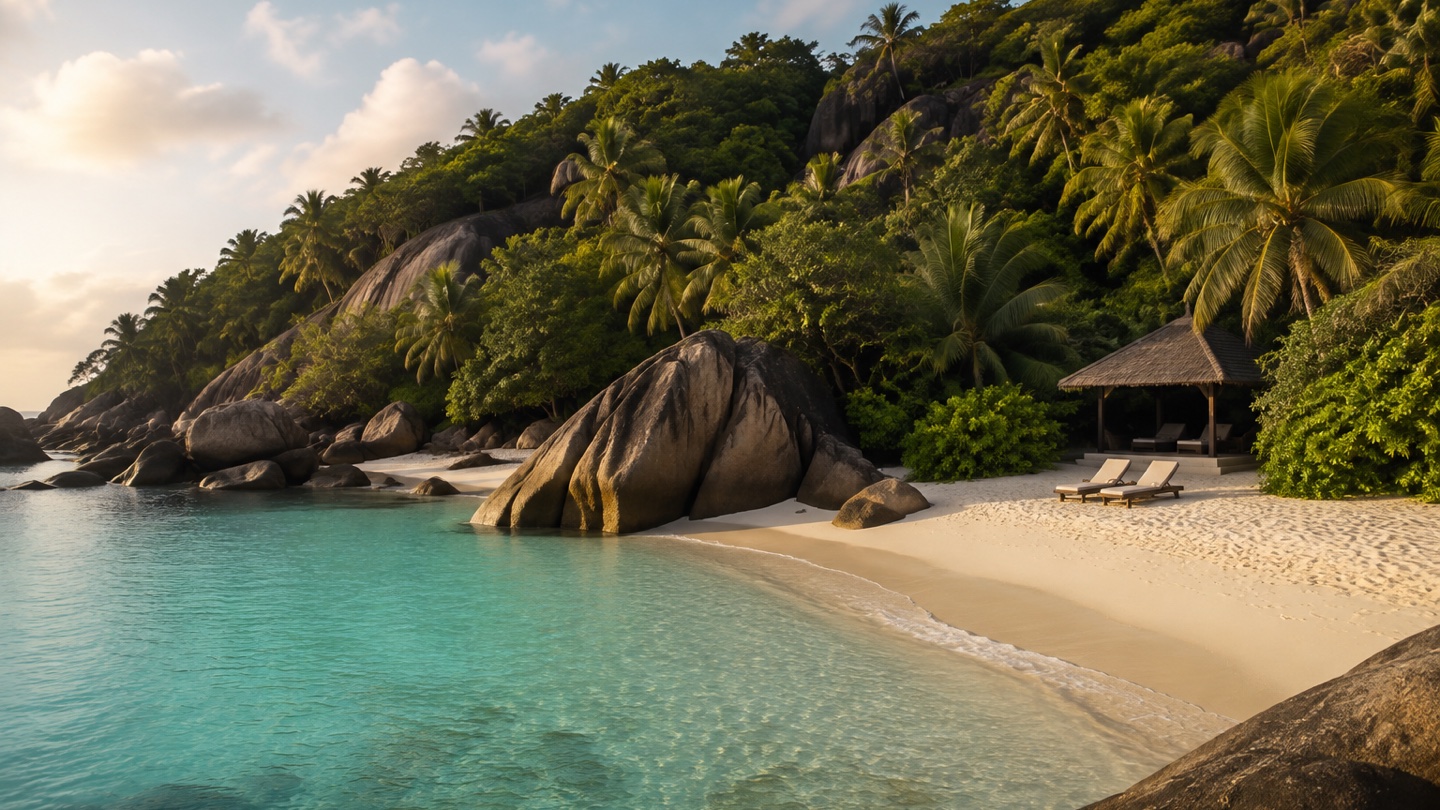
The Seychelles are old. These are not coral islands but granite, the peaks of a sunken continent, and the difference is everything: forested mountains behind the beaches, boulders the size of houses framing the sand, and giant tortoises that were alive before your grandparents. The hotels here are exceptional, but they are guests too. Nature holds the deed.
That changes how we plan. In the Maldives we choose a resort. In the Seychelles we choose a rhythm: how many islands, in what order, and on which coasts, because the coasts trade places twice a year.
Two trade winds, and why your beach moves
The islands sit outside the cyclone belt, so there is no bad season, only different ones. From November to March the northwest trades bring still, humid air and the occasional downpour, heaviest around December and January. From May to September the southeast trades turn the air cooler and the sea choppier on exposed coasts, and seaweed can gather on some famous beaches while others turn perfect. April to May and October to November are the turnarounds: glassy water, the year's best diving visibility, and especially appealing windows. Which beach is calm depends entirely on the wind, which is why the right island in June can be the wrong one in December. Holding that detail for you is the job.
Getting there, and what to pair it with
There is no nonstop from the United States; the sensible routings run one stop through Dubai, Doha, or Istanbul into Mahé. From there, Praslin is a fifteen minute flight or an hour by fast ferry, La Digue is a short ferry ride and then bicycles, and the private islands are a small plane away. The classic build is bush and beach: a safari in Kenya or South Africa first, then five or six nights here to let the dust settle. Within the islands, split Mahé or Praslin with one private island rather than racing all three granite islands in a week.
Leave room for the islands themselves. The Vallée de Mai on Praslin is a near-primeval palm forest and the world's stronghold for coco de mer, a species that occurs naturally only on Praslin and Curieuse; La Digue still moves at bicycle pace past vanilla plantations, and the giant tortoises of Curieuse will walk right up to inspect you. A morning ashore among all this is what separates a Seychelles trip from a generic beach week.
Where to stay now
This market has moved fast. Cheval Blanc opened on Mahé's Anse Intendance in December 2024, fifty-two pool villas by Jean-Michel Gathy. Four Seasons Seychelles above Petite Anse remains the treehouse-villa classic, and Four Seasons Desroches Island is the private island for families who want space without excess ceremony. North Island, eleven villas with a conservation story that predates the fame. Raffles on Praslin puts families near Anse Lazio. Add Waldorf Astoria's 2024 debut on Platte Island and you have the Indian Ocean's most interesting two-year run of openings.
Planning brief
Plan the Seychelles as an island sequence: coast, wind, transfer and pace determine whether Mahé, Praslin, La Digue or a private island belongs in the route.
- Best suited to: island combinations; nature and beaches; honeymoons; families; yacht and boat days.
- Decisions to settle early: travel month and wind; island order; ferry versus air transfer; beach orientation; number of hotel changes.
- Arrival and routing: Most visitors arrive by air on Mahé; Mahé, Praslin and La Digue are connected by air and sea, with schedules and transfer comfort best confirmed for the exact dates.
Begin with the wind
Give us your month and who is traveling. We will pick the coasts that will be calm, the islands worth your nights, and a standout villa.
For a deeper island comparison, read the journal's Maldives planning guide. Our luxury leisure travel planning matches the season, island combination, hotels, and flights.