

Vienna Destination Guide

The Capital of an Empire That No Longer Exists
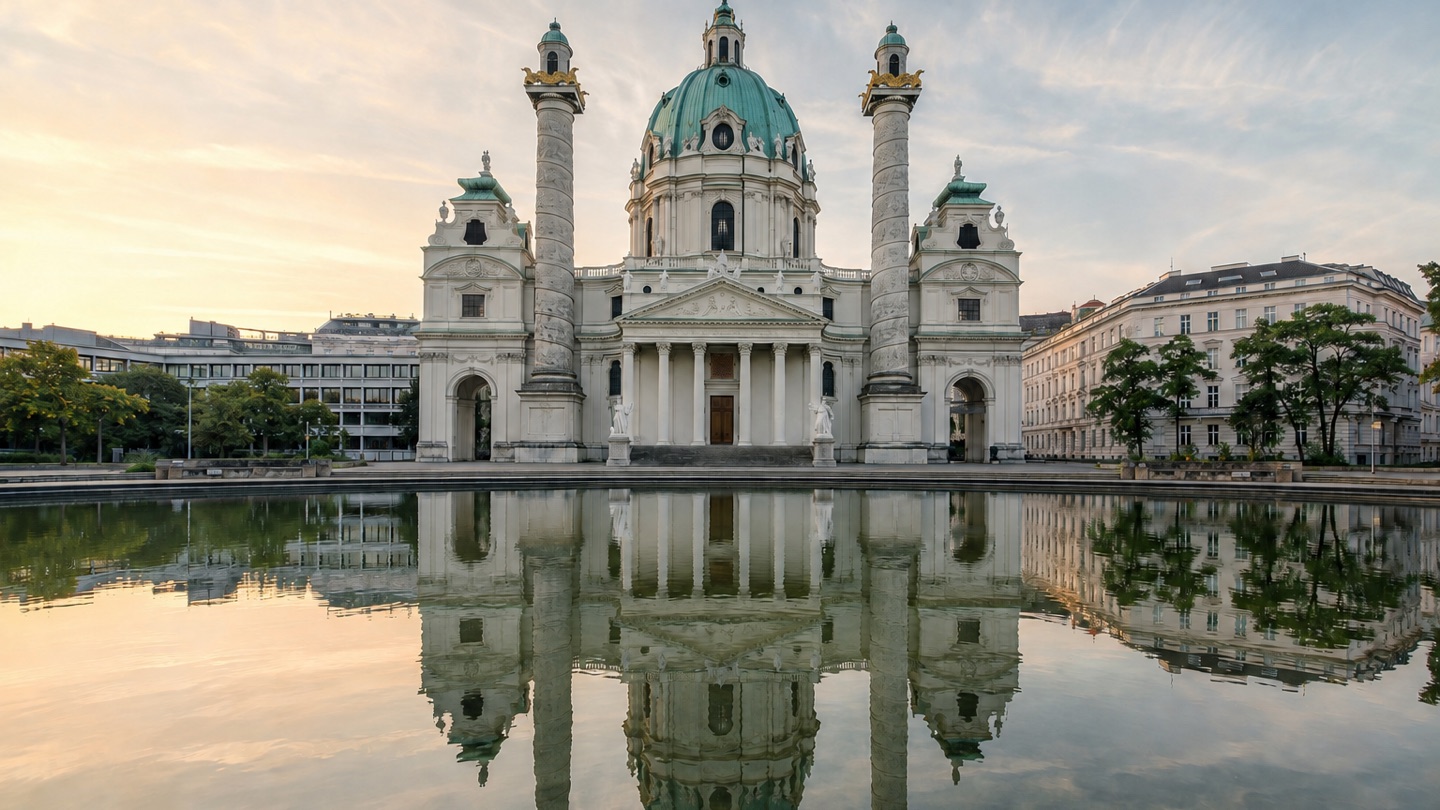
Vienna was built to run an empire of fifty million people, and Austria today has under ten. That mismatch is the whole charm of the place. The palaces, the ministries, the Ringstrasse, the opera house and the museums were all sized for something far larger, and the result is a capital with more grandeur per resident than almost anywhere in Europe. It is also, consistently, one of the most livable cities in the world, and that shows: the trams work, the parks are immaculate, the coffee houses still let you sit for three hours with one melange. Vienna does not chase visitors. It simply assumes you will appreciate it, and mostly you do.
The planning decision: which Vienna are you booking
The city has two distinct high seasons and they produce entirely different trips. The winter season, from roughly September to June, is when the Staatsoper, the Musikverein and the Konzerthaus are all running, when the ball season fills January and February, and when the city is at its most formal and most itself. The summer, by contrast, is warm, green and outdoor, with the Danube, the wine taverns in the hills and the palace gardens, but the opera house closes for its summer break and the orchestras tour. If music is the reason you are coming, the calendar decides your dates and not the weather. Say so early and we will build around it.
Ball season, opera season and the market weeks
May, June, September and October are the most comfortable months, mild and clear with the cultural season either starting or in full flow. July and August are warm and quieter, and the palaces and gardens are at their best while the concert halls are dark. The Christmas markets run from late November through the days before Christmas and are among the most beautiful in Europe, which also makes December the busiest and most expensive stretch of the year. January and February are cold and the heart of the ball season, when the Hofburg and the opera house host formal balls that are genuine occasions rather than tourist events, with dress codes and tickets that require planning.
Where to base, and how to route by rail
The Innere Stadt, the first district inside the Ringstrasse, is where almost everything you came for sits, and it is the right base for a first visit. The area around the Ring itself gives you the grand hotels and the opera house at the door. The third district near the Belvedere and the seventh around the museum quarter are quieter and more local. Vienna International sits about twenty minutes from the center. The rail connections are excellent and underused by visitors: Salzburg is under two and a half hours, Budapest around two and a half, Prague roughly four, and Munich about four. Vienna is the best hub in Central Europe for a multi city trip.
Palace hotels, and which side of the Ring
Hotel Sacher Wien sits directly behind the opera house and is as much an institution as a hotel. Hotel Imperial, on the Ringstrasse, was built as a palace and still behaves like one. Park Hyatt Vienna occupies a former bank in the old city with a pool in the vault. Rosewood Vienna is the newest of the group on Petersplatz, with a rooftop over the old rooftops. The Ritz Carlton Vienna sits on the Ring near the Stadtpark. If opera is the priority, stay within walking distance of the Staatsoper, because the whole evening improves when you can walk home.
When to begin
Three to four months covers most of the year. Opera and Musikverein tickets are the real constraint: subscription seats absorb much of the house and public sales open on published schedules well in advance, so a specific performance needs to be identified before hotels are set. The December market weeks want six months. Ball tickets and the tailoring or hire that goes with them want longer still, and that is a conversation to have early rather than in November.
Four experiences worth building the days around
- A performance at the Staatsoper or the Musikverein, chosen for the programme rather than the building, with the seats selected deliberately.
- The Kunsthistorisches Museum given a full morning with a guide, which holds one of the most important collections of Old Masters in the world.
- A proper Viennese coffee house afternoon, unhurried and with a newspaper, which is a UNESCO recognized cultural practice and not a cliché.
- An evening at a Heuriger wine tavern in the hills at Grinzing or Nussdorf, where the city's own wine is poured and the tone loosens considerably.
Who this trip suits
Vienna suits classical music travelers above all others. It suits art collectors and museum people. It suits couples wanting a formal, elegant European city that still feels calm. It suits multi generational families, because the pace is gentle, the transport is easy and the parks are excellent. And it suits anyone building a Central European rail itinerary, where it is the natural anchor.
When another plan may fit better
Travelers who want energy, informality and late nights will find Vienna reserved, and Berlin is the honest alternative a few hours north. Those wanting a smaller and more picturesque old town will prefer Prague. And if you are coming for the opera in July, the house is closed, which is exactly the kind of thing worth knowing before the flights are booked.
Plan it with one accountable advisor
Tell us the performance, the month or the occasion, and we will work backward from it to the hotel, the seats, the table and the rail connections. Our luxury leisure travel planning sets the Central European sequence when Salzburg, Prague or Budapest are part of the same trip.