


Bangkok
Bangkok Runs on Clocks Nobody Warns You About
The Grand Palace sells its last ticket at 15:30 and closes the gates at 16:30, so the leisurely afternoon visit most people picture is a single hour at the hottest, most crowded point of the day. That detail is the whole city in miniature. Bangkok is not disorganized. It runs on timetables, cutoffs and short windows that are obvious once somebody tells you and invisible if nobody does: two airports on opposite sides of town that are not interchangeable, an arrival card you can only file in the three days before you fly, a cool season that is genuinely short and books out early. Get those right and Bangkok is the best value great hotel city on earth. Get them wrong and you spend the week in a queue.
Know before you go
- Fly into Suvarnabhumi, code BKK, about 25 km from downtown. The second airport, Don Mueang, code DMK, sits on the far side of the city and handles most regional low fare and domestic traffic. Connecting between the two on one day is the classic self booked mistake; treat them as separate cities.
- Trip length Three nights is the floor, and they belong at the front of a Thailand itinerary rather than tacked on at the end. Jet lag will wake you at five for the first few days, which is precisely when the temples are worth walking.
- Best months Thailand runs three seasons. Cool, mid October to mid February, and November through February is the window you want. Hot, mid February to mid May, and April is punishing. Rainy, mid May to mid October, mostly as afternoon downpours that pass.
- Entry US passport holders enter visa exempt for 60 days, with six months of passport validity beyond arrival and at least one blank page. That 60 day allowance is under review, so we confirm it against the official source at the time you book.
- Arrival card The Thailand Digital Arrival Card has been mandatory for every foreign national since 1 May 2025. It is free, it is filed on the immigration.go.th portal, and the window opens only three days before arrival. Commercial lookalike sites charging a service fee outrank the real one in search results.
- Grand Palace timing Open daily 08:30 to 16:30, last ticket sold at 15:30, admission THB 500 a head. Go at opening. It is also cooler then, and the light on the Emerald Buddha compound is better.
- Proof of funds Immigration can ask a visa exempt arrival for an onward ticket and the cash equivalent of THB 20,000 per person or THB 40,000 per family. Seldom asked, but it is the published rule.
- Money The Thai baht sits at roughly 33 to the US dollar. Agree prices in baht rather than dollars whenever you are settling anything locally, because the dollar figure quoted back to you is rarely the good one.
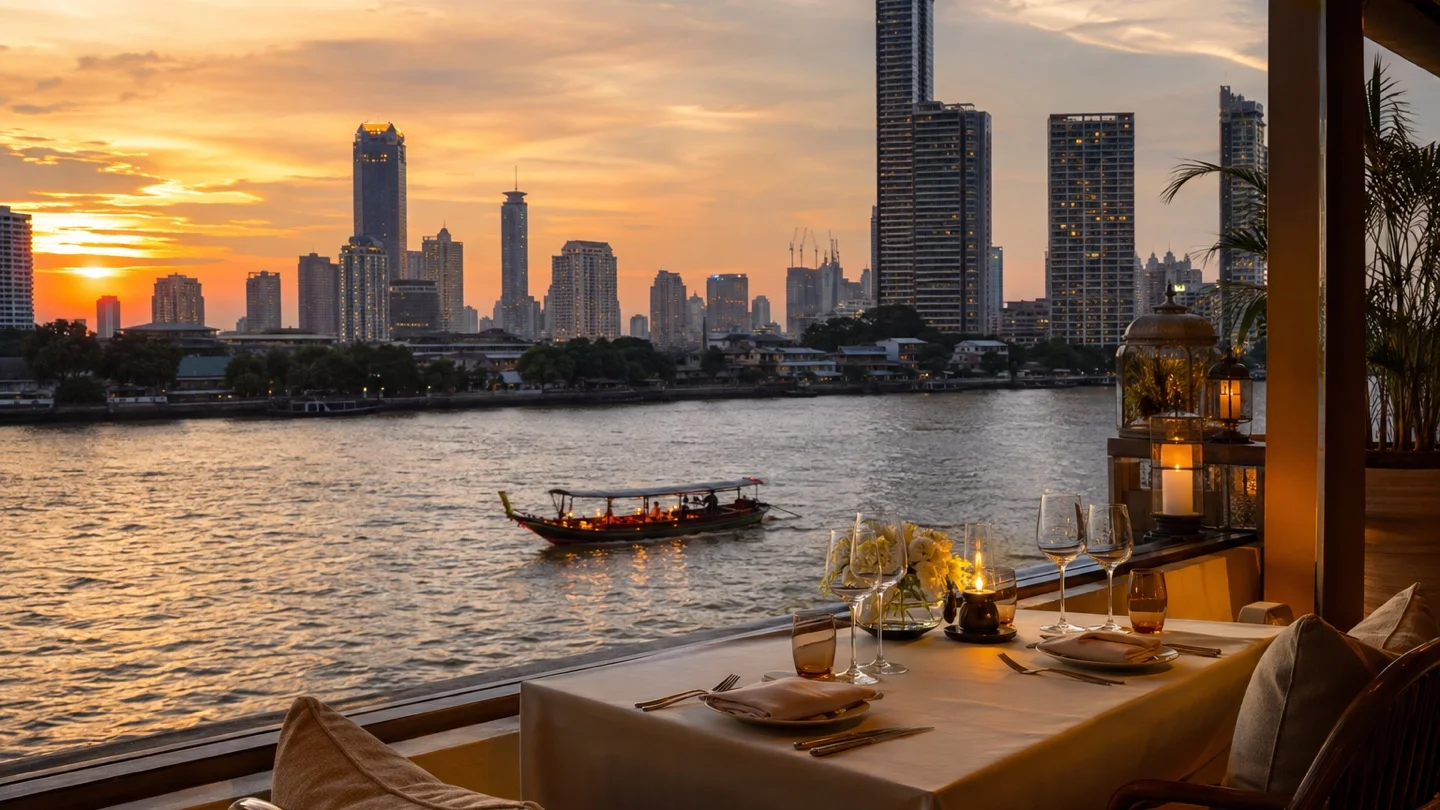
- Getting around The river is the transport decision, not the taxi. Hotels along the Chao Phraya run their own boats, and the Rattanakosin temples are minutes away by water when the same journey by road can swallow an hour. Where you sleep decides how much of the week you spend in traffic.
- Temple dress Shoulders and knees covered, men and women alike, enforced at the door by staff who will turn people away. Linen trousers and a light long sleeved shirt, put on at the hotel. Buying a cover up at the gate in April heat is the outcome to design around.
- Songkran Thai New Year falls 13 to 15 April in 2027, a Tuesday to Thursday, so no substitute Monday applies and the practical shutdown stretches from Monday the 12th to Friday the 16th. Domestic flights and trains sell out weeks ahead.
The cool season is short and everyone wants the same eight weeks
November through February is not a marketing preference, it is the only stretch when the heat, the humidity and the rain all cooperate at once. It is also when the best suites go, and December into January is held months in advance. June through October is the better compromise: the rain arrives as heavy afternoon bursts rather than all day gray, rates soften considerably, and the city is emptier. March through May is the one to work around. April in particular combines the worst heat of the year with the Songkran shutdown, and a week built around outdoor temples and river dining in that month is a week spent indoors wishing otherwise. If April is unavoidable, either book Songkran deliberately six months out or give the city a token two nights and go to the coast.
Sleep on the river or accept the road
Bangkok's finest hotels cluster along the Chao Phraya, and choosing the water changes the entire rhythm of a stay. You commute by hotel boat, the Grand Palace and Wat Arun are a short crossing away, and the traffic stays on the other bank until you want it. The Mandarin Oriental has held its stretch of the bank for generations and remains the address for romantics. Capella next door is all suites, every one with a balcony over the water, and is the more contemporary answer. Four Seasons at Chao Phraya River has the strongest restaurant bench on the river. Staying inland, around Sukhumvit or the embassy quarter, puts you nearer the newest kitchens and galleries, and Aman Nai Lert sits in a private garden off Wireless Road as the city side counterweight. First visits almost always do better on the water. Repeat visitors drift inland, and they are right to.
What to do first, and what to leave alone
Take the Grand Palace at 08:30 opening, walk straight through to Wat Phra Kaew while the courtyards are still empty, then cross the river to Wat Arun before the middle of the day makes the climb unpleasant. That is the morning. Give an entire afternoon to a spa, which Bangkok does as well as anywhere in Asia at a fraction of the price at home, and keep one evening loose for a rooftop. What to leave alone: the coach served floating markets, which are a performance staged for the buses and a two hour drive each way. If you want water markets, ask for the working canals in Thonburi instead, early, by long tail boat, before the heat.
Planning brief
Bangkok deserves to be planned as a stay in its own right rather than a connection. Season, bank of the river and airport all need settling before a hotel is chosen.
- Best suited to: first trips to Asia; food travelers; families; couples on a first visit; anyone building a wider Thailand or Indochina route.
- Decisions to settle early: month and season; river versus city; which of the two airports each flight uses; how many nights before the beach; whether Songkran is deliberate.
- Arrival and routing: confirm Suvarnabhumi or Don Mueang on every leg; file the arrival card in the three day window; build a real buffer around any airport change; hold cool season suites early.
The River Side, or the Road Side
That is the first decision here and it sets the rhythm of every day after it. The month, who is traveling and what Bangkok connects to on either side are enough to settle it, along with a morning order for the temples that gets ahead of the crowds and a table list running from a two dollar noodle stall to a starred dining room on the same day.
For the beach half of a Thai itinerary, read our Phuket and Koh Samui guides, which run on opposite rainfall calendars and need choosing between. Our luxury leisure travel planning ties the city stay to every flight, boat and transfer that follows it.
From the journal
More on Bangkok: Two Weeks in Thailand: Bangkok, the North, and the Right Island.
City first or beach first on a Thailand trip?
City first, and it is not a close call. Jet lag will have you awake at five for the first few mornings, which is exactly when the temples are worth walking and exactly when the heat has not arrived. Arrive off an island instead and the same mornings are spent resenting the traffic. Bangkok also does the practical work at the front of a trip: the domestic flights south leave from here, the tailors and the pharmacies are here, and a spa afternoon on day two repairs a long haul flight better than a beach does. Save the islands for the end, when doing nothing is the point.
Is the Grand Palace worth the queue, or is it a tourist trap?
It is worth it, but only on the right terms. The compound is open daily from 08:30 to 16:30, the last ticket sells at 15:30, and admission is THB 500. Arrive at opening and you get the Emerald Buddha temple in reasonable quiet and cooler air. Arrive after lunch and you are paying full price for a compressed hour in the worst heat with the largest crowd, which is where the tourist trap reputation comes from. Dress for it before you leave the hotel, because shoulders and knees covered is enforced at the door for everyone.
Does Bangkok work with children?
Better than its reputation, provided you sleep on the river. The hotel boats turn transport into the best part of the day for a child, the pools at the riverside hotels are large enough to matter in the afternoon, and Thai restaurants are unusually welcoming to small children rather than merely tolerant. What does not work is a temple heavy morning followed by a long lunch: cut the Grand Palace to the opening hour, cross to Wat Arun, and be back in the water by noon. Skip the coach trip to the floating markets entirely, which is a long drive to a staged performance with nothing in it for them.
Should I stay on the river or in the city?
On a first visit, stay on the river. The great hotels are there, the hotel boats turn a traffic problem into a pleasure, and the historic temples are a short crossing rather than an hour in a car. On a second or third visit, move inland to Sukhumvit or the embassy quarter, where the newer restaurants, galleries and bars are concentrated and where you will spend your evenings anyway. The mistake is booking a city address on a first trip because it looked central on a map, then losing two hours a day to the road.
When is the best time to visit Bangkok?
November through February is the window you want, inside the cool season. April is punishing, and the rainy season runs mid May to mid October, mostly as afternoon downpours that pass. Plan three nights at the front of a Thailand trip. Continue to Chiang Mai or follow our two week Thailand itinerary.
CONTINUE EXPLORING