

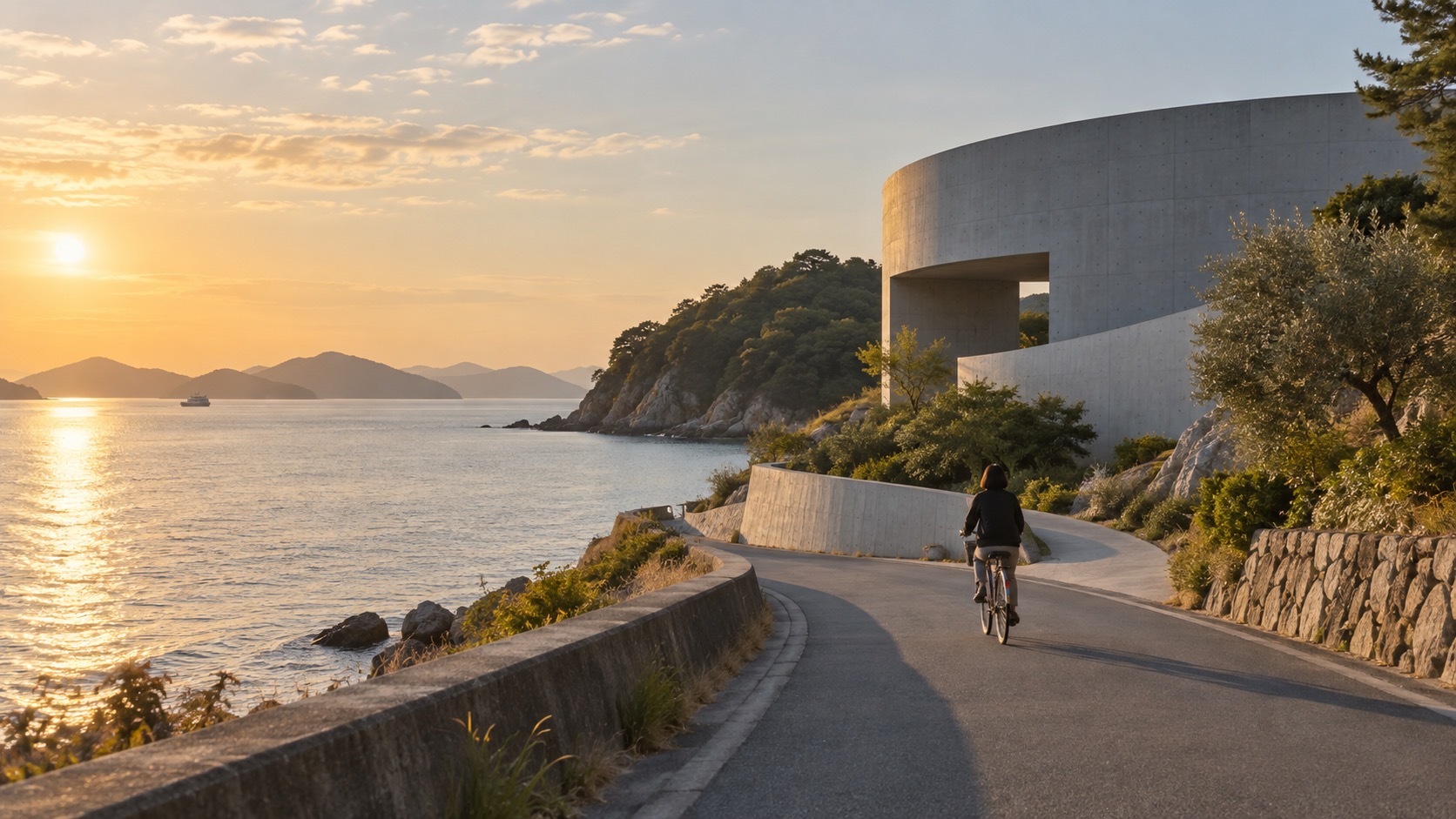

Naoshima
Naoshima, Art in the Open Air
Naoshima is a small island with a large cultural idea: art should change the way a place is seen. Museums, houses, installations, water, and weather all share the itinerary, and the island is better when there is time to move slowly between them.
Two nights is the minimum for the main museums. Three is better when the trip includes Teshima or Inujima, or when the group wants the island without spending every hour on a reservation.
Know before you go
- Fly into: Takamatsu or Okayama, followed by rail and ferry. The best arrival depends on whether Naoshima sits between Kyoto, Osaka, and western Japan.
- Trip length: Two nights for Naoshima itself. Add one or two nights for Teshima, Inujima, or a slower Setouchi route.
- Best months: Spring and autumn are comfortable for moving around outdoors. Summer is hot and bright. Winter is quiet and more weather dependent.
- Getting around: Local buses, bicycles, and short taxis connect the main areas. Museum reservations determine the order of the day.
- Money: Japan uses the yen. Carry cash for smaller island purchases and transport, since the island is more limited than Tokyo or Kyoto.
- What to reserve: Museum timed entries, island accommodation, ferry timing, luggage forwarding, and a private art guide when the context matters.
Reserve the museums before the room
Naoshima’s key museums work by timed entry, and the schedule is not a small detail. Start with the places the group most wants to see, then choose the ferry, hotel, and restaurant around those times. The island feels generous when the day has space between appointments and punishing when it does not.
Let the island do part of the explaining
Chichu Art Museum, Benesse House, and the Art House Project each ask for a different kind of attention. The architecture is part of the work, the natural light keeps changing, and a walk between buildings can be as important as the room you entered to see. A guide is useful when the group wants the thread between the works, not when every silence needs to be filled.
Stay on the island if you can
Staying at Benesse House gives the group early and late access to the landscape, while smaller inns in Honmura offer a more local base. A day trip can work, but ferry times turn the experience into a race. One night on the island changes the pace. Two nights lets it become the trip.
Add Teshima with care
Teshima is more rural and more spacious, with art that depends on the landscape around it. It deserves its own day and a little weather patience. Do not add it because the map makes it look close. Add it when the group wants another island and is willing to give it the time.
Make Naoshima part of a wider western Japan route
Naoshima can sit between Kyoto and Takamatsu, or between Osaka and Hiroshima, with luggage forwarded ahead. The route is easiest when one person owns the ferry and reservation sequence. Combine it with Hiroshima for a Setouchi chapter, or use Tokyo and Kyoto for a first Japanese journey.
Planning brief
Naoshima suits travellers who want contemporary art, landscape, quiet movement, and a trip whose best moments happen between the scheduled ones.
- Best suited to: art lovers, architects, couples, repeat visitors to Japan, and families with older children who can move patiently through museums.
- Settle early: museum times, island accommodation, ferry sequence, luggage forwarding, and whether Teshima belongs.
- Useful pairing: Hiroshima, Kyoto, Osaka, Takamatsu, or a wider Setouchi route.
Slow down enough to see the work
Naoshima is easy to overbook because the map looks small. Choose the works that matter, keep the ferry plan clean, and leave time for the island to come through.
Our luxury leisure travel planning can coordinate the museums, ferries, accommodation, guides, luggage, and the wider Japan itinerary.
How many nights should we spend on Naoshima?
Two nights is the right starting point because the key museums need timed entries and the island is more enjoyable without a same day ferry deadline. One night can work for a focused visit, but it leaves little room for weather or a missed connection.
Do we need to reserve the museums?
Yes. Timed entry determines the order of the day, particularly for the main museums. Reserve the strongest priorities first, then arrange ferries and meals around them rather than assuming the island can be improvised.
Should we stay at Benesse House?
Benesse House is the most immersive option and gives the group the advantage of being inside the landscape before the day visitors arrive. Smaller inns in Honmura are more personal and often better for travellers who want local evenings. Both work when chosen deliberately.
Is Teshima worth adding?
Yes, when the group has another full day and wants a more rural island experience. Teshima should not be squeezed into the gaps around Naoshima. Give it the day, check the ferry sequence, and let weather remain part of the decision.
CONTINUE EXPLORING