

Swiss Alps
Choose the Swiss Valley Before You Choose the Hotel
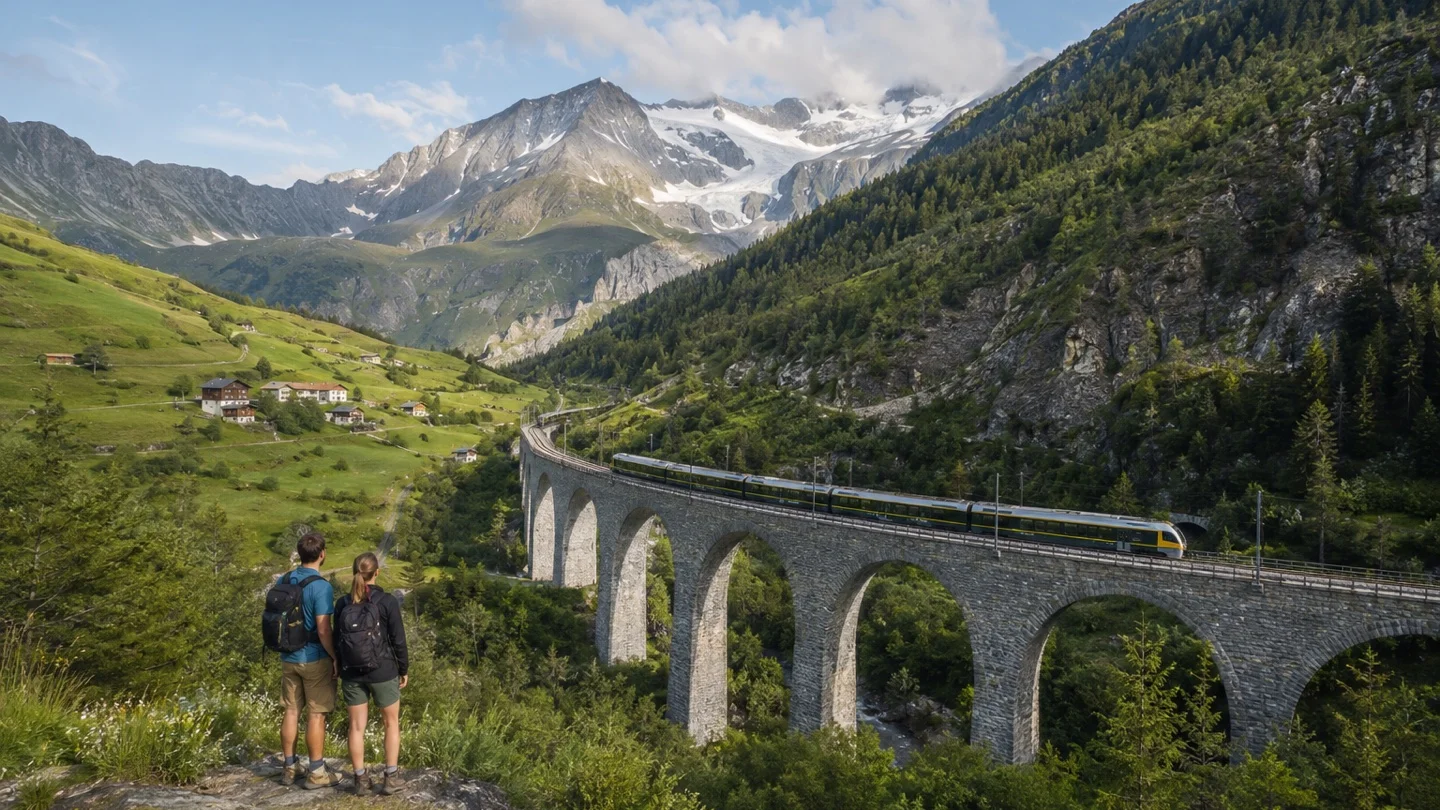
In the Swiss Alps the hotel is the second decision. The valley comes first, because each village is a small civilization with its own temperament and its own access pattern. Zermatt allows no private cars and is arranged entirely around one mountain. Gstaad is quiet money and green pasture, a village that lowers its voice. Verbier skis harder than anywhere else in the country and celebrates in proportion. Andermatt is the newest chapter and still writing itself. Match a traveler to the wrong village and no suite repairs it, which is why the first questions worth asking are about you rather than about rooms. The second thing to settle is the rail, which is not a transfer here so much as part of the holiday.
Know before you go
- Fly into Zurich or Geneva, then hand the rest to the trains. Swiss rail is timed against the flight schedules and reaches the valleys reliably, so plan on the better part of a half day door to door and do it in daylight.
- Zermatt is car free There is no driving to your hotel. Cars stop at Täsch and you continue by shuttle train or taxi, so either book the onward leg or brief the driver in advance.
- Trip length A full week in winter, five nights minimum in summer, and two villages as the sensible maximum on one trip. Moving more often than that turns a mountain holiday into a rail itinerary with hotels attached.
- The season, honestly The high resorts open around the start of December and run into April, with glacier skiing carrying on longer. Snow reliability climbs with altitude, so height buys certainty. Christmas and the February half term weeks sell out first and cost the most. January is the quiet value window between them.
- Entry Switzerland is a full member of Schengen but is not in the EU. At passport control that distinction changes nothing: there is no border check arriving from another Schengen country and Swiss days count against the same allowance of 90 days in any rolling 180. No visa and no ETIAS, which is not in operation.
- Where not being in the EU does matter Customs and VAT. Switzerland runs its own tax free scheme with its own validation at the Swiss border, so an EU refund claim does not cover Swiss purchases and a Swiss claim does not cover EU ones. On a shopping heavy trip that is worth getting right before you buy.
- At the border The EU Entry/Exit System has been fully operational since 10 April 2026. First entry into the zone means fingerprints and a facial image and there is no longer a passport stamp, so allow extra time wherever you first land in Schengen.
- Money The Swiss franc, worth a little more than the US dollar. Add about a quarter to any franc price to get the dollar figure. Switzerland is expensive and the franc is strong, and pretending otherwise wrecks budgets.
- The Glacier Express gap The Zermatt to St Moritz service does not run between 11 October and 3 December. An autumn itinerary built around it simply fails, and reservations for the December restart open in the middle of October.
- The reservation nobody warns you about A seat reservation on the Glacier Express is mandatory and costs 54 francs per person, and no rail pass covers it. The Swiss Travel Pass, Eurail and Half Fare cards cover the ticket only. Reservations open 93 days ahead for first and second class while tickets open 180 days ahead, and the 93 day date is the one to put in your calendar.
- Carry passports on mountain rail Some Alpine services cross into Italy, and the Rhaetian Railway asks passengers on those legs to carry a passport or identity card. Take it on the panoramic trains.
The villages, and who belongs in each
Zermatt is for people who want the mountain to be the point. It is car free, seriously equipped and arranged around the Matterhorn, and the Mont Cervin Palace gives you the village while the Riffelalp Resort puts you high above it, waking up on the mountain itself rather than beside it. Gstaad is the opposite register, pastoral and understated, and divides between the Gstaad Palace, which remains the social center of its valley, and The Alpina Gstaad for a more contemporary hand. Verbier is where the skiing gets ambitious and the evenings match it, with the W at the Médran lift the address for energy and position. Andermatt is the easiest of the four to reach from Zurich and means The Chedi, open through the year and half Alpine lodge, half Asian calm.
The Jungfrau region is the best value day in the Alps
If you want one high mountain day that justifies itself, this is it. The Eiger Express tricable car runs from Grindelwald Terminal to the Jungfraujoch in 45 minutes, from about 130 francs. Grindelwald First, with its cliff walk and glider, starts from 38 francs. The Schynige Platte cogwheel railway, inaugurated in 1893 and still running as it always did, starts from 34 francs and is the more charming option if you would rather have the view. The region carries 211 kilometers of ski slopes in winter, and it sits inside a UNESCO World Heritage area holding the longest glacier in the Alps, 22 kilometers long, 900 meters thick and something like 12 billion tons of ice. A Jungfrau Travel Pass, three to eight days from 165 francs, covers the region on its own terms.
Whether the Swiss Travel Pass pays depends entirely on your routing
The Swiss Travel Pass covers public transport across the country for up to 15 consecutive days, and the Flex version gives you 15 chosen days inside a month. The Half Fare Card is the alternative product, and there are regional passes including the Berner Oberland Pass and the Jungfrau Travel Pass. The pass earns its keep when you are moving between several cantons by train, using the lake boats and riding city transport at both ends. It is marginal when you base in one resort for a week and ride the same handful of mountain lifts, and that traveler is usually better served by a regional pass or the resort's own lift ticket. Mountain excursions are the crux, because coverage varies by railway. We price the pass against your actual routing rather than assuming it.
Planning brief
Name the valley first, then the week, then the room. The rail legs are booked around fixed windows that do not move for anybody.
- Best suited to: ski travel at every level; summer hiking above the treeline; families; scenic rail; travelers who want mountains without a car.
- Decisions to settle early: village; winter or summer; whether the Glacier Express is part of it; pass or point to point fares; ski instructors and mountain guides, which sell out with the suites.
- Arrival and routing: Zurich or Geneva then rail; Zermatt is reached from Täsch by shuttle only; Glacier Express reservations open 93 days out and the service is dark from 11 October to 3 December.
The valley chooses the holiday
Who is coming, how seriously they ski or walk and how social the evenings should be will name the village, and the hotel and the week follow from it in that order. If a panoramic rail day is part of the plan, the reservation window gets worked before anything else is held.
For a softer start before the high mountains, Lucerne gives you a day or two by the lake, and Andermatt is an easy rail connection further into the Alps.
If the eastern end of the country appeals more, St Moritz and the Engadin are a different mountain proposition entirely. Our leisure travel planning matches valley, hotel, rail and seasonal reservations to the trip you actually want.
Is the Glacier Express worth eight hours?
Once, and in one direction. The full Zermatt to St Moritz run takes roughly eight hours across 291 bridges and through 91 tunnels, and it is a genuinely beautiful piece of railway, but it is also a whole travel day and the middle hours are gentler than the ends. If you want the scenery without surrendering the day, take a segment rather than the full route. What matters more than the debate is the booking: the seat reservation is mandatory at 54 francs per person, no rail pass covers it, and reservations open 93 days ahead while tickets open 180 days ahead. Put the 93 day date in your calendar.
Is the Swiss Travel Pass worth buying?
It depends on your routing, and here is what it depends on. The pass pays when you are crossing several cantons by train, using the lake boats and riding city transport at both ends of the country, because those journeys add up quickly at full fare. It does not pay when you settle into one resort for a week and ride the same local lifts every day, and that traveler usually does better with a regional pass such as the Jungfrau Travel Pass or simply the resort's own lift ticket. Mountain excursion coverage varies railway by railway, which is why we price it against the itinerary rather than by reputation.
Which Swiss village suits a first trip?
Zermatt, in most cases. It is car free, the mountain is unambiguous, the skiing and the summer walking are both excellent, and the village works whether or not everyone in the party is on skis. Gstaad is the better answer for travelers who want the Alps quiet and pastoral rather than dramatic, and it is the stronger social base. Verbier is for people who came to ski hard and know it. Andermatt is the easiest arrival from Zurich and the newest product. The one thing not to do is pick the hotel first and accept whichever valley it happens to sit in.
Is summer in the Swiss Alps as good as winter?
It is better value and, for a lot of travelers, simply better. The lifts run, the walking above the treeline is world class, the lakes are warm enough to argue about, and the great houses charge noticeably less than they do in February. The Jungfrau day works in summer as well as winter, and the panoramic railways are at their best with green in the frame. Winter wins if skiing is the actual purpose or if you want the resorts at full social volume. If the mountains themselves are the point rather than the sport, come between late June and September.
How many days do you need in the Swiss Alps?
Plan a full week in winter and five nights minimum in summer. Two villages is the sensible maximum on one trip. Moving more often turns a mountain holiday into a rail itinerary with hotels attached. Choose the valley first, then the hotel. Compare Zermatt with Gstaad before you book.
CONTINUE EXPLORING