



Honeymoon Travel Planning: A Practical Couples Guide
You've got fourteen browser tabs open, three Pinterest boards competing for attention, and two resort quotes that somehow describe completely different trips. One villa deposit deadline is approaching, a private chef hasn't been held, and the sunset catamaran you saved for is already unavailable. The wedding is supposed to be the complicated part, yet your honeymoon is becoming an operations problem.
That's normal. A honeymoon combines fixed dates, limited inventory, nonrefundable deposits, international transport, and high expectations. The answer isn't more browsing. It's a simple workflow: define the trip, lock the critical decisions, protect the money, and leave room for human intervention when plans change.
Table of Contents
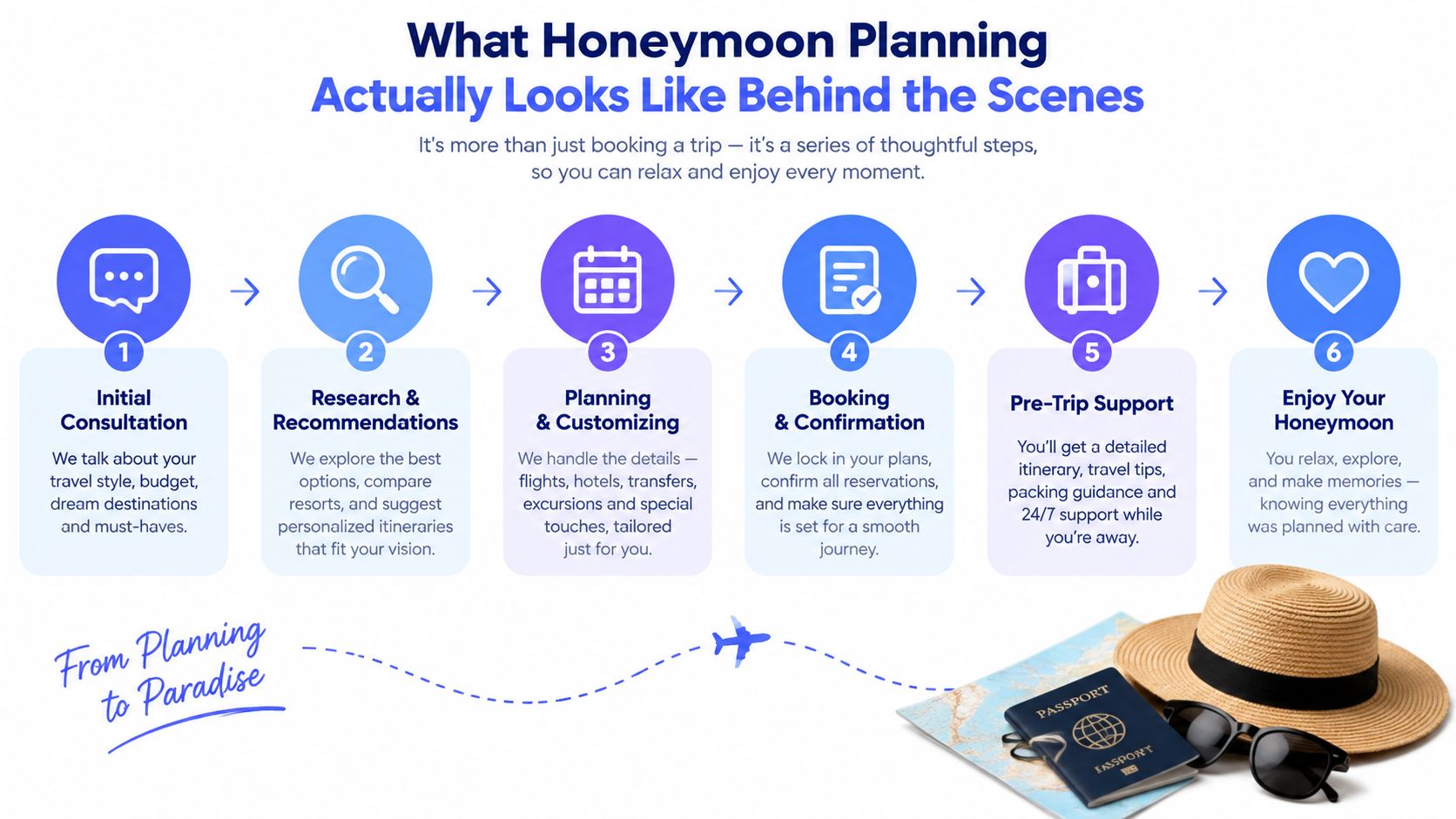
What Honeymoon Planning Actually Looks Like Behind the Scenes
A couple I'd advise in this situation would start by closing most of those tabs. Their Santorini villa might be beautiful, but a screenshot isn't availability, and a quote without cancellation terms isn't a plan. The first job is to turn scattered inspiration into a decision log that records the destination, travel window, budget ceiling, room priorities, and experiences that matter.
From there, honeymoon travel planning becomes a sequence of six moves:
- Define the brief: Agree on pace, climate, accommodation style, and the one or two moments the trip must deliver.
- Set the financial envelope: Separate the total trip budget from the amount available for optional upgrades and discretionary spending.
- Shortlist viable suppliers: Compare properties, airlines, guides, restaurants, and transfer providers with confirmed terms.
- Lock the core inventory: Secure the lodging and long-haul transport before optional details consume the budget.
- Sequence the ground plan: Place transfers, dining, and experiences around arrival fatigue, travel time, and recovery days.
- Run the control check: Reconfirm deadlines, deposits, names, documents, and suppliers before departure.
The difference between browsing and booking
Browsing creates possibilities. Booking creates obligations. A working plan needs one destination shortlist, one live budget, and a tiered vendor list with a preferred option, a credible alternative, and a fallback that still meets your standards.
In the Santorini example, the missing private-chef hold and the lost catamaran slot weren't romantic surprises. They were coordination failures. The couple had chosen memorable elements but hadn't assigned them a place in the booking sequence or verified how quickly they would disappear.
Practical rule: If a reservation matters enough to appear in your wedding photos or your memories for years, treat it as core inventory, not a nice-to-have.
A shared spreadsheet can handle this. Use columns for supplier, dates, deposit, cancellation deadline, payment method, contact person, and next action. One person owns the log, while both partners approve changes to the destination, budget, and nonrefundable commitments.
Building the Timeline That Holds the Trip Together
A long planning runway helps only when each stage closes a decision. Use the calendar as a sequence of gates. Do not move ahead while the previous gate is still unstable.
Gate one sets the boundaries
Choose the destination and travel window first. Weather, seasonal access, flight schedules, and accommodation supply depend on both. If the wedding date may change, keep research flexible and avoid deposits on competing destinations until the date and leave policy are firm.
Gate two is a lodging shortlist you can book. Keep three properties at most, each with confirmed availability, the intended room category, deposit terms, and cancellation language. A beautiful hotel without the right room available is not a real option.
Flights come next. Honeymoon planning depends on budget, timing, and destination choices, as described in the Honeyfund honeymoon trends report. Book air after the route works and lodging is held. Otherwise, a cheap fare can force an expensive or awkward itinerary.
Build the remaining locks in order
Once the route is sound, close the dependencies in this order:
- Documents: Check passport validity, entry rules, and required visa or health paperwork before committing to remote destinations.
- Experiences: Reserve limited-capacity guides, boats, private meals, and special-access activities after confirming the route and transfer times.
- Dining: Book important restaurants around real arrival and departure logistics, not an idealized map.
- Transport: Confirm airport transfers, inter-island connections, rail segments, and luggage handling.
- Final review: Recheck suppliers, payment deadlines, pickup times, and contact details shortly before departure.
The sequence prevents small decisions from breaking the trip. Hotel location sets transfer time. Transfer time determines which dinner fits. Dinner timing affects the experience available that day. Record every dependency in a shared spreadsheet with the supplier, dates, deposit, cancellation deadline, payment method, contact person, and next action.
Assign one person to maintain the log. Both partners should approve destination changes, budget shifts, and nonrefundable commitments. If a key reservation disappears, use the documented fallback instead of rebuilding the entire itinerary. The timeline should function as a control system, not a collection of wishes.
Setting a Realistic Budget Without Leaving the Best Parts Out
Set the budget around the experience you want, then assign limits to the parts that support it. Online averages can provide context, but they should not decide your trip. Domestic travel, international travel, a city-and-countryside route, and an island stay place pressure on different parts of the budget.
Start a shared worksheet with four lines: total available funds, lodging cap, air ceiling, and the amount remaining for transport, food, experiences, and contingency. A city-and-countryside itinerary may direct more money toward guides, dining, and rail. An island escape may concentrate spending in lodging, transfers, and limited-access experiences. Use the linked travel trends report as context, then make the final allocation according to your destination and priorities.
A working allocation model
The table below is a planning framework, not a universal spending rule. The example uses $5,800 only to show how the categories interact.
| Bucket | Share of Total | Example at $5,800 | Pressure Test Rule |
|---|---|---|---|
| Lodging | 45% | $2,610 | Confirm that the room category and number of nights fit the destination's real rates. |
| Air | 20% | $1,160 | Compare the ceiling with the cabin, routing, and baggage needs you actually want. |
| Ground and transfers | 10% | $580 | Include airport transfers, ferries, rail, private drivers, and inter-property moves. |
| Experiences and dining | 20% | $1,160 | Reserve enough for the meals and activities that define the trip, not just leftover spending. |
| Contingency | 5% | $290 | Keep it untouched for changes, fees, weather disruption, or a required replacement booking. |
Pressure-test the table against your priorities. If a private villa is the reason you chose the destination, protect that line before adding decorative upgrades elsewhere. A villa can also separate staff, chef, transport, and service costs from the nightly rate. Review the practical trade-offs in this guide to private villa vacations before treating the quoted room price as the full cost.
Find the leaks before they become surprises
Resort fees, private-transfer surcharges, foreign transaction costs, and currency conversion can distort an attractive quote. Ask whether taxes, breakfast, transfers, service charges, and mandatory activities are included. Record when each payment becomes nonrefundable, who collects it, and which currency applies.
Keep the contingency line intact. A slightly less elaborate suite with room to handle a missed connection is better designed than a beautiful booking that leaves no money to recover from a disruption. Use that reserve for flexibility, not for a last-minute upgrade you already know you cannot comfortably afford.
Locking Flights, Hotels, and the Bookings That Disappear First
Book the itinerary before you book the air. That sounds backwards to couples watching fares, but a flight only works if it serves confirmed lodging, realistic transfer times, and the travel window you can maintain.
The route-specific fare guidance summarized by this honeymoon planning analysis places international prime booking roughly three weeks to five months before departure, with transpacific routes to Asia and Oceania shifting earlier to about five to seven months. Domestic prime windows tighten to about three weeks to two and a half months. Use those ranges as decision points, not promises, and act once your destination and season are settled.
What to secure first
Hotels, villas, and rare experiences don't all behave the same way. A flexible room can wait while you compare neighborhoods. A specific overwater category, private guide, or dining reservation may not.
| Region | Flights | Hotels | Key Experiences |
|---|---|---|---|
| Domestic | Watch the route-specific window and prioritize flexibility. | Compare cancellation terms before paying a deposit. | Secure limited-capacity activities after the route is stable. |
| International | Move into the prime window once the itinerary is confirmed. | Hold the preferred property and a viable backup when possible. | Reserve private guides, boats, and special meals early when availability is constrained. |
| Transpacific | Begin monitoring earlier because the planning window shifts forward. | Confirm room category, transfer method, and arrival logistics together. | Place high-priority experiences around recovery time and internal travel. |
Use flexible holds when a property offers them and the deadline is clear. For deposits, record the exact cancellation date, the amount at risk, and whether the supplier permits a date change. Credit card protections can be useful, but they're not a substitute for reading the fare rules or hotel contract.
A premium cabin doesn't rescue a poor itinerary. If the hotel is on one island and the experience is on another, the cheapest flight may create a costly transfer day. Evaluate the whole chain, then buy the air that supports it.
When a Travel Advisor Earns the Fee and When You Don't Need One
You don't need an advisor because you're incapable of booking a hotel. You hire one when the cost of a mistake, the scarcity of inventory, or the complexity of fixing a disruption is high enough to justify another operator in the system.
The DIY route works well for a straightforward trip with plentiful rooms, flexible dates, and a couple who enjoys comparing terms. A private advisor becomes more valuable when the trip includes a scarce villa, several destinations, premium air, private transfers, and reservations that must happen in a precise order.
The problems an advisor can actually solve
Consider the difference between these situations:
- The invisible room: A villa isn't distributed through the major online travel agencies, so a general search won't reveal its availability or preferred-partner terms.
- The restricted table: A restaurant releases bookings through a hotel concierge or local relationship, rather than the channel you're checking.
- The live disruption: A flight cancellation, weather event, or destination problem forces a route change while you're already traveling.
- The coordination gap: A seaplane, driver, ferry, and resort check-in must connect, with luggage and late arrivals accounted for.
Preferred networks such as Virtuoso, Marriott Stars, Aman Preferred, and Belmond Bellini may provide access to hotel benefits or partner handling, but the value depends on the advisor's relationship, the property, your dates, and availability. Don't assume a network name guarantees an upgrade.
The honest DIY sweet spot
A shoulder-season domestic escape, a second honeymoon, or a trip with one hotel and flexible plans usually doesn't need high-touch design. If you enjoy research, can monitor deadlines, and have time to manage changes, booking directly may be the right choice.
For couples who want a specialist to build the route and stay available during travel, understanding what a travel advisor does helps clarify the fee. Ask what the service includes, whether the advisor handles changes after booking, how emergencies are managed, and which suppliers they can access.
The advisor's real test isn't the first reservation. It's the response when the reservation stops working.
Three Sample Honeymoon Itineraries Built From the Same Framework
The same planning framework can produce completely different honeymoons. The choice isn't only destination. It's the ratio of movement to stillness, the type of lodging that carries the emotional weight, and the experiences you're willing to prioritize.
| Itinerary | Pace | Lodging Focus | Budget Center of Gravity |
|---|---|---|---|
| Maldives | Slow and restorative | Overwater and beach villas | Premium lodging, seaplane transfers, and private dining |
| Italian coast | Layered and scenic | City hotels, coastal resort, and countryside estate | Lodging changes, private touring, dining, and ground transport |
| Japan | Structured and immersive | Urban luxury hotel, ryokan, and boutique Kyoto stay | Rail or private transfers, cultural access, lodging variety, and food |
Maldives for complete decompression
A ten-day structure could place four nights at Soneva Jani, three nights at Cheval Blanc Randheli, and three nights at Joali Being. The rhythm is deliberately quiet, with seaplane transfers, long water days, and a private sandbank dinner as the trip's signature moment.
This design spends heavily on the room, the transfer chain, and the experience of being somewhere remote. The planning risk is not a crowded sightseeing schedule. It's a missed connection between properties or a room category that sells before you commit.
Italy for contrast and movement
A coastal-and-cultural version could use two nights in Rome, three nights at Borgo Santandrea on the Amalfi Coast, two nights at Castello di Casole in Tuscany, and two nights in Florence. A private Uffizi tour gives the final city stay a clear purpose, while the countryside pause prevents the itinerary from becoming a sequence of hotel changes.
The budget concentrates in intercity transport, strong lodging choices, private touring, and meals. The key operational question is whether each transfer day leaves enough time to enjoy the destination rather than relocate through it.
Japan for depth and precision
A Japanese circuit could include three nights at Aman Tokyo, two nights at a Hakone ryokan with kaiseki, three nights at The Shinmonzen in Kyoto with a private tea ceremony, and two nights in Osaka for the food scene. It offers a faster rhythm, but each stop has a distinct role.
This itinerary rewards careful sequencing. A thoughtful bespoke travel itinerary should account for luggage movement, rail or private-transfer choices, restaurant timing, and enough unprogrammed space to absorb the culture rather than rush through it.
Final Steps Before You Board the Plane
The final month is an operational gate, not a packing montage. Start with insurance because timing affects what protection may be available. Squaremouth says travelers purchase coverage 67 days before departure on average, while its guidance recommends buying within 10 to 21 days of the first trip payment for time-sensitive benefits such as cancel-for-any-reason coverage. Read the policy itself, since eligibility, preexisting-condition rules, supplier-default protection, and cancellation deadlines vary.
The cleanest process is to request coverage options immediately after the first deposit. Compare the covered reasons, exclusions, medical limits, claim documentation, and deadline for cancel-for-any-reason benefits before you assume the policy protects every part of the trip.
Close the payment loop
Review every resort, villa, airline, rail, guide, and transfer booking. The 30-day mark is a useful control point for checking final payments, but your supplier's written deadline always governs. A missed payment can release inventory or convert a flexible reservation into a nonrefundable one.
Use one final-payment register:
- Supplier: Record the property or operator and the service date.
- Amount due: Note the currency and whether taxes or service charges remain.
- Deadline: Add the exact date and time zone.
- Cancellation rule: Record what you lose if the wedding date or itinerary changes.
- Confirmation: Save the current confirmation number and contact method.
Then verify the four documents that create the most avoidable friction: passport validity, visa status, credit card travel settings, and a written itinerary shared with a trusted contact. Your passport name should match the name on the ticket, and destination-specific validity rules may require more time beyond the return date.
Make arrival boring
Activate an eSIM if your phone supports it, download offline maps and confirmations, save transfer instructions, and keep essential contact details available without a data connection. Decide how you'll access local currency and keep a modest operational reserve for transport or small purchases.
A successful departure day should feel uneventful because every dependency was checked before you left home.
The final review should answer simple questions. Who meets you? Where do you go if the flight is delayed? Which booking is next? Who can change it if you can't? Once those answers are written down, you can stop managing the trip and start enjoying it.
JustKeeps Travel designs bespoke honeymoon itineraries with one-to-one planning, preferred hotel and villa relationships, coordinated transfers, dining, guides, and support for changes while you're traveling. If you want an experienced operator to turn your priorities into a workable route, visit JustKeeps Travel and start the conversation.