

Luxury Group Travel: VIP Coordination & Bespoke Itineraries
You're coordinating a trip for people who are accustomed to being looked after, yet the group still has to move as one. One guest wants the early expedition, another expects a quiet morning, a third has a strict allergy, and the principal's assistant needs every transfer confirmed before anyone boards a plane. The destination may be exceptional, but the experience will feel ordinary if those details are treated as afterthoughts.
Luxury group travel works when the itinerary is designed around individuals without losing the shared purpose of the journey. That requires more than a premium hotel and private transportation. It requires preference capture, discreet room allocation, parallel programming, accurate guest manifests, and someone authorized to solve problems while the group is in motion.
Table of Contents
Why Most Group Travel Falls Short of Luxury
Twenty executives arrive at a five-star resort. Dinner is reserved for the wrong date. Three guests have adjoining rooms they specifically declined. The yacht described as private is carrying another party. Nobody has made a catastrophic mistake, but the trip already feels poorly managed.
That pattern appears when a booking system treats the group as one transaction. A single rooming list, one menu selection, and one activity schedule may simplify administration, but they ignore the fact that a group is made up of people with different expectations, relationships, medical needs, and levels of authority.
The hidden friction inside a group booking
Room assignments can create unnecessary tension. Families may want adjacent suites, while executives may require independent space and discreet access. A celebrity guest may need a private arrival route, while other travelers value proximity to the social center of the property. Luxury coordination means recording these distinctions before the hotel receives the final list.
Dining produces another set of problems. Allergies, religious requirements, intolerances, preferences, and different appetites need to be handled without making the affected guest explain themselves at the table. The planner should know which restaurant can execute safely, brief the venue in advance, and give the guest a natural experience rather than a public accommodation.
Activities need the same level of thought. An active guest may welcome a demanding excursion, while another wants a spa appointment or an unstructured afternoon. Forcing everyone into the same program creates resentment. Offering well-designed opt-outs preserves the group's energy because guests can choose their pace without appearing antisocial.
Practical rule: If a preference can affect comfort, safety, privacy, timing, or status, capture it as operational information, not casual conversation.
A dedicated coordinator then turns that information into action. They check dates, reconcile room categories, confirm transportation windows, and maintain one current version of the itinerary. They also establish escalation protocols, so a missed connection or sudden weather change doesn't leave guests waiting for a decision.
The difference between premium and luxury is rarely the thread count alone. It's the absence of visible friction, created by detailed preparation and real-time ownership.
The Scale and Growth of Premium Group Travel
Luxury group travel sits inside a substantial premium-travel economy. Grand View Research estimates the global luxury travel market at USD 1.59 trillion in 2025, with a projection of USD 3.04 trillion by 2033, implying an 8.5% CAGR from 2026 to 2033. That scale helps explain why hotels, villas, airlines, yacht operators, and experience providers maintain specialized inventory and service structures for smaller, higher-value parties. Grand View Research's luxury travel market analysis provides the broader market context.
Destination weddings offer a particularly clear proxy for premium group movement because they combine accommodation, guest transfers, venues, dining, and event production. Independent market research estimates the global destination wedding market at $57.9 billion in 2025, projecting $100.8 billion by 2034 at a 7.2% CAGR. International weddings represented 58.3% of the market in 2025, while Asia Pacific held 38.7% of revenue share, according to the destination wedding market report.
Why the market requires specialist planning
These figures describe more than ceremonies. They point to an ecosystem in which guests travel across borders, stay in premium properties, use coordinated transport, and expect the host to manage a complex social calendar. The same infrastructure supports milestone birthdays, incentive journeys, executive retreats, and multi-family vacations.
The planning challenge grows with the number of decision-makers. A private celebration may have one principal and several family representatives. A corporate program can involve an executive sponsor, an assistant, procurement, security, finance, and individual travelers. The 2025 Incentive Travel Index survey gathered responses from more than 2,700 professionals in 85 countries across five professional roles. That global breadth reinforces a practical point: successful group programs need standardized coordination across stakeholders, not a collection of disconnected conversations.
A proposal should therefore make operational assumptions visible. State what is private, what is shared, which room categories are available, how guests can opt out, and who pays for personal additions. Premium pricing becomes easier to understand when clients can see the service layers behind it, including custom routing, dedicated inventory, transfers, and on-trip support.
Luxury group travel market segmentWhat drives demandPlanning implicationDestination celebrationsShared events with individual guest requirementsBuild a master guest profile and flexible activity tracksExecutive and incentive travelTime sensitivity, privacy, and stakeholder approvalProtect meeting windows and create rapid escalation pathsMulti-family journeysDifferent ages, room needs, and activity preferencesSeparate private space from shared anchorsPrivate group escapesExclusivity and destination accessConfirm buyouts, venue privacy, and supplier capacity early
A luxury group isn't a tour with nicer hotels. It's a coordinated service environment operating within a large and growing premium travel market.
Building a Bespoke Itinerary from Discovery to Departure
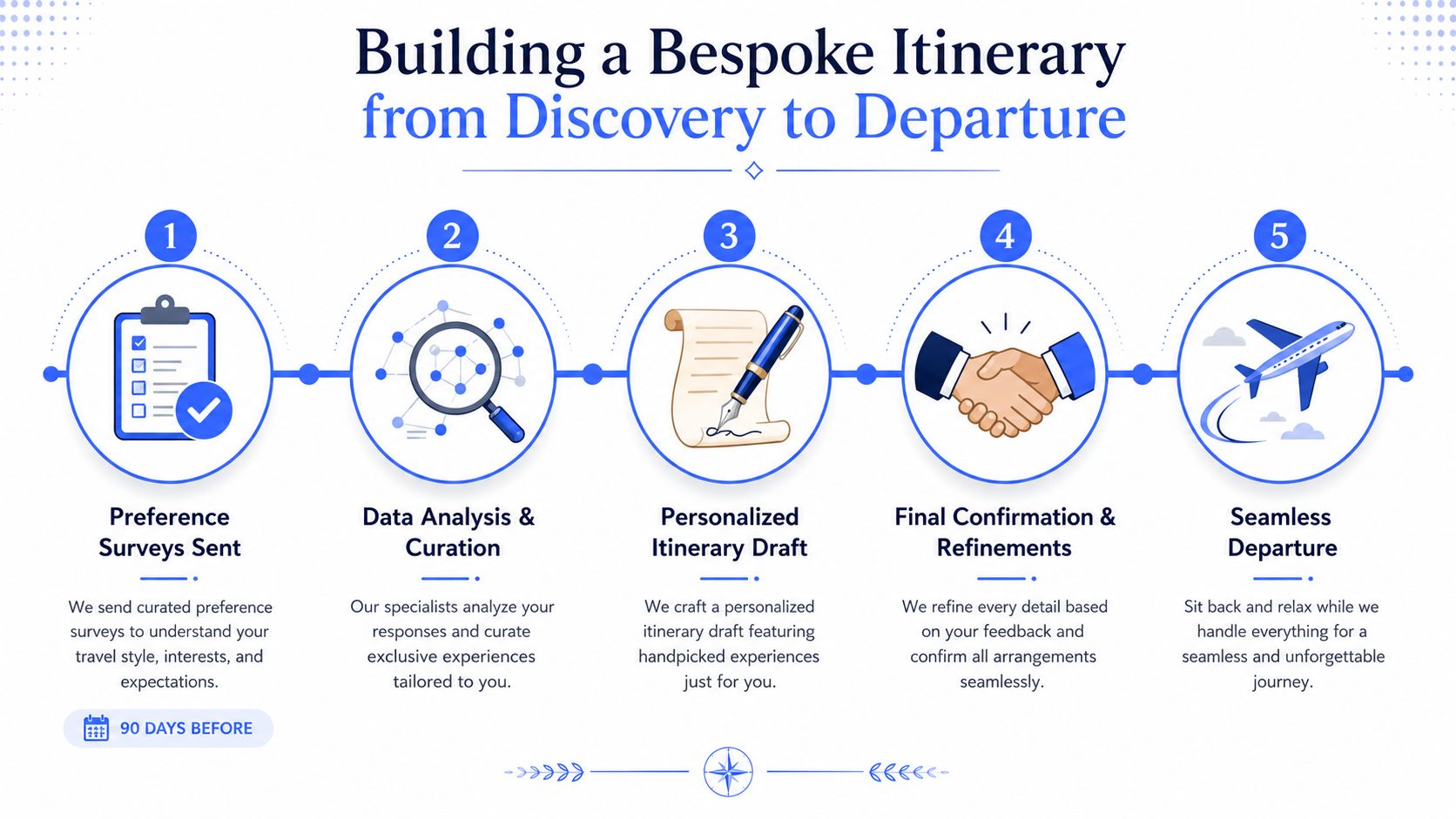
The itinerary should begin with people, not destinations. Before selecting restaurants or excursions, the planner needs to understand who is traveling, what each person expects, and which preferences are essential.
A useful workflow looks like this:
- Start with a structured discovery process. Ask about room location, bed configuration, dietary restrictions, allergies, mobility, preferred pace, privacy expectations, celebration details, and communication preferences. A good discovery call also identifies the group's shared purpose, whether that's a family milestone, executive retreat, or incentive reward.
- Create one master logistics matrix. Keep room assignments, arrival details, transfer needs, dining notes, activity choices, emergency contacts, and payment responsibility in one controlled document. The point isn't to collect information for its own sake. It's to prevent a dietary request from living in an email thread while the restaurant receives an outdated manifest.
- Build parallel tracks. If some guests want a demanding outdoor program and others prefer wellness, both options should feel intentional. They can share a transfer hub, meet for lunch, and reunite at the evening event. Cohesion comes from well-placed anchors, not identical schedules.
- Present curated options rather than an open-ended menu. A luxury travel process commonly begins with a discovery call and produces up to three customized proposal options before booking, covering preferences, budget parameters, must-haves, flights, accommodations, transfers, excursions, special requests, dietary accommodations, and group payments. This example of a bespoke luxury group planning model shows why proposal design is a service, not merely a quote.
- Confirm ownership before departure. Every supplier should have a named contact, every guest should know the relevant portion of the schedule, and the lead planner should retain the complete operational picture. Share personalized welcome information without exposing private details about other guests.
What should happen before the group leaves
Use staged confirmations rather than one final scramble. Reconfirm the major suppliers, then check the details most likely to cause friction, including names, room categories, meal notes, transfer sequencing, cancellation terms, and activity participation.
The planner should also establish a communication hierarchy. Guests need a convenient channel for routine questions, while the principal or executive assistant may need a separate route for sensitive requests. Suppliers should know who can approve changes and which decisions require client authorization.
For further perspective on designing high-touch journeys around personal preferences, see this guide to ultra-curated travel experiences. The underlying lesson is simple: personalization only works when it enters the operational system early enough to change the booking.
Balancing Privacy and Togetherness in Group Settings
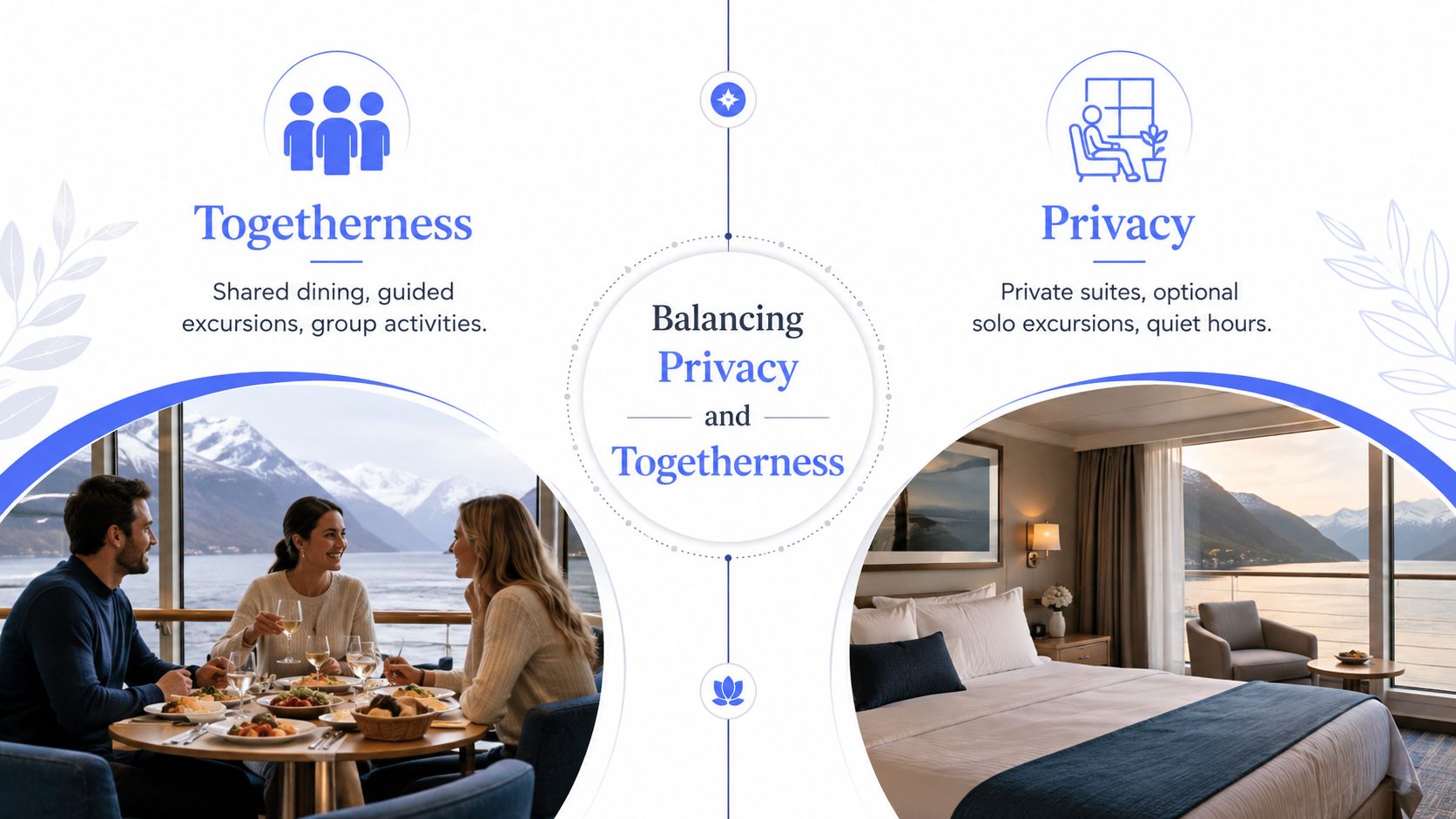
The central design problem in luxury group travel is not getting people into the same destination. It's deciding when they should be together and when they should be left alone.
A single itinerary appears efficient, but it usually creates the wrong kind of pressure. The most active guests feel constrained, quieter guests feel dragged along, and the person managing the trip spends the day negotiating exceptions. A modular schedule performs better because it gives the group shared milestones while allowing individual control around them.
Design the day around anchors
Shared dinners, a signature excursion, a welcome reception, or a closing event can create the emotional center of the trip. The hours around those anchors should remain flexible.
Togetherness works best forPrivacy works best forWelcome meals and destination dinnersEarly mornings and recovery timeSignature cultural experiencesSpa appointments and personal errandsGroup celebrationsSensitive calls and executive decompressionShort, well-paced transfersUnstructured afternoons
Room allocation supports the same balance. Adjacent suites can serve families who want easy contact, while standalone villas provide executives or public figures with greater separation. The property should receive clear instructions about access, visibility, housekeeping timing, and who may enter each space.
Properties such as Aman and Four Seasons are often considered for this kind of modular programming because their service environments can support private accommodation alongside shared dining and guided experiences. The important point isn't the brand name alone. It's whether the property can execute different guest rhythms without making the group feel divided.
The best group itinerary doesn't ask everyone to want the same thing. It makes different choices feel equally well planned.
Opt-in language matters. “The group hike departs after breakfast, and a private wellness schedule is available” feels generous. “Everyone should join the hike” creates social pressure and makes the alternative feel like a failure.
For a deeper look at designing travel across generations and preferences, explore this approach to multi-generational journeys. Luxury is preserved when guests have autonomy, while the group still shares enough meaningful moments to feel like a group.
The Case for Dedicated On-Site Concierge Support
Remote planning gets guests to the destination. On-site concierge support protects the experience after arrival, when weather changes, preferences evolve, and small delays begin to collide.
A hotel concierge serves the entire property. A dedicated group concierge serves one itinerary, one principal, and one set of priorities. That distinction matters when several guests arrive on different flights, a restaurant receives a last-minute dietary change, or a private charter becomes impossible because of weather.
What the dedicated role actually handles
The concierge should carry the live schedule, understand the guest hierarchy, and have authority to coordinate with hotels, drivers, guides, restaurants, and security teams. Typical responsibilities include:
- Arrival control: Monitor transfers, identify delays, and keep the welcome process discreet.
- Dining adjustments: Communicate allergies and substitutions across venues without asking guests to repeat themselves.
- Activity pivots: Replace a canceled excursion with an equally considered alternative.
- Guest requests: Arrange personal shopping, gifts, spa changes, child-related needs, or private appointments.
- Information control: Ensure the right person receives sensitive updates without broadcasting them to the whole group.
A published travel concierge package offers a dedicated expert available 24/7, remotely and on-site at selected venues, for €3,500 per week. A higher tier includes a team member accompanying the traveler throughout the stay, coordinating transportation, VIP venue seating, and on-site arrangements for €7,000 per week, as detailed by Fortune's coverage of bespoke travel concierge services.
On-site concierge service levelPublished costBest fitPrimary scopeDedicated remote and venue-based expert€3,500 per weekGroups needing continuous coordinationRequests, venue support, and remote assistanceAccompanying concierge team member€7,000 per weekTravelers requiring full-stay presenceTransportation, VIP seating, and on-site arrangements
Those are defined market examples, not universal rates. Pricing changes with destination, staffing, hours, security requirements, and the number of simultaneous movements.
The economic argument is practical. One missed connection, botched dinner, or poorly handled VIP request can affect the entire group's confidence. A dedicated professional reduces the number of decisions guests need to make and gives the lead client one accountable person rather than a chain of disconnected suppliers.
Details on the operational scope of concierge support are outlined through this dedicated concierge service. For demanding groups, real-time presence is not decoration. It's the layer that turns a carefully designed itinerary into a controlled experience.
Sustainability Choices That Actually Matter to Affluent Groups
Affluent travelers increasingly ask for sustainability, but they don't want vague promises inserted into a luxury itinerary. They want to know what the property, transport plan, suppliers, and community partnerships do.
WATG reports that nearly 40% of affluent travelers are willing to pay 30% to 50% more for sustainable features, a finding summarized in its luxury travel trends report. For group planners, that willingness creates room to choose better suppliers, but only when the benefit is concrete and verifiable.
Prioritize decisions with operational impact
Carbon-conscious air planning, efficient routing, and credible offset programs deserve more attention than decorative gestures. For a group, consolidating movements and reducing unnecessary repositioning can simplify the itinerary as well as reduce its footprint.
Property selection also matters. Look for transparent environmental standards, responsible water and energy management, credible certifications where relevant, and suppliers that can explain their practices. Avoid treating a reusable amenity as proof of a broader sustainability program.
Food can combine responsibility with pleasure. Farm-to-table sourcing, seasonal menus, and local culinary partnerships can create a stronger experience than imported ingredients selected only for familiarity. A private cooking session with a respected local producer may offer cultural depth while supporting the destination economy.
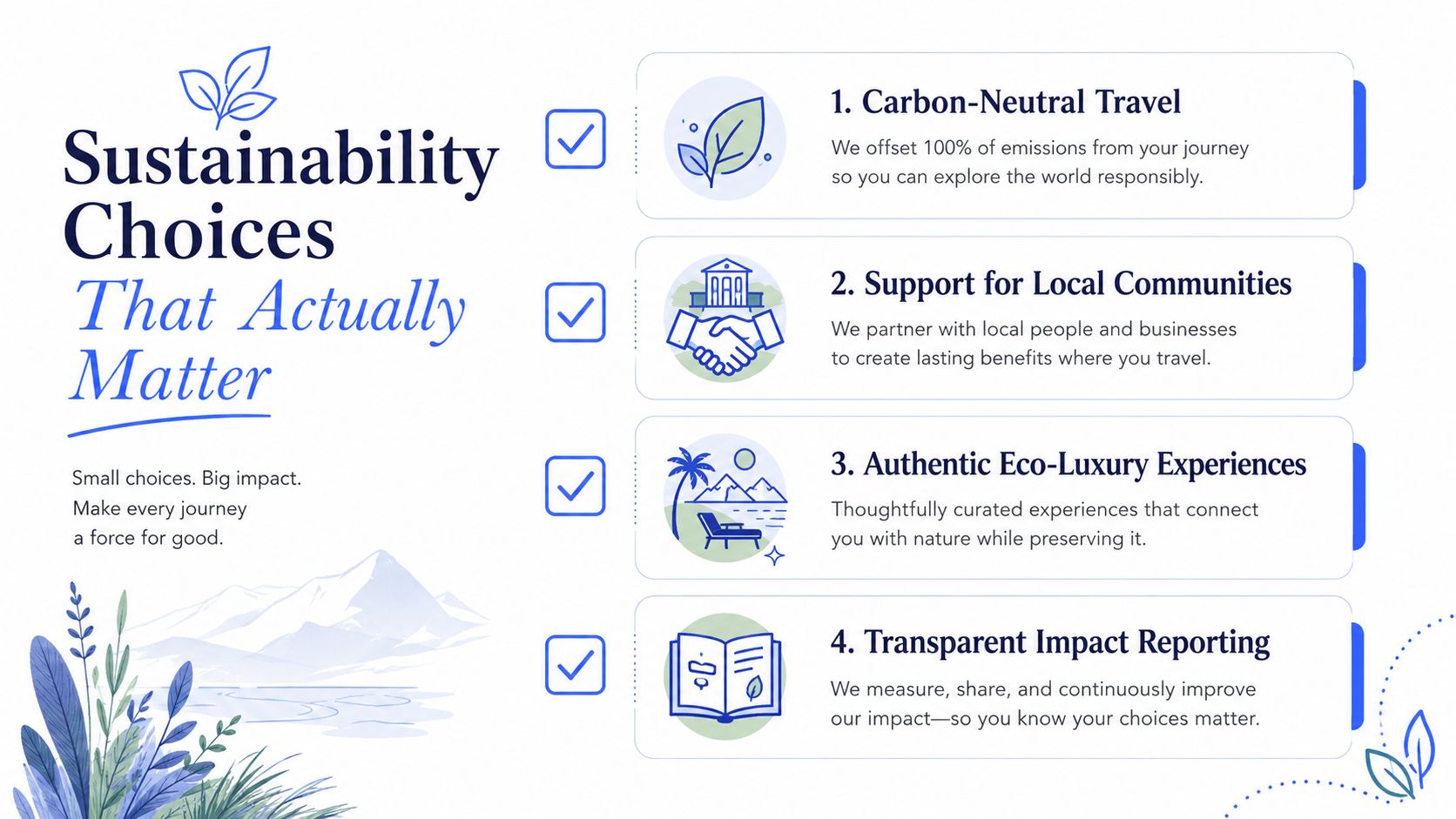
For corporate programs, ask suppliers for documentation that can be shared with internal stakeholders. Useful evidence may include sourcing policies, waste procedures, community partnerships, transport choices, and the property's environmental reporting. The standard should be proof, not polished language.
Sustainability works best when it enhances access and comfort. Guests can dine exceptionally well, meet local experts, stay in a thoughtfully operated property, and travel through a less crowded route without feeling that luxury has been removed. The planner's job is to identify the choices that improve both the guest experience and the destination's long-term resilience.
Real-World Execution: A Corporate Buyout Case Study
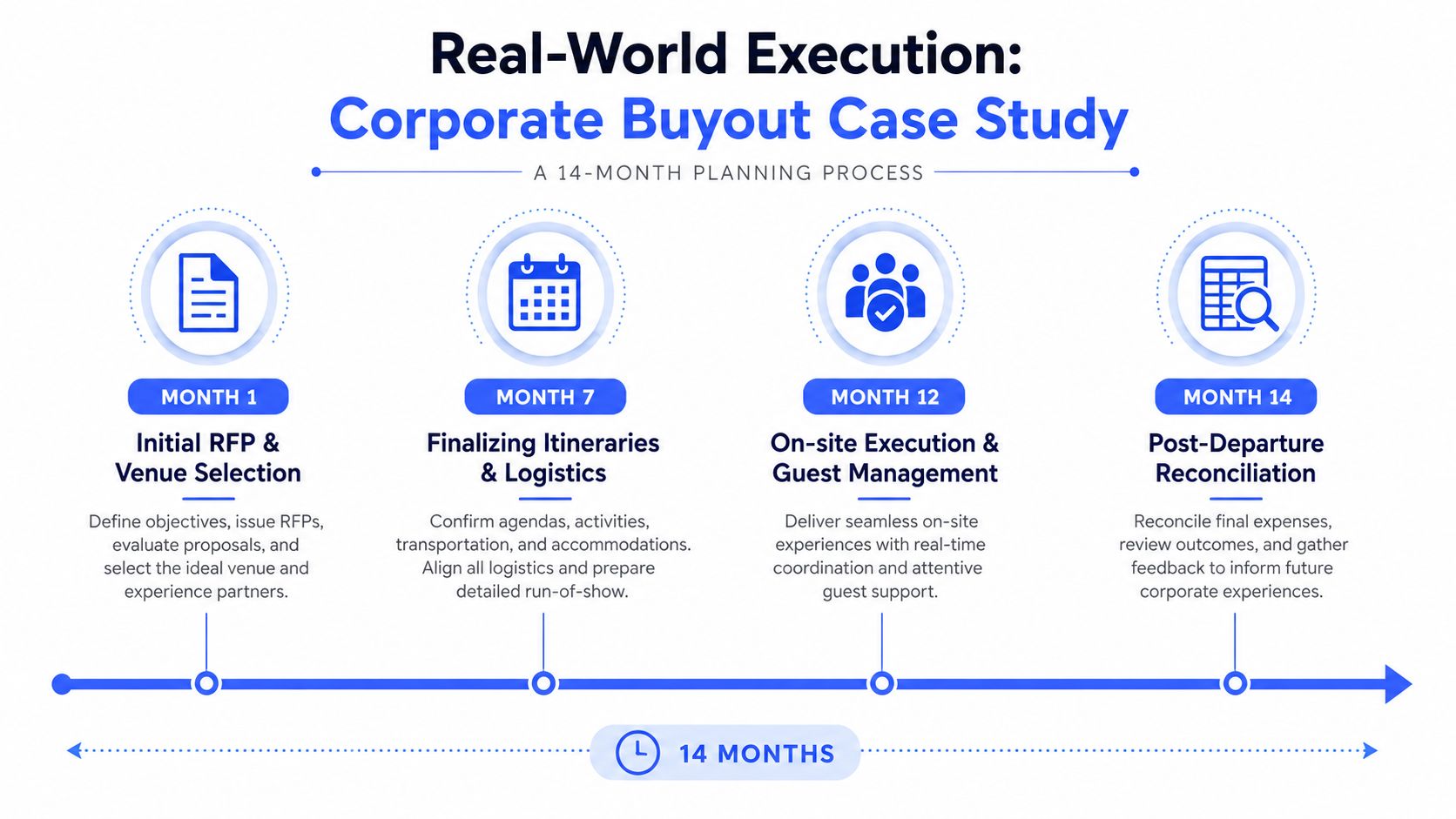
A recent corporate offsite buyout in Istanbul for 25 executives illustrates what successful coordination looks like when the details are handled before they become visible problems. The group arrived with different preferences and demanding schedules, yet the experience remained cohesive because the itinerary was built around the company's shared objectives while allowing room for individual needs.
The planning began with a discovery process that covered room preferences, dining restrictions, arrival patterns, meeting requirements, and personal requests. The property and local partners then received a consolidated operating plan rather than scattered instructions from multiple stakeholders.
How the experience stayed controlled
The schedule combined private transportation, coordinated meals, executive programming, and cultural experiences. Some guests wanted more time for exploration, while others needed quiet windows around work commitments. Instead of treating those differences as disruptions, the planning team placed them into the schedule from the beginning.
On site, the coordinator monitored arrivals, checked the rooming plan, confirmed restaurant details, and handled changes directly with suppliers. That presence protected the executives from operational noise. They could focus on the offsite rather than asking who had confirmed the next transfer or whether a dietary request had reached the kitchen.
Corporate buyouts are a recognized luxury group format, and group demand remains an important hotel revenue driver, as discussed in Hotels Magazine's coverage of group travel and hotel performance. The Istanbul example demonstrates the practical side of that model: a buyout succeeds when the venue, planner, transport team, and client operate from the same live plan.
The highlight wasn't a single dramatic reveal. It was seeing the executives relax because the day moved cleanly, requests were answered without escalation, and the group could enjoy Istanbul instead of managing its logistics. That is the standard worth pursuing in luxury group travel. Guests should remember the destination, the people, and the shared experience, not the operational effort required to make it happen.
For bespoke leisure, executive, corporate, entertainment, and group journeys, JustKeeps Travel designs every itinerary around guest preferences, precise logistics, and discreet support. Visit the team to discuss your group size, destination, room requirements, and competing priorities, then build a luxury experience that works for the whole party without forcing everyone into the same day.