

The Perfect 5-Day Amalfi Coast Itinerary

Why the Amalfi Coast Rewards a Slower Pace
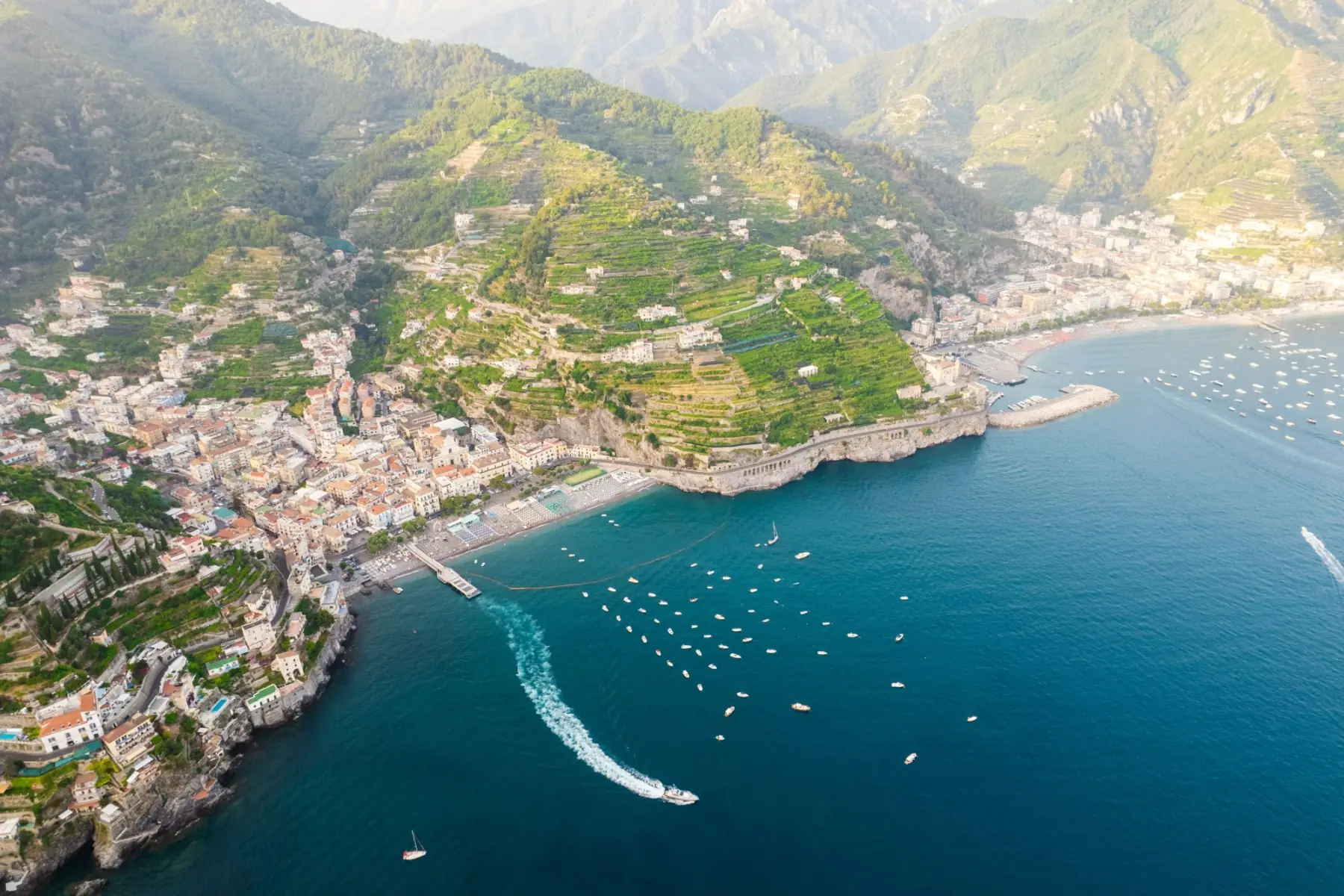
The Amalfi Coast rewards travelers who slow down. The coastal road between Positano and Amalfi is only about 10 miles long, but traffic and switchbacks can turn a short drive into a much longer transfer. That's exactly why most of the experiences worth having here happen by boat, on foot, or within walking distance of where you're staying.
This itinerary works well for a honeymoon or anniversary trip, but it's equally suited to a smaller group of friends or a family with older children. The structure below assumes a base in Positano with a day trip to Capri and a day exploring Amalfi and Ravello, which is the most efficient way to see the coast without spending half your trip in transfers.
Justkeeps Travel can coordinate private transfers, accommodation options, and local suppliers around an Amalfi Coast itinerary. Reservations and access remain subject to availability.
Day 1: Arrive in Positano
Positano sits on a near-vertical hillside, which means your hotel's elevation relative to the water matters more here than almost anywhere else in Italy. Properties closer to the marina put you steps from the beach and restaurants but often mean more stair climbing to reach the town center; those higher up trade convenience for quieter views and, usually, better sunset light on their terraces.
A private transfer from Naples International Airport takes roughly 90 minutes to two hours depending on traffic on the SS163, and it's worth booking rather than relying on the coastal bus, which can take three times as long during peak season.
Once settled, the best use of a first afternoon is simply walking: down Via Positanesi d'America toward Fornillo Beach, which is quieter than the main beach and a good spot to get oriented before the trip picks up pace. Save the bigger excursions for tomorrow. Day 1 is for resetting after travel, not packing in activities.
Highlights
- Private transfer from Naples (roughly 90 to 120 minutes)
- Boutique accommodation with sea-facing terrace
- An easy walk to Fornillo Beach to shake off jet lag
- Dinner at a cliffside table timed for sunset, generally between 8:00 and 8:30 PM in late spring and early autumn
Day 2: Private Yacht to Capri
Capri is 45 minutes from Positano by fast boat, and going by private charter rather than the public ferry changes the entire day. Ferries run on fixed schedules and drop you into Marina Grande with everyone else. A private boat lets you time the crossing around calmer morning seas, stop at coves along the way, and adjust the day if the Blue Grotto is closed, which happens often, since the grotto's low entrance means it shuts whenever tide or swell rules out the small rowboats that ferry visitors inside.
Good stops en route include the Faraglioni, the three limestone stacks off Capri's southeastern coast, and the Green Grotto near Punta Carena, a worthwhile alternative when the Blue Grotto isn't accessible.
On the island, Capri Town's boutiques are worth an hour, but the better use of afternoon time is the chairlift up to Monte Solaro. At just over 1,900 feet, it's the highest point on the island and gives you a clear view back across the Bay of Naples that photos rarely capture well from sea level. Lunch is best planned for Anacapri rather than the more tourist-heavy Capri Town, where tables turn over faster and prices run noticeably higher for comparable quality.
Day 3: Amalfi and Ravello
This is the day to trade beach time for architecture and gardens. Amalfi itself was a maritime republic that rivaled Venice and Genoa in the medieval period, and the Cathedral of Saint Andrew, with its striped Arab-Norman facade and the Cloister of Paradise beside it, is a reminder of how wealthy and well-connected the town once was.
From Amalfi, it's a 20-minute drive up to Ravello, which sits roughly 1,000 feet above the coastline and has a noticeably cooler, quieter feel than the towns below. Villa Rufolo's gardens hosted Wagner and later inspired part of Parsifal; Villa Cimbrone's Terrace of Infinity is arguably the single best view on the entire coast, framed by classical busts along a curved balustrade. Both villas are close enough to visit in the same afternoon, with Cimbrone better suited to late afternoon light.
If your schedule allows, Ravello in late June and July hosts its annual music festival, with performances staged in Villa Rufolo's gardens overlooking the sea. Worth checking dates against your travel window if live music appeals.
Day 4: Local Food and Cultural Experiences
The Amalfi Coast's food culture is built on a handful of specific ingredients: San Marzano tomatoes, buffalo mozzarella from the Sele plain, fresh anchovies from Cetara, and the region's famous Sfusato Amalfitano lemons, which are larger, less acidic, and more fragrant than typical lemons because of the coast's unique microclimate.
A private cooking class is the most useful way to understand this. Most run three to four hours and typically start with fresh pasta (scialatielli is the regional specialty) before moving into a full meal. Pairing this with a visit to a family-run lemon grove, many of which are terraced into the hillside and still hand-harvested, gives context for why limoncello made here tastes different from bottles found elsewhere in Italy: the lemon peel's oil content is simply higher.
Afternoon is best kept unstructured. A spa treatment, a slow walk along the coastal path between Positano and Praiano, or simply a long lunch are all reasonable ways to close out a trip that's had a fairly full pace up to this point.
Day 5: Relax Before Departure
Departure day logistics matter more here than in most destinations because of how traffic backs up on the coastal road. If your flight is in the afternoon, plan the transfer to Naples for at least three hours before departure, longer during July and August weekends.
Use the morning for whatever you didn't get to earlier: a final espresso at a café you liked, a last swim at a beach club, or simply repacking without rushing. Many travelers use this last morning to start thinking about where in Italy they'd like to go next. The Amalfi Coast tends to be a starting point rather than a one-time visit for people who love this kind of coastal, food-driven travel.
Best Time to Visit the Amalfi Coast
- April to June: the most reliable stretch for good weather without peak-season crowds; hydrangeas and wisteria are also in bloom, which matters more than it sounds for photos of Positano's staircases.
- September and October: sea temperatures stay warm into early October, and the towns noticeably empty out after the first week of September once Italian and European school holidays end.
- July and August: the liveliest months, but also the most expensive and the most likely to involve waiting for tables, parking, and ferry tickets. Worth it if you want the coast at full energy; worth avoiding if you'd rather have it quieter.
Luxury Travel Tips
- Book accommodation four to six months out for spring and fall travel, and six to nine months out for July and August.
- Private transfers are worth the cost difference on this coast specifically. The SS163's traffic and hairpin turns make shared or public transport meaningfully slower and less comfortable.
- Reserve dinner tables at well-known restaurants as soon as dates are confirmed; arriving without a booking during peak season is unreliable at best.
- A private boat charter, rather than the public ferry, is the difference between a rigid schedule and a day that can adapt to weather, sea conditions, and your own pace.
- Five days is close to the minimum for seeing Positano, Capri, Amalfi, and Ravello without feeling rushed; fewer than that usually means cutting one of the four.
How Justkeeps Travel Can Help
Every traveler's priorities on this coast are different. Some want the food and wine focus, others want the boat time, and others are here mainly for Ravello's gardens and quiet. Justkeeps Travel builds itineraries around those priorities rather than a fixed template, and typically arranges:
- Hotel selection based on your preferred location, elevation, and pace
- Private yacht charters, matched to sea conditions and your itinerary
- Chauffeur-driven transfers along the coastal road
- Restaurant reservations secured ahead of peak season demand
- On-the-ground concierge support throughout your stay
- Multi-region Italian itineraries for travelers extending beyond the Amalfi Coast
The Amalfi Coast is easy to visit poorly: too rushed, too reliant on public ferries and buses, too focused on the three or four towns everyone photographs. It's much better with a bit of structure behind it: the right home base, transportation that doesn't eat half your day, and enough flexibility to let a sea-view lunch run long if it's going well.
Five days, split between a coastal base, an island day, and a cultural day inland, is enough to see the coast properly without feeling like a checklist. The details (which hotel, which boat, which restaurant, on which day) are where the trip either comes together or doesn't.
Planning Your Own Amalfi Coast Escape?
Contact Justkeeps Travel to build a personalized itinerary around your pace, interests, and travel dates. Our advisors handle accommodation, private transfers, and reservations so the planning stays out of your way and the trip itself doesn't.
Continue with our Amalfi Coast and Rome guides to place these five days inside the wider trip. Our luxury leisure travel planning coordinates hotels, private drivers, boats, guides, and dining throughout Italy.
How many nights are enough for the Amalfi Coast?
Five nights is a useful minimum for a first visit: enough for a coastal base, a Capri day, Amalfi and Ravello, and one slower day. Fewer nights usually means cutting the water day or spending too much of the trip in transfers.
Where should we stay on the Amalfi Coast?
Positano is convenient for a first itinerary and boat departures, while Amalfi can feel more central for the eastern coast. Ravello offers elevation and quiet, and Praiano can suit travelers who prefer a calmer base. Compare stairs, road access, evening plans, and the exact sea view before choosing.
Is a private boat worthwhile on the Amalfi Coast?
A private boat makes the day more flexible and turns the coastline into part of the experience. It can allow stops for swimming, a different arrival into Capri, and a weather-aware schedule. Sea conditions still matter, so keep a land-based alternative in reserve.
When is the best time to visit the Amalfi Coast?
Late spring and early autumn generally balance pleasant weather, open-season experiences, and less pressure than July and August. Summer is lively and beautiful but brings higher demand, heavier traffic, and earlier booking deadlines for hotels, boats, and restaurants.
How do you get from Naples to Positano?
A private transfer from Naples International Airport takes roughly 90 minutes to two hours, depending on traffic. It is worth booking rather than relying on the coastal bus, which can take three times as long in peak season. The coastal road between Positano and Amalfi is only about 10 miles, but switchbacks slow it down. Read our Positano and Capri guides.