

Luxury Japan Tours: A Bespoke Travel Planning Guide
You've chosen the ryokan, saved the restaurants, and circled the private cultural experiences that would make Japan feel exceptional. Then the replies arrive: your preferred suite is waitlisted, the kaiseki counter won't accept an overseas booking, and the private guide is unavailable on the only day your route passes through Kyoto.
That's the reality of planning luxury Japan tours in 2026. Japan offers extraordinary hotels, ryokan, cuisine, art, and hospitality, but the most valuable components are often limited by room count, seating capacity, geography, or personal relationships. A successful itinerary is therefore a logistics exercise before it becomes a sightseeing plan.
Table of Contents
What a Luxury Japan Trip Actually Looks Like in 2026
A couple planning nine months ahead for Tokyo and Kyoto recently shortlisted Aman Tokyo, Hoshinoya Kyoto, and several celebrated ryokan. On paper, the trip looked straightforward. In practice, their preferred rooms were already waitlisted, their restaurant list depended on fixed counter seating, and the dates they had chosen overlapped with intense demand.
The mistake would have been to treat those properties as interchangeable. They aren't. A city hotel can sometimes be replaced without changing the structure of a trip. A small ryokan with a particular garden, bathing experience, or dining program may be the reason to route through an entire region.
Practical rule: Secure the irreplaceable elements first, then build the route around what is actually confirmed.
The scarce assets that shape the journey
The most constrained parts of a high-end Japan itinerary usually include:
- Ryokan suites: Small properties may have only a handful of rooms, and the best suites can disappear before the wider itinerary is settled.
- Kaiseki counters: A restaurant's quality doesn't create more seats. A counter has a fixed capacity, and some establishments don't accept direct overseas reservations.
- Private cultural access: Temple, garden, workshop, and tea experiences depend on local permissions and specialist hosts.
- Experienced guides: A licensed guide with strong language skills, cultural fluency, and the ability to adapt privately isn't available on every date.
- Transfers: Rural ryokan, art islands, ski regions, and onsen towns require careful coordination between trains, ferries, private vehicles, and luggage handling.
The working playbook is simple in principle. Establish the supply reality, choose the season according to the experience rather than the postcard, reserve the rooms that anchor the route, then layer in dining and private touring. Finally, select an advisor who can offer more than polished recommendations, particularly when the first-choice inventory has already gone.
A luxury Japan trip should feel unhurried once you arrive. That calm is created before departure through disciplined sequencing, fallback options, and someone responsible for the details.
The Anatomy of a High-End Japan Journey
Luxury in Japan isn't defined by a high nightly rate alone. It's defined by tight supply, relationship-dependent access, and careful layering. The strongest itineraries combine urban hotels, traditional ryokan, private touring, reserved dining, and well-coordinated transfers without making the traveler feel the machinery underneath.
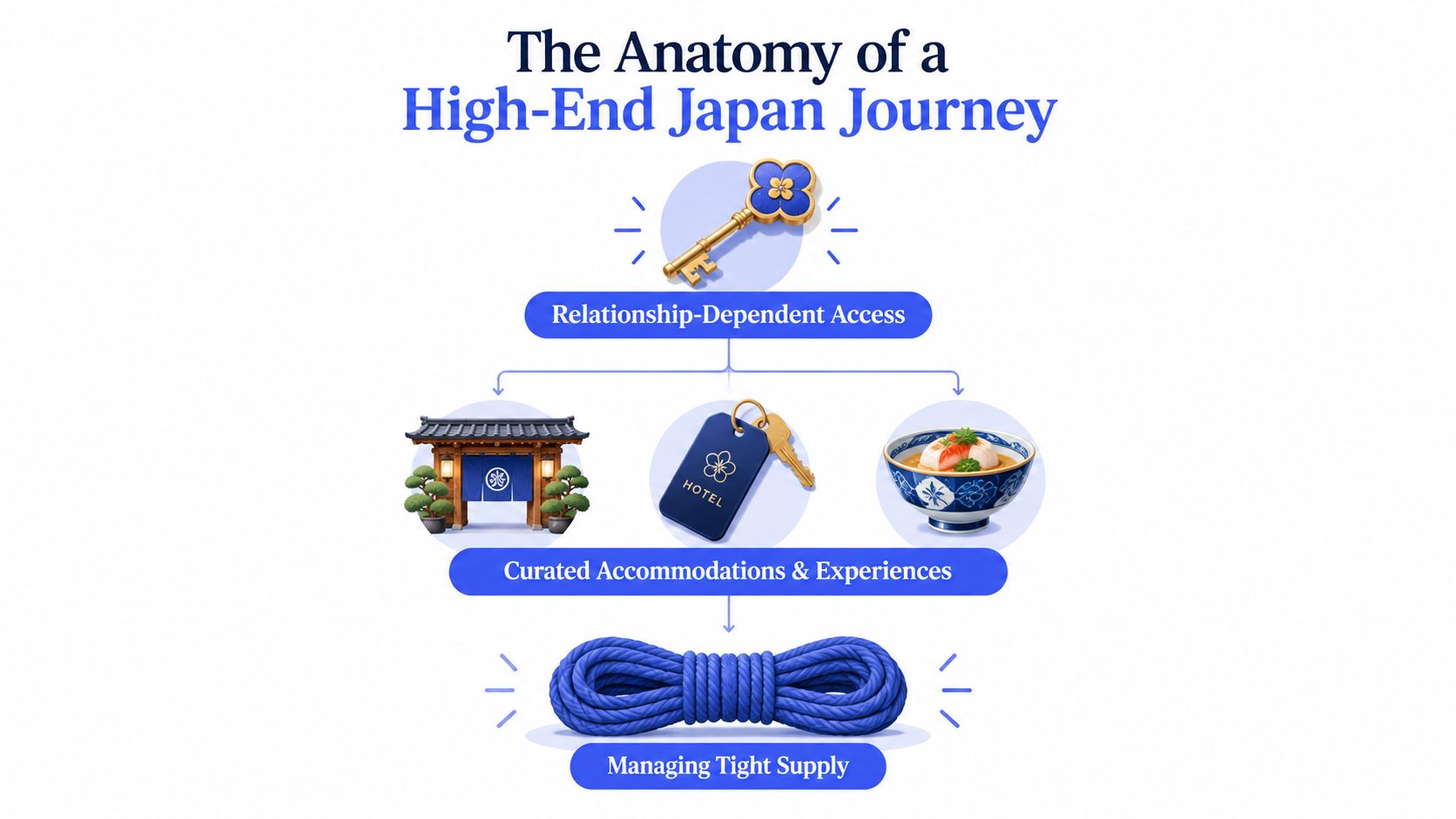
Build the journey in layers
Start with the urban leg. Tokyo provides the broadest range of contemporary dining, shopping, galleries, architecture, and cultural neighborhoods. Osaka can work as an alternative opening or closing point when food, efficiency, and access to western Japan matter more than a long Tokyo stay.
Then introduce the ryokan leg. Hakone is convenient for travelers who want an onsen retreat within an established route. Kyoto offers traditional architecture and cultural depth, while more remote onsen regions can provide greater quiet and a stronger sense of place. A first-rate ryokan isn't just accommodation. It combines the room, bathing, meals, service rituals, and setting into one complete experience.
Private-guide days should follow the traveler's interests, not a generic checklist. A knowledgeable guide can turn a temple visit into a conversation about design, religious practice, gardens, or restoration. The same principle applies to food. A market visit, sushi counter, tea setting, or craft workshop works best when it connects to the traveler's curiosity.
For a useful framework on shaping a trip around personal priorities, see this guide to a bespoke travel itinerary.
Protect the rhythm
The sequence matters. Several dense city days followed by a remote ryokan can feel restorative, while placing a demanding cultural program immediately after a long transfer can make a beautiful experience feel like an obligation.
Keep travel days visible in the plan. A private car may be worthwhile for luggage, rural access, or a multi-stop day, while the Shinkansen is often the most elegant option between major cities. Reserve restaurant and private experiences only after the accommodation pattern is stable, because the confirmed location determines whether a booking is convenient or exhausting.
Why Premium Inventory in Japan Is Structurally Tight
Japan feels difficult to book at the top end because the supply is narrow. Independent industry analysis identifies 56 luxury hotels nationally and notes that Tokyo luxury rooms account for 9% of total room stock, compared with 26% in New York and 15% in London. Those figures come from Ken Research's analysis of Japan's luxury hotels and resorts market.
That shortage becomes more pronounced when travelers want a specific combination: a large suite, a particular view, a private bath, a traditional design, a certain dining style, and dates during a popular season. A hotel may have availability while the room category you want doesn't.
Demand also has an unusually high economic impact. In 2019, only about 1% of international arrivals to Japan spent at least 1 million yen during their stay, yet that group generated 11.5% of total inbound tourism expenditure, as reported by TTG Asia. The lesson is practical: premium travelers matter disproportionately, so sought-after accommodation and experiences attract serious competition.
Translate scarcity into booking decisions
The constraints aren't limited to hotels. A five-key ryokan may have fewer rooms than a city property, a kaiseki counter has fixed seating, and specialist cultural guides can be booked across several private groups. Tokyo and Kyoto also concentrate much of the country's luxury hotel supply, which creates pressure during peak periods and limits the number of easy substitutes.
| Component | Supply Profile | Typical Booking Window | Scarcity Pressure |
|---|---|---|---|
| Luxury city hotels | Concentrated in major urban districts | Book early for preferred categories | High for suites and peak dates |
| Premium ryokan | Small room counts and highly individual properties | Start with the ryokan before routing | Very high |
| Kaiseki counters | Fixed seating and limited reservation channels | Secure as soon as dates are firm | Very high |
| Private cultural access | Dependent on permissions and specialist hosts | Coordinate after route confirmation | High |
| Private vehicles and guides | Limited by geography and staffing | Reserve with accommodation planning | High in popular seasons |
Budget should follow scarcity. I'd rather see a traveler reserve the right ryokan, guide, and dining access than spend heavily upgrading a city room that offers a similar experience elsewhere. Flexing arrival dates, changing the order of cities, or accepting a less famous property can preserve the trip's character without turning every booking into a compromise.
Choosing the Right Season for Your Trip
Japan's premium seasons reward different kinds of travelers. There's no universally superior window, but there is a wrong season for a particular priority. Cherry blossoms suit first-time visitors who want iconic scenery, while winter is more compelling for skiers and travelers who value snow, onsen, and a quieter visual atmosphere.
| Season | Window | Lead Time | Signature Experience | Best For |
|---|---|---|---|---|
| Cherry blossom | Late March to early April | Start planning well ahead | Sakura viewing, seasonal cuisine, temple gardens | First-time visitors |
| Summer | July through August | Plan early around festivals | Festival culture, mountain retreats, cooler highland escapes | Repeat travelers and culture-focused guests |
| Autumn foliage | Late October to mid-November | Reserve popular regions early | Koyo, gardens, seasonal kaiseki | Scenic and culinary travelers |
| Winter | January to February | Secure ski and ryokan inventory early | Powder snow and onsen | Ski enthusiasts and wellness travelers |
Match the season to the traveler
Cherry blossom is visually powerful but operationally unforgiving. Bloom timing can shift, weather can interfere, and premium reservations may carry restrictive conditions. Ask about cancellation terms and insurance before paying for nonrefundable rooms or experiences.
Summer works when you want movement and regional contrast. Pair a city with mountain areas, lake districts, or a festival rather than forcing a conventional sightseeing circuit into humid weather. A strong guide can also shift the day earlier and use indoor cultural visits during the warmest hours.
Autumn is my preferred compromise for travelers who want beauty, food, and a comfortable touring rhythm. Foliage timing varies by elevation, so a route with different altitudes gives you more flexibility than relying on one famous garden.
Winter is the clearest choice for ski travelers, but it also suits couples who want a restorative itinerary. Combine a Tokyo opening with a snow destination and finish at an onsen ryokan. The route feels deliberate rather than like a collection of separate bookings.
Sample Bespoke Itineraries by Traveler Type
A bespoke itinerary begins with the traveler's reason for going, not with a list of famous hotels. These examples show how the route changes when the priority is cultural depth, food, or snow.
The first-time couple
A 10-day first visit can open in Tokyo with Aman Tokyo, then move toward Kyoto for a slower traditional stay in a private machiya. The city leg provides design, shopping, contemporary dining, and an easy introduction to Japan's pace. The machiya changes the texture of the trip, giving the couple a residential setting rather than another polished tower.
In Kyoto, I'd reserve private temple and garden viewings where available, then build a Gion evening around a kaiseki dinner and a tea master in a private residence. The point isn't to fill every day. It's to create contrast between the city's visual energy, the quiet of a traditional house, and the concentration of a formal meal.
The route works because the travelers don't repeatedly unpack for short stops. A private vehicle can manage luggage and door-to-door transfers, while the Shinkansen handles the major intercity movement efficiently. A useful reference point for this style of journey is JustKeeps Travel's 10-day Japan journey.
The culinary traveler
A 14-day food-led itinerary should avoid treating Tokyo and Kyoto as the entire culinary map. I'd route through Tokyo, Kanazawa, Naoshima, and Kyoto, with a ryokan stay in Kaga to connect cuisine with regional produce, craft, and hospitality.
Tokyo days could combine a carefully selected sushi counter with a private visit to Toyosu and a focused exploration of neighborhood food culture. Kanazawa adds Omicho Market, seafood, lacquerware, gardens, and refined local cuisine. Kaga then changes the pace. Dinner at the ryokan becomes part of the destination rather than an afterthought.
Naoshima gives the itinerary visual relief through contemporary art, architecture, and island scenery. Kyoto closes the journey with kaiseki, tea, and traditional neighborhoods. The transfer plan should account for luggage forwarding, limited island schedules, and the fact that the most memorable meal may happen at the ryokan itself.
The winter ski traveler
A 9-day winter journey can begin in Tokyo, continue to Niseko or Hakuba, and finish at an onsen ryokan. The opening nights absorb jet lag and give the traveler access to restaurants and shopping before the mountain portion.
Niseko suits travelers seeking a highly developed ski environment and broad resort infrastructure. Hakuba offers a different mountain setting and can work well for travelers who want a more varied valley experience. Either choice requires the ski stay to anchor the itinerary, not sit awkwardly between city reservations.
End with an onsen ryokan rather than flying straight home from the slopes. The final transition gives the body time to recover, replaces ski logistics with attentive service, and lets the trip finish with Japanese cuisine and bathing culture. Keep the last transfer simple, with luggage support and a clear airport connection.
The Concierge Layer and What It Really Buys You
A concierge isn't valuable because the word sounds exclusive. The value comes from handling requests that ordinary booking channels can't reliably solve. A competent booking agent can confirm flights, reserve standard hotel rooms, and suggest broad sightseeing. That may be enough for a flexible traveler with straightforward preferences.
A high-end Japan concierge earns attention when the request is specific, scarce, and connected to several other moving parts.
Where specialist intervention matters
The useful capabilities include:
- Hotel negotiation: Checking hard-to-get rooms or holding suitable options at properties such as Aman Tokyo, Hoshinoya, and the Imperial when standard channels show limited availability.
- Restaurant access: Pursuing Michelin-starred kaiseki counters and sushi restaurants that don't routinely accept foreign bookings.
- Private cultural arrangements: Requesting private temple, garden, tea, or craft access when the venue permits it.
- Transport choreography: Coordinating Shinkansen cars, private vans, station greeters, luggage movement, and rural transfers.
- Live recovery: Rebuilding a day when weather, illness, closures, delays, or a missed connection disrupts the original plan.
The last point is often underestimated. Japan is highly organized, but no destination is immune to disruption. The person who knows the full itinerary can make a better decision than a series of disconnected vendors because they understand what can be moved, what must be protected, and which experience matters most to you.
The right advisor doesn't just find a reservation. They protect the sequence around it.
Advisor fees in the 5% to 10% range can be rational when the trip depends on scarce rooms, complex routing, private access, extensive coordination, or active support during travel. They're harder to justify for a simple city stay, standard transfers, and restaurant reservations that you could easily make yourself. Ask what the fee covers, whether supplier commissions reduce it, and what support remains available after the itinerary is paid.
How to Choose the Right Advisor for the Trip
Choose an advisor by operational proof, not brochure polish. A beautiful portfolio can show taste, but it doesn't prove that the person can secure a ryokan suite, reach a restaurant that refuses online bookings, or rebuild a route when the preferred inventory disappears.
Ask direct questions before committing:
- Specific access: Do you have established relationships with the exact ryokan and hotels I'm considering?
- Peak-period capacity: Can you block or request multiple suitable rooms when my first category is unavailable?
- Restaurant reach: How do you handle counters that don't accept direct overseas reservations?
- Response coverage: Who answers during the trip, and what happens outside standard office hours?
- Ownership: Will one named advisor manage the file from discovery through the return flight?
- Re-engineering experience: Can you describe an anonymized example where a route changed after inventory tightened?
- Privacy controls: Who sees my information, and how do you brief hotels, guides, and drivers about discretion?
The answers reveal whether you're dealing with an advisor or a reseller of templates. A strong advisor asks questions in return. They'll want to understand your preferred pace, dining habits, mobility, tolerance for early starts, previous Japan experience, and what you found memorable or disappointing on past trips.
Access must come with judgment
Direct relationships matter, but access without judgment can produce an expensive itinerary that feels crowded and generic. Your advisor should be willing to reject a famous property if it creates poor routing, question a restaurant choice that doesn't fit your preferences, and recommend a less obvious region when it better serves the trip.
The definition of a travel advisor is explored in this guide to advisor-led planning. For travelers comparing firms, JustKeeps Travel offers bespoke itinerary design, hotel and villa coordination, private guides, transfers, dining support, and year-round concierge assistance, with a dedicated advisor relationship and 24/7 support while clients are traveling on arranged itineraries.
Putting It All Together Your First Steps
Start with three anchors:
- The unforgettable experience: Choose the moment that would justify the journey, whether that's a private tea setting, a particular ryokan, a ski week, or an art-focused stay on Naoshima.
- The supporting season: Pick the window that makes that experience strongest, then acknowledge its weather and availability risks.
- The logistical frame: Select the cities and regions that allow the experience to fit naturally rather than forcing it into a crowded loop.
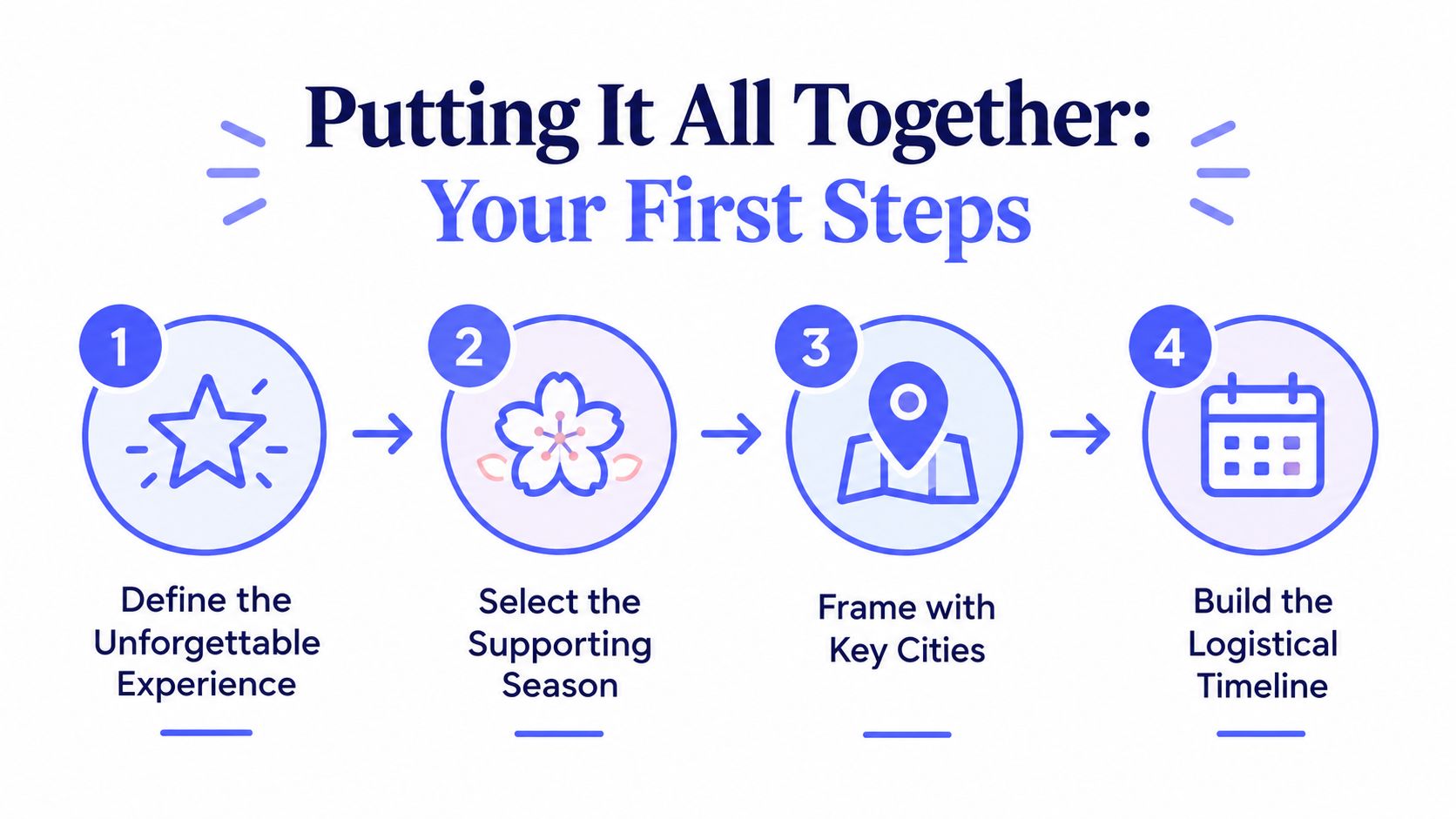
Sequence the work
After the anchors, map the rhythm. Mark city nights, travel days, recovery time, and the properties that need priority because their inventory is especially constrained. Aman, Hoshinoya, leading city hotels, and sought-after ryokan should be addressed before you spend time building a detailed restaurant calendar.
Once accommodation is confirmed, add dining and private experiences. Restaurants and guides need reliable dates, and your final location determines whether a booking is convenient. Build a buffer night in Tokyo at one or both ends when your international flights, seasonal conditions, or complex internal connections make missed links costly.
Use a shared planning document so your advisor, traveling companions, and household staff can see revisions, open questions, and confirmed bookings in one place. Lock internal travel, including Shinkansen segments and private car movements, before promising exact arrival times to guides or restaurants.
Review visa requirements, payment routing, cancellation rules, and travel insurance for high-value bookings early. Premium travel feels effortless only when the underlying commitments are understood and protected.
The following video can provide another visual planning reference:
The first move is to identify the irreplaceable experience. The second is to secure the room or ryokan that makes it possible. The third is to build every train, guide, meal, and transfer around confirmed inventory rather than hopeful availability.
JustKeeps Travel designs bespoke Japan itineraries around scarce accommodation, private guides, rail and car transfers, cultural access, and carefully sequenced dining, with concierge support while you travel. If you want a Japan journey built around what can be secured, visit JustKeeps Travel to begin a planning conversation.