

Sicily Destination Guide

Sicily Is a Country That Happens to Be an Island
Sicily is not an island you tour; it is a small country you choose a piece of. Greek temples on one coast, Norman mosaics on the other, an active volcano in between, markets that still sound faintly of North Africa, and driving distances that punish a greedy itinerary. The travelers who come home converted are the ones who picked a side, settled in, and let Sicily come to them. That choice, east or west, is the first conversation we will have with you.
East or west: the one decision that shapes everything
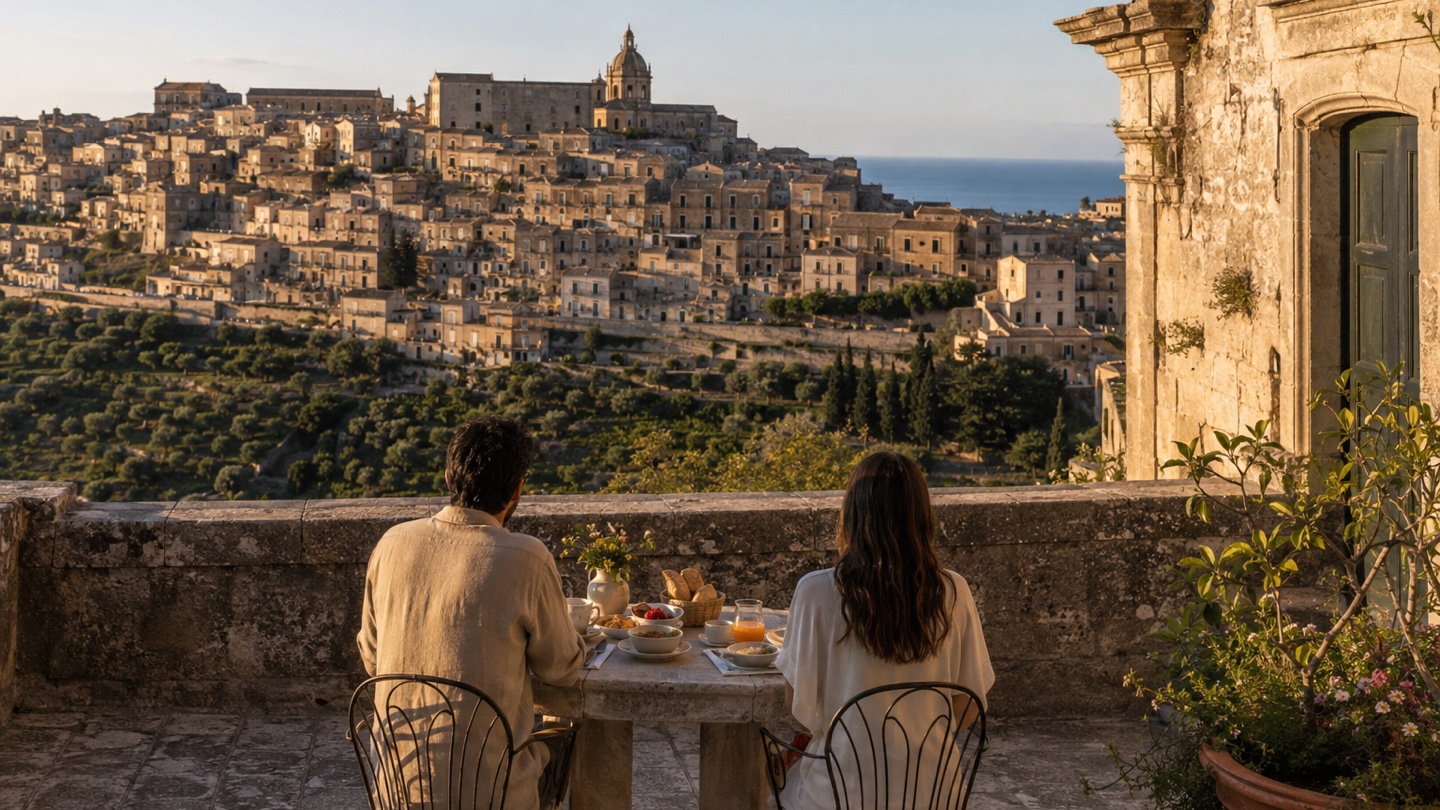
The east is Taormina's terraces, Mount Etna's vineyards, Syracuse and Ortigia, and the honey-colored baroque towns of the southeast, Noto above all. The west is Palermo's markets and Norman gold, the temple at Segesta standing alone in its valley, Monreale's cathedral, and the slower beach towns of the north coast. With ten days you can have both, crossing the island once and never backtracking. With a week, choose one coast and do it justice; the drive between the two eats the better part of a day each way, and Sicily punishes anyone who treats it as a checklist.
When to come, and when the interior turns to a furnace
May, June, September and October are the island at its best: warm sea, open country roads, and ruins you can walk at a humane hour. July and August work on the coast if you accept the scene, but inland Sicily regularly passes a hundred degrees, and the Valley of the Temples at Agrigento at noon in August is an endurance event, not a pleasure. The sea stays swimmable well into October, which is also harvest on Etna, when the wineries on the volcano's north slope are at their most alive and lunch among the vines becomes the day's main event. City hotels run year-round; many coastal properties close from November to March, so a winter Sicily is a Palermo and Catania trip, which has its own charms.
Where to stay
San Domenico Palace in Taormina, a Four Seasons hotel set in a fourteenth-century convent, is the island's marquee stay, and since its television close-up it books like one: for peak summer weeks, count on reserving close to a year out. In Palermo, Villa Igiea, a Rocco Forte hotel, is an Art Nouveau palazzo on the harbor that makes the city's case better than any guidebook. Rocco Forte's Verdura Resort on the south coast is the answer for families and golfers who want space, sand, and their own stretch of shoreline.
If you have the appetite, we can add the Aeolian Islands by boat from the island's northeast corner, or finish with two city nights in Palermo so the trip ends on street food and mosaics rather than a highway. Sicily also pairs well with the Amalfi Coast or Rome on the front end, since Catania and Palermo both connect easily through the mainland.
Planning brief
Choose eastern or western Sicily before choosing hotels; a focused route protects time for food, landscape and history.
- Best suited to: culture and archaeology; food and wine; coast and countryside; longer Italian journeys.
- Decisions to settle early: east versus west; season; driving time; hotel sequence; Etna or archaeological priorities.
- Arrival and routing: Catania suits many eastern routes and Palermo many western ones; airport, driver and route should be chosen together.
Start with your ten days
Tell us what pulls you here, the temples, the volcano, or the table, and how many days you can give it. We will come back with a side of the island, a pair of bases, and a route that never asks you to drive after dinner.
See one way Sicily can join a longer romantic route in our Greece and Italy honeymoon itinerary. Our luxury leisure travel planning connects the flights, private drivers, hotels, and pace across the full trip.