

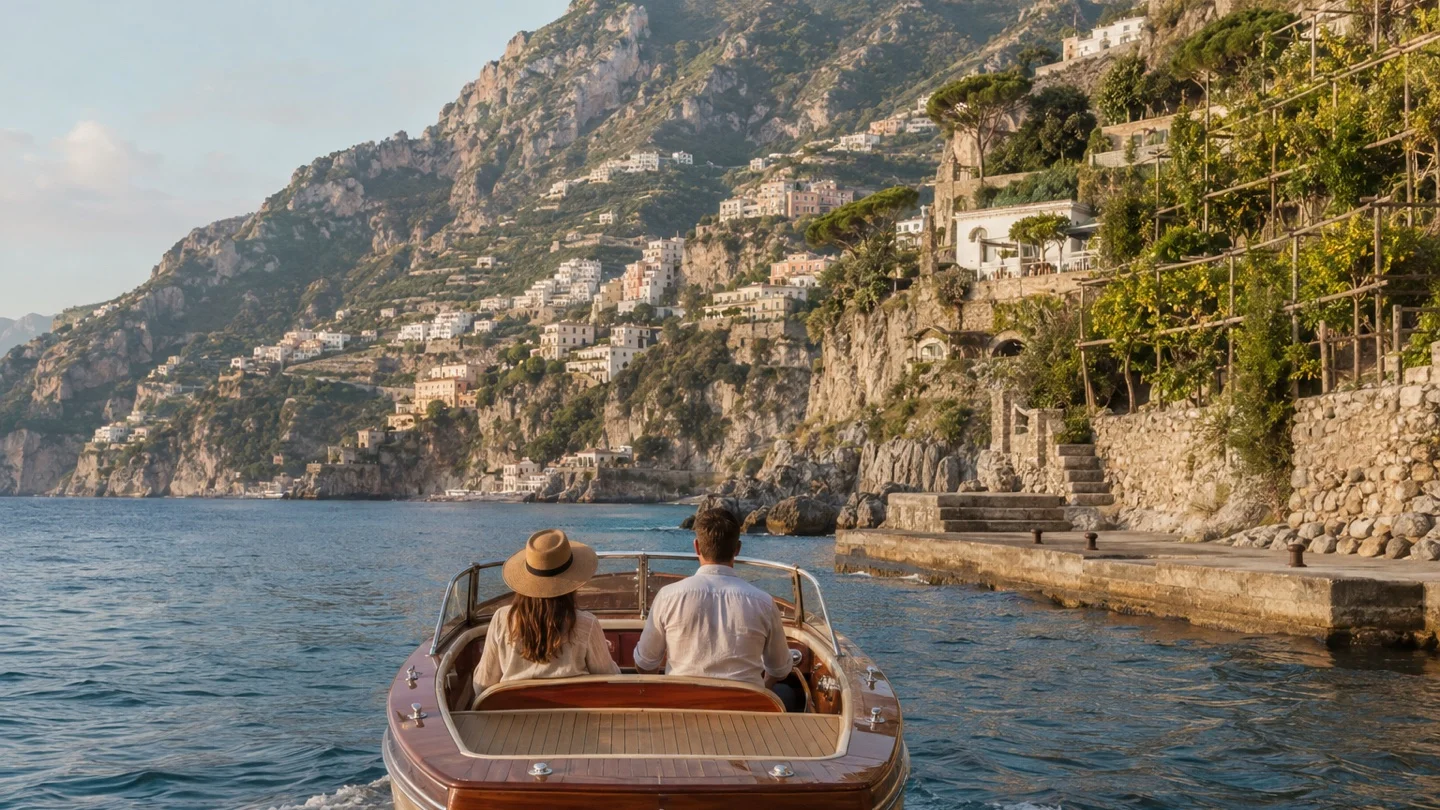

Amalfi Coast
The Amalfi Coast Is A Road Problem
Thirty miles of vertical Italy strung along one narrow road. The villages are stacked rather than spread: Positano tumbles down to its beach, Amalfi folds into a ravine, Ravello sits a thousand feet above both in cooler air with the best view of either. The scenery takes care of itself. What separates the trips people rave about from the ones that end in traffic is how you move along that coast, and in which month.
Almost everyone plans this place backwards. They choose the hotel from a photograph, then discover the road. Choose the month and the method of movement first, and the rest of it falls into line.
Know before you go
- Fly into Naples Capodichino, code NAP. Positano is about 61km and ninety minutes by private car, Amalfi about 68km and a hundred minutes, at roughly 180 to 220 euro either way. The Curreri coach runs to Sorrento for 13 euro and Positano for 20. One hard date to know: Naples airport closes for the whole of November 2026 to rebuild its runway.
- Trip length five nights on the coast. Four is the floor and it costs you either Capri or Pompeii. The road is slow enough that a single outing eats a day, so this is a base, not a day trip from Rome.
- Best months late May into mid June, then mid September into the first week of October. June averages 24C with only 30mm of rain, which is the best ratio of weather to crowds all year. September holds much the same daytime warmth with the sea at its warmest of the season, but rainfall climbs to 91mm and October to 139mm.
- The trap that ruins itineraries assuming you can drive. On the SS163 between Vietri sul Mare and Positano, ANAS runs alternating plate restrictions from 10:00 to 18:00. In 2026 that applied every single day through August and September. On even dates, plates ending in an even digit are banned; on odd dates, the odd ones. Hotel guests are exempt only for arrival and departure.
- Move by water the coast is faster and cheaper by sea than by road. Travelmar runs Amalfi to Positano for 10 euro in twenty five minutes. Positano to Capri is 28 to 30 euro for forty to fifty minutes. Ferries run roughly April to early November, then stop for winter.
- Currency and real prices the euro, and the sightseeing is genuinely cheap. Villa Rufolo in Ravello is 8 euro, the Amalfi cathedral complex 4 euro, Pompeii 20 euro. Cards work almost everywhere, but carry 50 to 80 euro because beach vendors and small bars still refuse them.
- Entry no visa for US, UK, Canadian and Australian passports, ninety days in any hundred and eighty. The Entry Exit System has been live across Schengen since 10 April 2026 and takes a facial image and fingerprints at your first crossing, so expect a slower arrival at Naples. ETIAS is not in operation, no applications are being collected and no start date has been announced.
- The tax nobody warns you about the imposta di soggiorno, charged per person per night at checkout and almost never included in the rate you booked. Positano charges 5 euro for five star, 4 for four star, 3 for three star and 2.50 for everything else, from 1 April to 31 October, with under tens exempt. Day trip to Capri and add a 5 euro landing tax on top.
- The rule that catches people out you cannot buy a bus ticket from the driver. Buy it at a tabaccheria first and stamp it as you board, because an unvalidated ticket counts as no ticket at inspection. The second is dress. The Amalfi cathedral turns away beachwear, and Sorrento has fined people up to 500 euro for walking through town in swimwear since 2022.
- The date to plan around Ferragosto, 15 August, when Italy itself goes on holiday and the coast reaches its absolute ceiling for traffic, boats and tables. Book that week six months out or avoid it entirely. At the other end, hotels close from mid October and the ferries stop in early November.
The planning decision: which village you sleep in
This is the choice that determines the trip, and the honest answer is not Positano for everybody.
Amalfi is the right first visit. It is the ferry hub, with direct sailings to Positano, Salerno, Capri and Sorrento, the bus to Ravello takes about half an hour, and the town is flat enough to walk. It photographs less well than Positano and functions considerably better.
Positano is the postcard, and you pay for it twice, once in money and once in stairs. It is a vertical amphitheater with a single one way road looping through it. Almost nothing is reachable without steps, and from the upper garages down to the beach is two to three hundred of them.
Ravello is a thousand feet up with no port, so every swim is a bus ride down. It is the most beautiful place to sit still on this coast and the worst place to be impatient. Four nights minimum, or do not bother.
Praiano is the answer we give most often and the one nobody asks for. Quiet, central between Positano and Amalfi, materially better value, and it has its own ferry stop in season.
Why you travel by water
Use the road once, on arrival, with a driver who knows it. After that, move the way the coast was built to be moved. A jammed forty minute drive becomes a twenty minute crossing with a swim stop in the middle, and in high season the ferry is not merely nicer, it is the only reliable option. The buses leave Amalfi already full in the afternoon and drive straight past the Positano stops, which is the single most common ruined afternoon we hear about.
The one caveat is weather. Positano has no enclosed harbor and its pier closes in rough seas, so sailings cancel at short notice. Always know your bus fallback, and never plan a ferry connection to a flight.
Stay strategy
Three things decide whether the hotel works. Whether it has its own beach club or lift to the water, because on this coast access to the sea is not a given. Where it sits on the hill, since a room high on Via Pasitea is a beautiful view and a daily climb. And whether the sea view you are paying for is the room you are actually confirmed into, which is a question worth asking in writing.
Book earlier than feels reasonable. The sea view categories that made these hotels famous are held first by returning guests, and for June and September the rooms worth having are gone eight to twelve months out.
When to begin
For June and September, eight to twelve months. For May and early October, five or six. For Ferragosto week, six months and a tolerance for minimum stays. Nothing about this coast rewards late booking, because the inventory is small and the season is short.
Who this trip suits
Couples who want long lunches and short distances. Travelers who like being on the water and will actually use a boat. Anyone combining Italy, since Rome is about seventy minutes from Naples by fast train. Repeat visitors who already know they want Praiano and a launch rather than Positano and a photograph.
When another plan may fit better
If you have three nights, go to Capri or Sorrento instead and keep the transfers short. If mobility is a consideration, this coast is built on staircases and the honest answer may be Puglia. If you want to drive yourself through Italy, choose almost anywhere else, because here the road is the one thing you cannot control. And if you want July heat with September quiet, that combination does not exist here at any price.
Planning brief
The Amalfi Coast is decided by the month and the method of movement, not by the hotel photograph.
- Best suited to: couples who want long lunches and short distances; travelers who will actually use a boat; anyone already coming to Rome or Naples; repeat visitors who want Praiano and a launch rather than Positano and a photograph.
- Decisions to settle early: which village you sleep in; late May into mid June against mid September into early October; five nights rather than four; a sea view category confirmed in writing; the imposta di soggiorno and the Capri landing tax, neither of them in the rate you booked.
- Arrival and routing: Naples Capodichino, with a private driver used once, on arrival; ferries as the spine from roughly April to early November; the bus fallback known before you need it; never a ferry connection against a flight.
The month, the village, then the boat
In that order, and the coast punishes anyone who takes them in another. A hotel on the wrong side of a plate ban, a ferry connection booked against a flight, a sea view room that turns out to face a courtyard, a week booked in the two weeks the whole country is also here: these are the errors that recur, and every one of them is fixed months in advance rather than on the day.
The month, the village, the room and the movement go into one plan through our luxury leisure travel planning, held by one office that answers for it. Where the days are fewer than four, Capri is usually the better use of them.
Our Greece and Italy honeymoon itinerary shows how the coast fits after a few days in the Cyclades.
For Naples, Positano, Capri and Ravello handled as one route by sea instead of four separate bookings, see our Amalfi & Positano by Sea itinerary.
From the journal
More on the Amalfi Coast: Honeymoon Travel Planning: A Practical Couples Guide and How to Plan a Luxury Italy Trip That Feels Unhurried.
What is the safest way to connect the Amalfi Coast to a flight?
Keep a bus or private-driver fallback in mind, and never make a ferry connection to a flight. Sea conditions and schedules can change; protect the departure day with a land transfer and generous margin.
Positano, Amalfi or Ravello: where should I actually base?
Amalfi if it is your first visit and you want everything reachable, because it is the ferry hub with direct sailings to Positano, Salerno, Capri and Sorrento, and the bus to Ravello takes about half an hour. Positano if the photographs are the point and you accept paying roughly forty percent more and climbing stairs constantly. Ravello only if you are staying four nights or more, because it sits 350 meters above the water with no port, so every swim is a bus ride down. Praiano is the advisor's answer: quiet, central between the two, better value, and it has its own ferry stop in season.
Ferry or bus between the towns?
Ferry, every time, from roughly April to early November. Amalfi to Positano is 10 euro and twenty five minutes on Travelmar, against an hour or more on a bus you may not get onto. In high season the buses leave Amalfi already full and drive straight past the Positano stops in the afternoon, which is the single most common ruined afternoon we hear about. The catch is weather. Positano has no enclosed harbor and its pier closes in rough seas, so sailings cancel with little notice. Always know your bus fallback, and never plan a ferry connection to a flight.
Is Capri a day trip from the coast, or does it need its own stay?
A day trip works and it is the wrong shape. The boats from Positano and Amalfi arrive within an hour of every other boat and every hydrofoil from Naples and Sorrento, which puts you in the Piazzetta at the fullest moment of the day and back on the water before the island empties. Capri after five in the afternoon is a different place, quiet enough to walk to the Faraglioni without queueing to pass anyone. Give it two nights of its own if the island genuinely interests you. If it does not, one crossing on a settled morning is enough, and going early rather than at eleven is most of the battle.
When is the best time to visit the Amalfi Coast?
The best windows are late May into mid June and mid September into the first week of October. June averages 24C with only 30mm of rain, the best ratio of weather to crowds all year. September holds the same daytime warmth with the sea at its warmest. Follow our five day Amalfi Coast itinerary or add Capri.
CONTINUE EXPLORING