

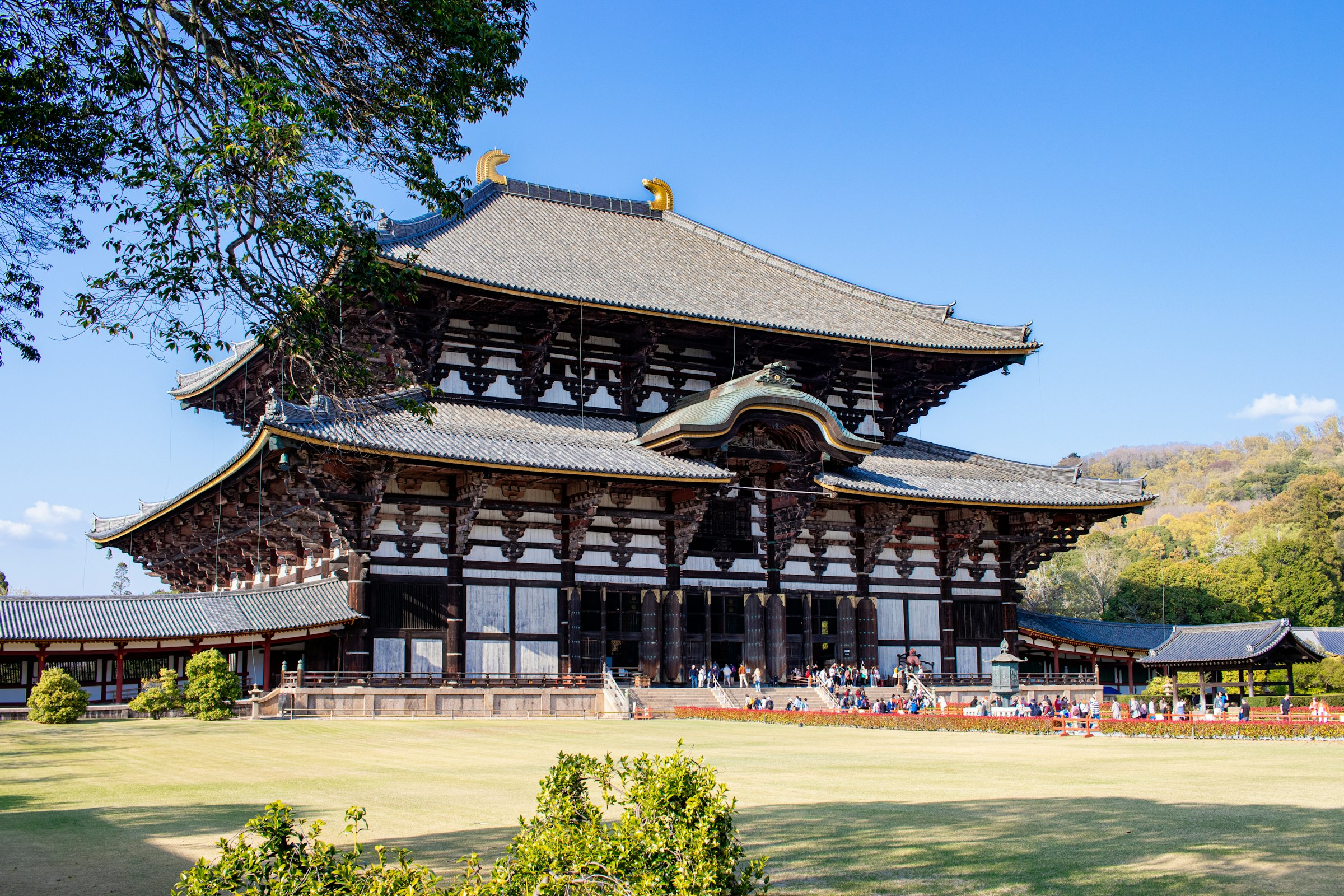

Nara
Nara Is the Day Trip That Deserves a Night
Nara was Japan's capital before Kyoto, for most of the eighth century, and it still holds the oldest and largest of the country's great religious buildings inside one walkable park. Most visitors give it four hours from Kyoto or Osaka, see the deer and the great Buddha with everyone else, and leave by mid afternoon. That is exactly when the town gets good. The tour groups go, the light drops across the park, the lanes of Naramachi go quiet, and you have Kasuga Taisha's lantern paths almost to yourself. One night here changes the whole impression.
Know before you go
- Fly into Kansai International, code KIX, or Itami, code ITM, for domestic connections. Nara has no airport of its own. From Kansai it is a straightforward rail or car transfer, and most guests arrive from Kyoto or Osaka rather than from the airport.
- Getting there the Kintetsu line runs from Kyoto and from Osaka Namba straight into Kintetsu Nara station, which sits at the edge of the park. Both trips take well under an hour on the limited express. JR also serves the city, but its station is a longer walk from the sights.
- Trip length one night is the right answer for most people, two if you add Horyuji and the quieter temples to the south. A day trip works, but you see the busiest version of the town.
- Best months late March into early April for blossom, and November for maples and clear, cool days. In autumn the Nara National Museum holds its annual Shosoin exhibition of eighth century treasures, which draws serious crowds and is worth timing a trip around.
- Months to avoid the rainy season in June and July, and August, which is hot and humid enough to make the park hard work by late morning.
- Entry rules United States passport holders need no visa for short visits and are granted 90 days on landing. Complete Visit Japan Web before you fly.
- Getting around on foot. The park, the major temples, the museum and Naramachi are all within a comfortable walk of each other. A car and driver makes sense only for Horyuji and the countryside beyond.
The deer, honestly
There are more than a thousand of them, they are protected as sacred messengers of the Kasuga shrine, and they have learned exactly what the crackers sold in the park mean. Some will bow before you feed them. Others will head butt you if you are slow. Children love it for about twenty minutes. The trick is to see them early, before the crowds arrive and the deer are still calm, and then walk up toward Kasuga Taisha, where the forest thins the crowds out fast.
What to see, in the right order
Start at Todaiji at opening. The great bronze Buddha sits inside one of the largest wooden buildings in the world, and the scale only lands when the hall is quiet. Walk east through the park to Kasuga Taisha, the shrine lined with thousands of stone and bronze lanterns, all lit twice a year during the lantern festivals in early February and mid August. Come back through Kofukuji and its five story pagoda, then spend the late afternoon in Naramachi, the old merchant quarter of narrow wooden houses, small cafes and sake shops. Isuien garden is worth an hour if you want somewhere still.
Horyuji and the south
About half an hour from the center, Horyuji holds some of the oldest surviving wooden buildings in the world, and it sees a fraction of the visitors Todaiji does. Pair it with Chuguji next door and you have a morning that most travelers to Japan never get. In early April, Yoshino, further south in the mountains, has one of the most famous blossom slopes in the country, and it rewards an early start and a driver.
Where to stay
Nara's hotel scene has changed. The historic Nara Hotel, open since 1909 on a rise above the park, still has the best sense of place. Newer luxury openings have brought international standards to the town for the first time, which is why an overnight now makes sense for travelers who would never have considered one. We match the room to the trip: the classic for atmosphere, the newer properties for space and service.
Planning brief
- Best suited to: anyone doing Kyoto and Osaka who wants the oldest layer of Japan; families, because the deer and the park are an easy win; second visits to Japan.
- Decisions to settle early: day trip or overnight; whether to add Horyuji; whether your dates line up with the autumn treasure exhibition or a lantern festival.
- Arrival and routing: Nara between Kyoto and Osaka, so you never backtrack; luggage sent ahead by courier so the train is easy.
Stay the night. See it after the buses leave.
Plan Nara as part of the Kansai route rather than a detour from it. Pair it with Kyoto and Osaka, and read Kyoto beyond the blossom for timing the region. We build the Japan sequence whole under luxury leisure travel planning.
From the journal
More on Nara: Kyoto Beyond Cherry Blossom Season and A First-Time Guide to Japan During Cherry Blossom Season.
Is Nara worth an overnight, or is a day trip enough?
A day trip shows you the sights. An overnight shows you the town. Most visitors arrive mid morning and leave by four, so the park, the shrine paths and the old quarter are at their busiest exactly when a day tripper is there. Stay one night and you get the early morning at Todaiji and the evening walk through Kasuga Taisha with almost no one around. For most travelers one night is the right amount.
How do you get to Nara from Kyoto or Osaka?
The Kintetsu line is the easy answer. It runs from Kyoto Station and from Namba in Osaka directly into Kintetsu Nara station at the edge of the park, and the limited express takes well under an hour from either city. JR trains also run to Nara, but their station is a longer walk from the main sights. We usually send luggage ahead by courier so the train ride is simple.
Are the deer in Nara safe for children?
Yes, with a little sense. The deer are wild but used to people, and most of them are gentle. The ones near the cracker stands can get pushy once they see food, and they will nudge or nip. Buy crackers, hand them out quickly, and show empty hands when you are done. Early morning is calmer than midday, and the deer further into the park toward Kasuga Taisha are far more relaxed.
When is the best time to visit Nara?
Late March into early April for blossom, and November for autumn color and the annual treasure exhibition at the Nara National Museum. Both seasons are busy, so book rooms early. Early February and mid August bring the lantern festivals at Kasuga Taisha, which are worth planning around if your dates allow. June and July are rainy, and August is hot and humid.
What is there to do in Nara?
Nara holds the oldest and largest of Japan's great religious buildings inside one walkable park. Stay past mid afternoon, when the tour groups leave, the lanes of Naramachi go quiet and Kasuga Taisha's lantern paths empty out. Add a second night for Horyuji and the quieter temples to the south. Pair it with Kyoto or Osaka.
CONTINUE EXPLORING