



Tour Travel Management: How Complex Itineraries Get Built
You're probably staring at a tour sheet that looks clean on paper and wondering which part will break first. Maybe the flights are confirmed, the hotels are fine, and the venue has signed off, but one delayed truck, one moved soundcheck, or one missing room list can still turn the night into a scramble. Tour travel management is what keeps that from happening, not by making the schedule prettier, but by making it survivable when the day stops behaving.
Table of Contents
- When a Tour Day Goes Sideways
- What Tour Travel Management Actually Means
- Routing sets the skeleton
- Accommodation blocks protect the schedule
- Ground transfers absorb the slack
When a Tour Day Goes Sideways
The call comes in while the bus is already rolling out of Brussels. The airport has closed because of a regional strike, the charter repositioning to Antwerp is stalled, dinner for forty is sitting in limbo on the crew bus, and the next morning's load-in starts in eleven hours. At that point, nobody is “just booking travel” anymore, because every decision changes sleep, timing, budget, and whether the show happens on time.
A working tour manager doesn't try to solve everything at once. The first move is to protect the essentials: the flight that keeps the principals in motion, the rooming that keeps key people rested, and the transport that protects the gear or the next day's venue arrival. The local fixer gets the tasks that need boots on the ground, the hotel is told what can shift, and the bus becomes temporary shelter for whoever can safely wait.
That's why a single point of contact matters so much. Hotels, drivers, venues, and production teams all need one person who can make the call quickly, then hold the line when the plan changes again fifteen minutes later. Without that coordination, each supplier makes its own small decision and the result is a cascading mess. With it, the day is still hard, but it stays inside the rails instead of sliding off them.
For teams that need the broader support layer around that kind of coordination, corporate concierge services are useful to understand because they show how much of the job is really about controlled response, not just reservations.
What Tour Travel Management Actually Means
Tour travel management is the orchestration of people, time, inventory, and risk across a moving schedule that can't be pushed back a day. An artist, crew, entourage, and sometimes family all have different obligations. Rehearsals, press, soundcheck, meals, call times, and rest windows all compete with transportation and lodging.
The difference from corporate travel management is simple. Corporate travel often optimizes one traveler, one policy, and one expense report, and a delay can be tolerated if Tuesday becomes Wednesday. A tour can't absorb that kind of drift because the venue, the audience, and sometimes the broadcast truck are already locked in.
Practical rule: if the schedule depends on one perfect flight, one perfect transfer, or one perfect hotel check-in, it isn't a tour plan yet. It's a hope.
The deliverable is a living itinerary, not a pretty PDF. It needs a primary plan, named contingencies, and escalation contacts that turn a problem into a phone call instead of a fire. That's where the work starts, because every leg has to be planned with the next leg in mind.
Travel planning is also a constraint problem, not a simple booking task, which is why formal work like the TravelPlanner benchmark exists to test route feasibility, timing, and resource availability across real-world itineraries as described in the benchmark paper. On the ground, that means one change can ripple through hotels, transfers, and activities fast.
See how bespoke routing is structured in practice
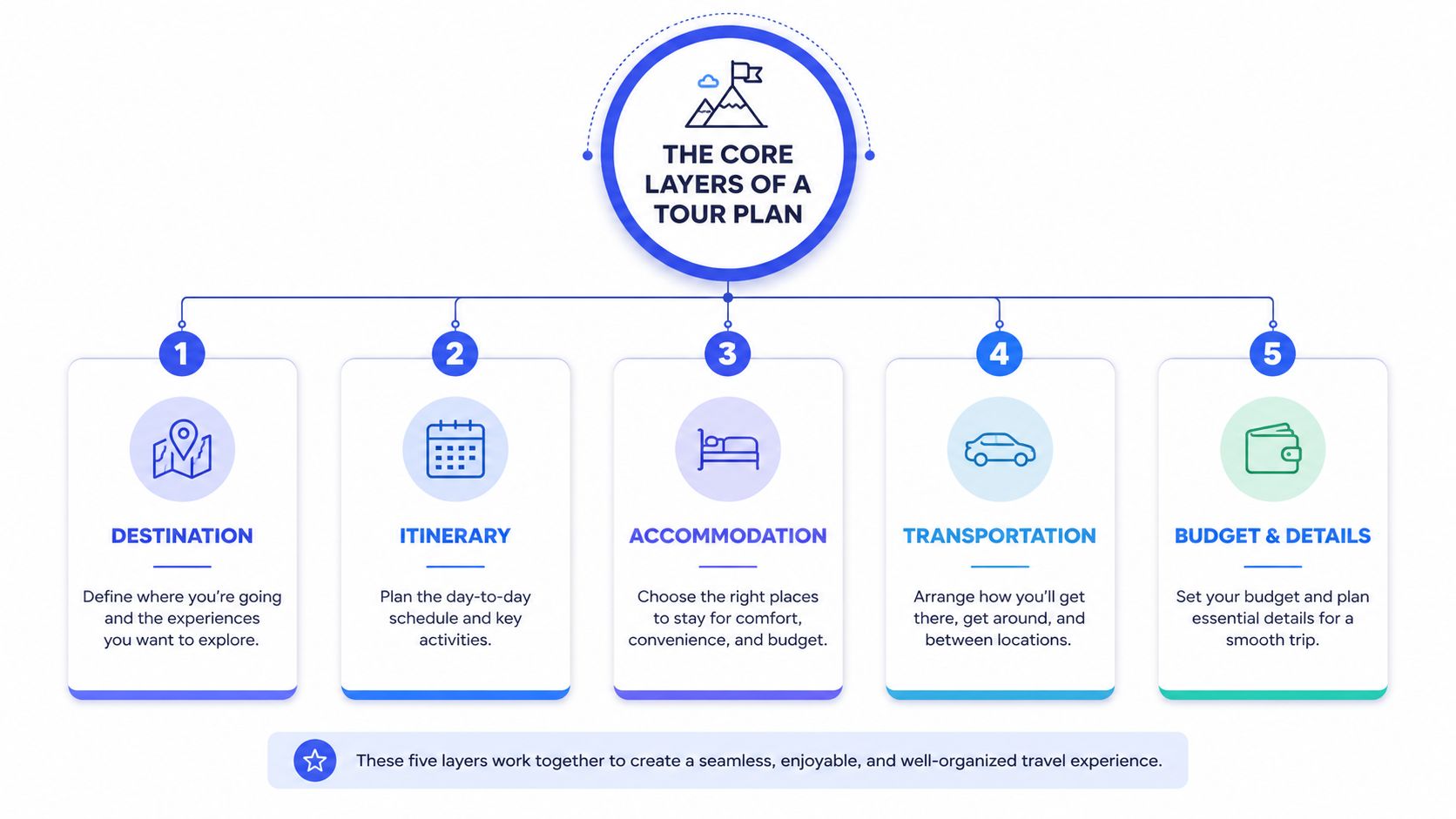
The Core Layers of a Tour Plan
Routing sets the skeleton
Routing decides where the tour can physically move and how much friction each move creates. A clean route gives you workable transit windows, sensible arrivals, and a realistic chance of getting crew and luggage where they need to be before the next call time. If routing is weak, everything else becomes damage control.
Accommodation blocks protect the schedule
Hotel blocks aren't just beds. They stage the whole machine, talent, crew, drivers, and support staff, close enough to the venue that a late call time doesn't wreck the morning. Good blocks are chosen for access, quiet, check-in reliability, and the ability to absorb a changed arrival without a public argument at the front desk.
Ground transfers absorb the slack
Coaches, sprinter vans, and car-and-driver services hold the day together. They're often the margin between a smooth handoff and a missed load-in, especially when the venue is awkwardly placed or the airport arrival is tight. If transfers are booked as an afterthought, they become the first thing that fails under pressure.
A transit plan only looks simple when nobody is late.
Crew movement adds a different layer of complexity. Gear trucks, border paperwork, meal timing, and sleeping arrangements all interact, and they interact badly when treated as separate spreadsheets. The same is true of security buffers, which sit on top of everything else, because advance teams, venue sweeps, and escalation channels have to be aligned with the actual movement pattern, not an idealized one.
A moved show by six hours can force a hotel change, a charter reshuffle, and a reset of the security detail. That's why experienced planners don't build five separate plans, they build one model with five dependent parts. For a broader view of how an advisor handles connected services, what a travel advisor does is a useful reference point.
The core logic behind bespoke route design is also laid out here
A Six-Show Run Across Three Countries
A representative run might start in London, then move through Berlin, Amsterdam, Paris, Milan, and Barcelona. The obvious move is a straight line, but a good manager looks at venue curfews, truck timing, and how much punishment the crew can take before choosing the route. In practice, a hub-and-spoke pattern can beat a linear sweep when one city needs more recovery time or a transfer is less predictable than it first appeared.
The transport split is where the job gets concrete. People may fly while equipment moves by truck, or the principal may go ahead while crew and gear follow behind on the safer lane. That choice isn't glamorous, but it protects the show from one delayed bag or one border issue turning into an entire missed date.
Where the buffers live
Berlin to Amsterdam is the kind of leg that looks straightforward until it isn't. A 90-minute buffer between those stops can be the difference between an ordinary transfer and a cascading cancellation, because it gives breathing room for boarding delays, baggage problems, and a late hotel release. That time is not wasted, it's what prevents the rest of the week from collapsing.
Venue curfews and rest cycles create the hardest trade-offs. Catering has to hit crew call without crowding soundcheck, and soundcheck has to leave enough margin for local load rules and the next morning's move. That's also why accommodation choices are often made around load-in windows instead of downtown convenience.
Keep the day boring where you can. Save the drama for the stage.
A good tour manager also builds contingency days into the itinerary, not as a luxury but as a pressure valve. Those days may never be used, and that's the point. Their value shows up when a moved rehearsal, weather delay, or late border crossing would otherwise force a show to be rebuilt overnight.
The Five Failure Modes That Derail Tours
Tours usually break in the same five places. Inventory disappears inside a tight booking window, especially flights and hotels. Weather, industrial action, or political closure interrupts movement. Suppliers split responsibility across too many handoffs. An artist or executive changes plans at the last minute. The venue shifts a load-in, changes capacity, or adds a dual-site rehearsal that crushes the schedule.
Each failure mode needs a specific control. Hold rooms early with rate blocks before they vanish. Get dual-source transport quotes so the plan does not depend on one carrier, one operator, or one vehicle class. Use single-point-of-contact contracts so suppliers cannot pass blame when the day goes wrong.
Time cushions carry as much weight as supplier choice. A buffer that looks generous on paper disappears fast after a delayed check-in or a late briefing. Pre-cleared backup venues are the final layer when the original space becomes unusable, but they only work if the team has already agreed on who can approve the switch.
The managed travel market is large enough to support this kind of precision work. Recent estimates put global corporate travel management at about US$24.8 billion in 2024, rising to US$38.3 billion by 2031 at a 6.5% CAGR, while another source estimates the managed travel market at US$41.2 billion in 2025 and US$65.8 billion by 2034 at a 5.8% CAGR QY Research. That scale helps explain why clients expect a real operating system, not a stack of confirmations.
The practical answer is simple. Build the fallback before the problem appears, and make sure the person who can approve the change is already in the communication tree.
In-House Managers Agencies and Luxury Advisors
A tour can fail for simple reasons. The wrong person has the call, supplier access is thin in one market, or no one owns the full chain when a flight changes and the day has to be rebuilt.
The operating model should match what the trip is protecting. An in-house tour manager often knows the artist or executive best, which helps with taste, timing, and trust, but that person may not have wide geographic reach or deep supplier access in every market. A traditional agency can cover more markets, but requests often pass through layers of staff and generic inventory.
A luxury advisory model works differently. It trades on relationships, private hotel desks, charter access, and vetted ground operators, then absorbs the coordination load in exchange for one accountable owner. That fits when discretion, short notice, or multi-country movement matters more than the cheapest visible rate.
| Dimension | In-House Manager | Traditional Agency | Luxury Advisory |
|---|---|---|---|
| Discretion | Very high, because the team is close to the client | Variable, depending on staffing | High, with privacy-sensitive handling |
| Supplier access | Strong with known partners, thinner elsewhere | Broad but often standard inventory | Strong through curated relationships |
| Escalation authority | Fast if the person has decision-making authority | Often slower through layers | Usually direct, with a single decision path |
| 24/7 reach | Depends on the individual and team coverage | Can be staffed, but not always personal | Typically built into the service model |
The biggest warning sign is any setup where nobody owns the whole chain. If one person books air, another handles hotels, and a third handles ground, the handoffs become the weak point. A strong advisor role is defined by clear ownership, direct escalation, and the ability to keep the plan moving when one part breaks. this overview of a travel advisor describes that role plainly.
No model wins on every axis. The right choice depends on whether the priority is cost control, creative fidelity, or operational insurance.
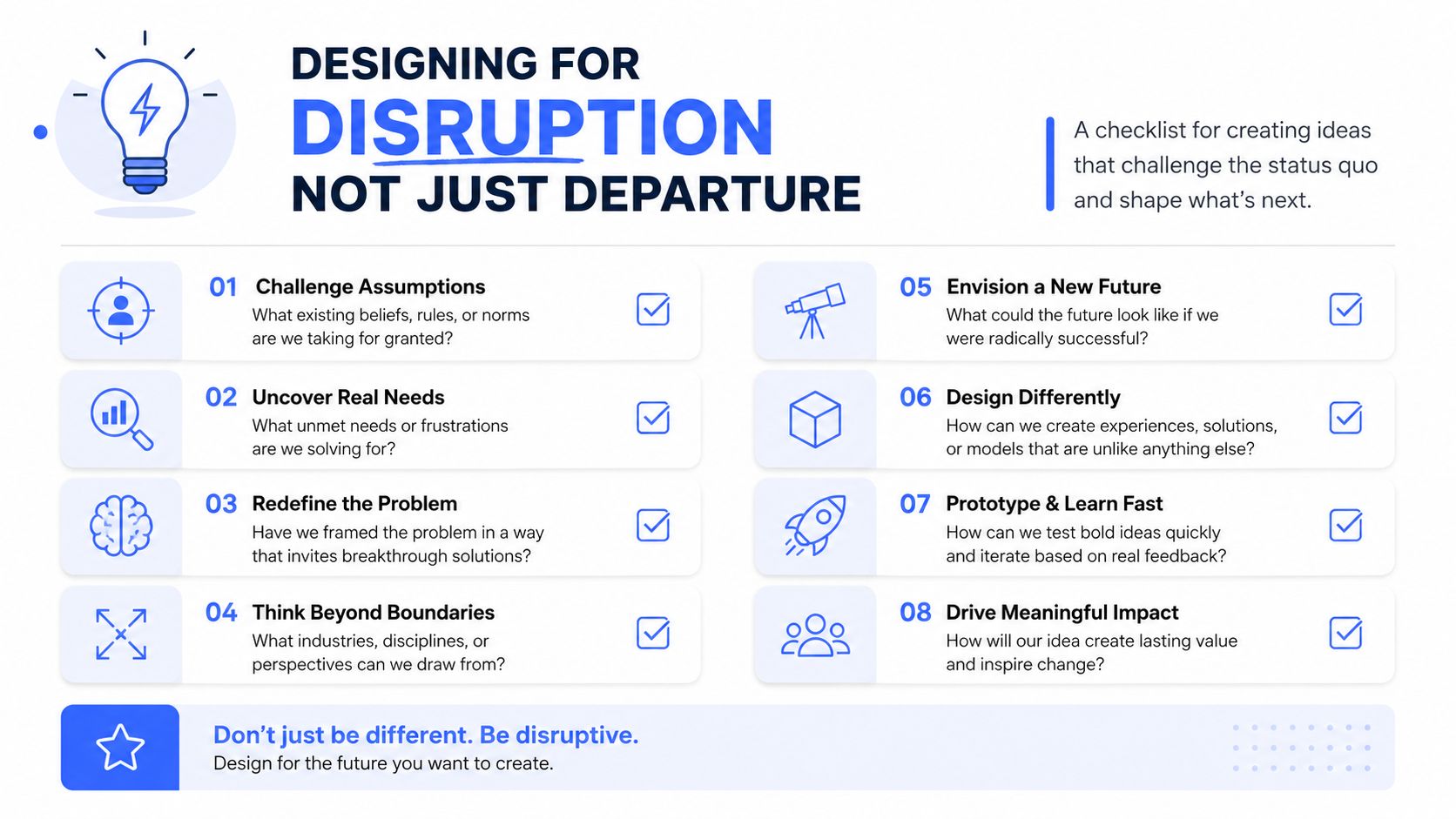
Designing for Disruption Not Just Departure
A good tour plan starts with a clean itinerary, then assumes it will break. Each leg needs a dated fallback with inventory already held, each venue needs a secondary staging point within a workable radius, and each critical transfer needs a backup that does not depend on one phone call being answered at the right moment. That is what keeps a run alive after the first version fails.
The parts that should never travel together
Cash, documents, and medical contingencies should never sit in the same place as the primary bag. Communication trees should still work if a local SIM fails, and authorization ladders should make clear who can move money, change transport, or approve a reroute without waking the principal. Those decisions sound basic until a midnight disruption turns them into the only things that matter.
If the backup plan lives only in one person's head, it isn't a backup plan.
The hard part is not building a polished PDF or a tidy call sheet. The hard part is rebuilding a four-country run from a hotel lobby at midnight without losing the show, the crew, or the client's trust.
Deloitte's corporate travel survey points to the pressure behind this shift, with travel managers planning budget expansion even as work travel participation changes Deloitte. Digital booking still matters because it speeds routine changes, but it does not replace human escalation when a tour starts slipping.
If you manage artists, executives, or family groups across multiple stops, JustKeeps Travel designs end-to-end itineraries with 24/7 assistance, discreet coordination, and attention to the parts of the trip that fail first. Visit JustKeeps Travel if you need routing, backups, and on-trip changes treated as part of the job, not an afterthought.