

East Africa Safari Guide: Best Time to Visit, Where to Go & What to Expect

When Is the Best Time to Visit East Africa?
The honest answer is that East Africa works year-round, but which specific wildlife spectacle you'll see depends entirely on timing, and the migration's schedule shifts with the rains rather than sticking to a fixed calendar.
June to October (Dry Season)
This is peak safari season, and for good reason. With less vegetation and animals concentrated around permanent water sources, wildlife viewing is at its most reliable. The Mara River crossings, the images most people associate with the Great Migration, typically begin in late July and run through September, sometimes continuing into October on the return journey south. Skies are clear, temperatures are comfortable, and this is also, unsurprisingly, when parks and camps are busiest and priced accordingly.
November to March (Green Season)
The short rains arrive in November, pushing the herds back south into the Serengeti and Ngorongoro area. By February, the southern Serengeti and Ndutu plains become the center of the action: calving season, when roughly half a million wildebeest calves are born within a two- to three-week window, drawing significant predator activity as lions and hyenas take advantage of the vulnerable young. This period also brings lush, green landscapes, dramatically fewer visitors, and excellent birdwatching, as migratory species from Europe and Asia are present through the northern winter.
Because the migration's exact timing shifts with rainfall each year, and can run early or late by several weeks, it's worth treating these windows as reliable patterns rather than fixed dates, particularly if a specific event like a river crossing is the main draw.
Where Should You Go?
Maasai Mara National Reserve, Kenya The Mara is where the river crossings happen during the dry season, and its concentration of luxury tented camps, many positioned close to known crossing points, makes it the most popular single destination for witnessing that specific spectacle. Wildlife density here is exceptional even outside migration season.
Serengeti National Park, Tanzania Vastly larger than the Mara, the Serengeti hosts the migration for most of the year and offers strong wildlife viewing regardless of season, since the ecosystem's resident predators and other species don't move with the herds. The Serengeti's size also means it's genuinely possible to find quieter areas even during peak season.
Ngorongoro Conservation Area The Ngorongoro Crater, a UNESCO World Heritage Site, is a self-contained volcanic caldera with an unusually high density of resident wildlife, including a healthy population of black rhino, one of the more difficult species to spot elsewhere in East Africa. Its compact size makes it a strong half-day or full-day addition to a Serengeti-based itinerary.
Amboseli National Park, Kenya Amboseli's draw is the combination of large, well-studied elephant herds and clear views of Mount Kilimanjaro across the border in Tanzania. On clear mornings, the mountain provides a backdrop that few other parks in the region can match.
What Wildlife Can You Expect to See?
Sightings vary by season, location, and simple chance, but East Africa's parks support a genuinely wide range of species:
- Lions, leopards, and cheetahs, the three predator species most safari-goers hope to see, with the Mara and Serengeti offering strong odds for all three
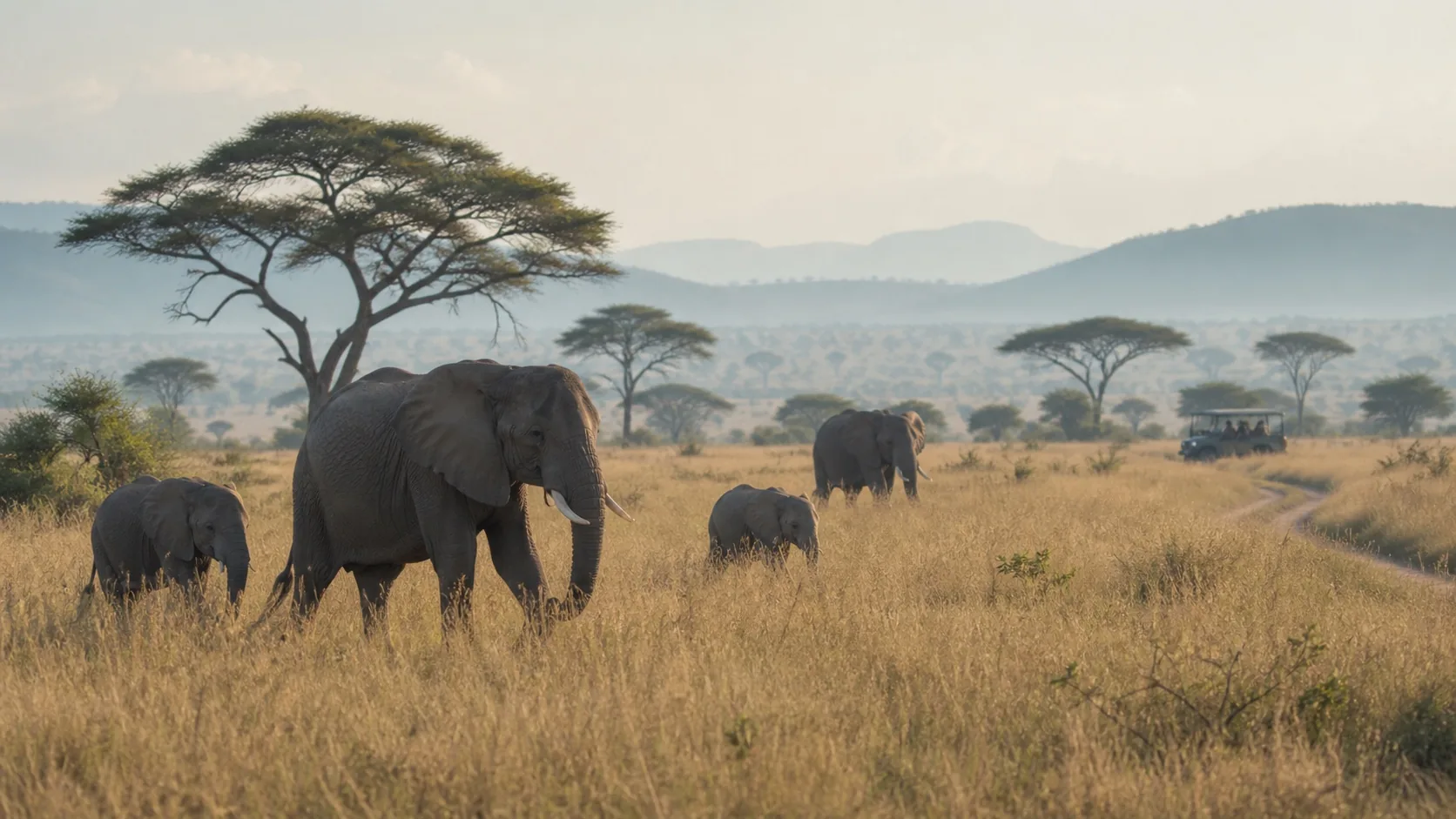
- Elephants and buffalo, both present in significant numbers across most of the region's parks
- Rhinos, most reliably seen in Ngorongoro Crater given their rarity elsewhere
- Giraffes, zebras, and wildebeest, present year-round, though wildebeest numbers concentrate wherever the migration currently is
- Hippos and crocodiles, particularly visible along the Mara and Grumeti Rivers, where the crocodiles play a direct role in the migration's river crossings
- Several hundred recorded bird species, with the green season bringing the added interest of migratory birds from outside Africa
No safari guarantees specific sightings, but the density of wildlife across these parks means multiple game drives over several days generally produce a strong range of encounters.
Choosing the Right Safari Experience
The style of safari matters as much as the destination:
- Private guided safaris, with a dedicated vehicle and guide, allow full control over pacing and which sightings to linger on
- Family-friendly safaris, built around camps with age-appropriate activities and, where relevant, locations in parts of Kenya and Tanzania where malaria is not a concern
- Honeymoon safaris, often paired with a beach extension to Zanzibar or the Kenyan coast
- Walking safaris, offered at select camps with a qualified armed guide, giving a genuinely different perspective than a vehicle-based drive
- Hot air balloon safaris, typically at dawn over the Mara or Serengeti, a worthwhile add-on for a different vantage point over the plains
- Fly-in safaris, using small aircraft between parks to cut down on long road transfers, particularly useful for multi-park itineraries
- Photographic safaris, with vehicles and timing built around light and sighting duration rather than covering ground quickly
- Conservation-focused experiences, including visits to research or poaching prevention projects at select properties
Practical Travel Tips
- Confirm passport validity well ahead of travel; most East African countries require at least six months' validity beyond your return date.
- Check visa requirements by nationality; Kenya and Tanzania both offer eVisa applications that are worth completing in advance rather than on arrival.
- Review recommended vaccinations and malaria prophylaxis with a travel medicine clinic several weeks before departure.
- Purchase comprehensive travel insurance that includes medical evacuation coverage, standard practice for safari travel given the remoteness of many camps.
- Pack neutral, lightweight clothing suited to both cool mornings and warm afternoons, along with a good pair of binoculars.
- Bring appropriate camera equipment if photography is a priority; a zoom lens of 300mm or longer makes a meaningful difference for wildlife shots.
- Book well ahead for dry season travel; camps near known crossing points fill up months in advance for July through September.
Working with Justkeeps Travel
Planning a safari across Kenya and Tanzania involves more than choosing a park. It means sequencing multiple locations, coordinating internal flights between them, timing the trip against where the migration is likely to be, and matching lodges to the group's specific style, whether that's a private guided experience, a family trip, or a honeymoon paired with a coastal extension.
Justkeeps Travel typically handles custom itineraries, luxury lodge selection, internal flight logistics, private guides, and multi-country routing where a safari is combined with a beach or city extension, along with concierge support throughout the trip.
Contact us today to start planning your safari across East Africa.
Use our East Africa and Tanzania guides to compare timing, regions, and camp styles. Our luxury leisure travel planning coordinates the internal flights, private guides, lodges, and any coast extension.
When is the best time for the Great Migration?
The migration follows rainfall rather than a fixed calendar. The Mara crossings are commonly associated with the later dry season, while calving is associated with the southern Serengeti earlier in the year. Treat those as patterns and build in flexibility if one event is the priority.
Should we choose Kenya or Tanzania for a first safari?
Kenya can be a strong fit for classic Mara scenery and accessible camp combinations, while Tanzania offers the scale of the Serengeti, Ngorongoro, and a natural beach extension. Season, flight routing, and the kind of camp you want should decide the country.
How many nights should we spend on safari?
Four or five nights is a useful starting point for a first trip, with enough time for the rhythm of several game drives and a slower lodge day. More nights can justify a second ecosystem, but changing camps only helps when the landscape or wildlife objective genuinely changes.
What should we pack for a luxury safari?
Use lightweight layers for cool mornings and warm afternoons, neutral colors, sun protection, binoculars, and comfortable closed shoes. Soft-sided luggage is usually more practical for small aircraft, and a travel-medicine consultation should happen well before departure.
What is the best time to visit East Africa for a safari?
East Africa works all year, but what you see depends on timing. June to October is the dry season and peak safari season, with wildlife gathered around permanent water. November to March is the green season, with fewer visitors, excellent birdwatching and calving in the southern Serengeti around February. Read our Masai Mara and Serengeti guides.