

Planning a Multi-Generational Family Safari: A Luxury Guide for Every Generation

Start with the Group
A safari is unusual among family trips in that it genuinely holds everyone's interest at once, but only if the logistics behind it are handled with more care than a standard beach holiday. Grandparents may need shorter drive times and single-story accommodation. Toddlers generally aren't permitted on game drives at most camps, which affects where you can even book. Teenagers often want more activity than a typical safari day offers.
None of this makes a multi-generational safari harder to plan well. It just means the planning has to start with the group's actual constraints rather than a generic itinerary template. Justkeeps Travel builds these trips around age range, mobility, and each family member's specific interests, which is covered in more detail further down.
Why Multi-Generational Safaris Are Growing in Popularity
More families are choosing a shared trip over a traditional party for milestone birthdays, anniversaries, and reunions, largely because a week together in the bush tends to produce more lasting memories than a single evening event. A safari also solves a common problem with group trips: everyone has downtime built in, so nobody feels pressured to be "on" for the entire visit.
The appeal for multi-generational groups specifically comes down to a few things:
- Shared wildlife encounters that don't require any particular fitness level
- Private vehicles and guides, so the day's pace can be set by the family rather than a fixed group schedule
- Accommodation that ranges from very active (walking safaris, canoeing) to fully restful (pool, spa, lodge views)
- Structured activities for children that keep them engaged without requiring parents to entertain them constantly
- Enough scheduled rest that grandparents aren't pushed past a comfortable pace
Choosing the Right Safari Destination
Destination choice matters more for multi-generational trips than for a couple traveling alone, mostly because of flight time, malaria risk, and minimum age rules for activities.
Kenya: The Maasai Mara offers some of the most reliable wildlife viewing in Africa and, during the Great Migration season (roughly July through October), some of the most dramatic. Flight times from Nairobi to Mara camps run under an hour, which matters if anyone in the group doesn't do well with long transfers.
Tanzania: The Serengeti and Ngorongoro Crater are strong choices for a first safari because sightings tend to be consistent even outside migration season. The crater floor in particular is a good half-day option for anyone who can't manage full-day game drives.
Botswana: Camps here tend to be smaller and more spread out, which means fewer other vehicles at sightings and a quieter overall feel. It's a strong choice for families who've done a more classic safari before and want something less crowded, though flights between camps add up if you're moving around.
South Africa: The main advantage for families with young children is the number of reserves where malaria is not a concern, particularly in the Eastern Cape and parts of the Waterberg. That removes one significant medical consideration and makes South Africa the most common starting point for families traveling with children under five.
The right choice usually comes down to the youngest and oldest travelers in the group: their age, mobility, and how much flight time everyone can reasonably handle.
Selecting Family-Friendly Luxury Lodges
Not every luxury camp accepts young children, and even fewer are set up well for three generations at once. Worth checking before booking:
- Family suites or two-bedroom units, rather than assuming interconnecting rooms are standard (many camps don't offer them)
- Private villas at larger properties, which give grandparents a separate space from parents and kids
- A minimum age policy for game drives, since many camps set the cutoff at six or seven years old
- A pool and some structured activity for children who won't do a full game drive
- Flexible meal times, since a 6 AM drive followed by a toddler's nap schedule doesn't always match a set dining schedule
- Guides experienced with mixed-age groups, who know how to keep a game drive interesting for a teenager without making it too long for a grandparent
Many family-oriented lodges also run junior ranger programs, which teach children basic tracking and conservation skills in a low-pressure, hands-on way, usually while the adults are on a drive or at the spa.
Creating a Flexible Itinerary
The single biggest planning mistake with multi-generational safaris is overscheduling. Not every family member needs to be on every activity, and building in optional items rather than fixed ones tends to produce a much better trip.
A workable daily structure usually looks like:
- An early morning game drive (typically 6 to 9:30 AM, when animal activity is highest)
- A late morning to early afternoon block left open for rest, pool time, or a spa treatment
- An optional afternoon activity: a nature walk, a village visit, or a shorter drive for those who want it
- A private dinner, ideally with some flexibility on timing for families with young children
Two to three nights per camp is usually enough to settle into a rhythm without the group feeling rushed between properties, and it cuts down on the number of internal flights, which matters when traveling with grandparents or very young children.
Travel Tips for Families
- Confirm that every traveler's passport is valid for at least six months beyond the return date, a common requirement across East and Southern Africa.
- Check visa requirements by nationality well ahead of travel; several countries, including Kenya and Tanzania, offer eVisas that are worth applying for in advance rather than on arrival.
- Review vaccination and malaria prophylaxis recommendations with a travel medicine clinic, ideally four to six weeks before departure, since some vaccines need time to take effect.
- Buy comprehensive travel insurance that covers medical evacuation, which most reputable safari operators require and which matters more here than on a typical trip given the remoteness of some camps.
- Pack light, breathable layers rather than heavy safari gear, since mornings can be cold and afternoons warm even in the same location.
- Bring dedicated entertainment for young children during transfer flights and longer drives, since in-flight entertainment on small bush planes is essentially nonexistent.
Why Work with a Luxury Travel Advisor
A safari for a large, mixed-age family involves more moving parts than most people expect: multiple domestic flights, park entry logistics, vehicle allocation per family group, and lodges that need to work for everyone from a toddler to a grandparent with limited mobility. Coordinating that independently is possible, but it's easy to end up with an itinerary that's too ambitious for the oldest travelers or too sedate for the youngest.
Justkeeps Travel typically handles:
- Custom itineraries built around the group's specific age range and interests
- Lodge selection based on family suite availability, minimum age policies, and activity options
- Private guides and vehicles, so pacing can be adjusted for the group rather than fixed in advance
- Airport and domestic flight logistics between camps
- Concierge support before departure and throughout the trip
Creating Memories That Last
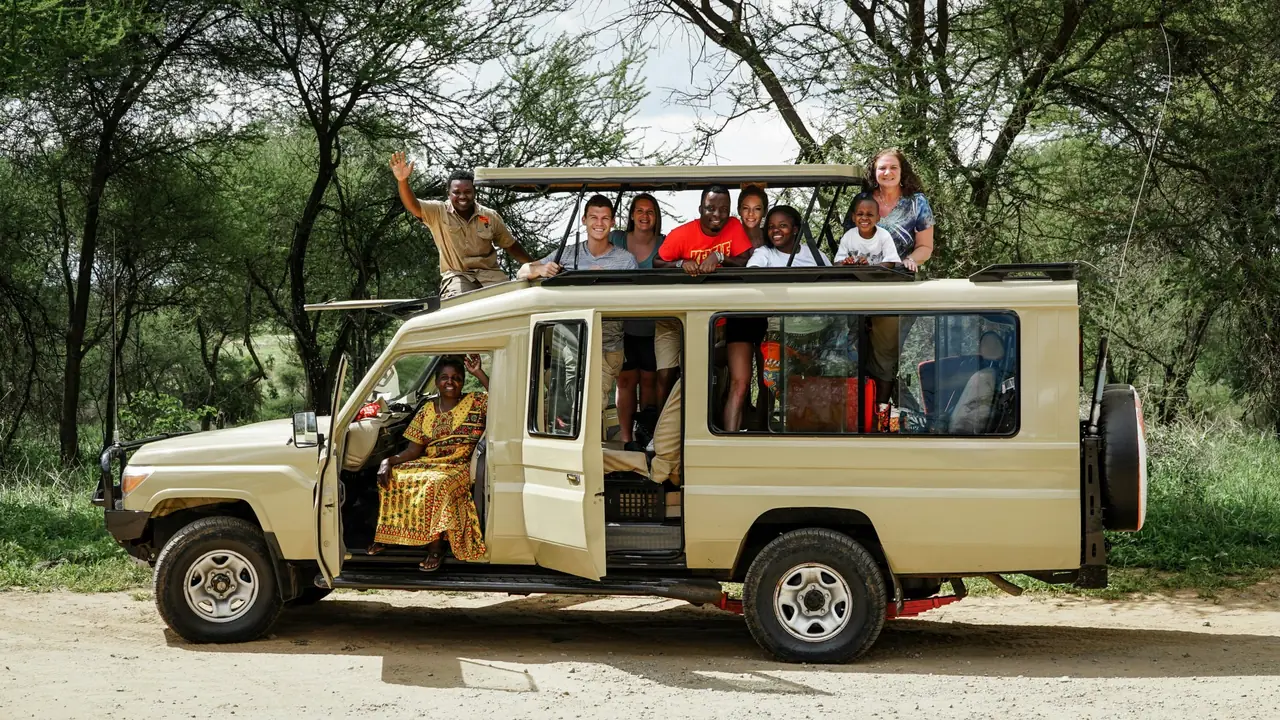
The real value of a multi-generational safari isn't any single sighting. It's the uninterrupted time together: three generations in a vehicle at sunrise, a birthday marked at a bush dinner, a first elephant sighting for a child watched by grandparents who've waited years to share it. None of that depends on luxury for its own sake, but the right accommodation and pacing make it much easier for everyone to actually enjoy the moment rather than manage discomfort or exhaustion through it.
A well-planned multi-generational safari works because the logistics are matched to the people traveling, not the other way around. Destination, lodge, and daily pace all follow from the group's actual ages and energy levels, not from a standard safari template.
The trip might mark a milestone birthday, a reunion, or simply a first shared trip to Africa. Either way, the planning that makes it work happens well before departure: the right country, the right camps, and an itinerary with enough flexibility built in.
Planning a Family Safari?
Let Justkeeps Travel design a safari itinerary built around your family's specific ages, interests, and pace. From destination and lodge selection to private guides and flight logistics, our advisors handle the coordination so your family can focus on the trip itself.
Contact us today to start planning your family's safari.
Use our broader East Africa guide to place the camps, internal flights, migration timing, and coast extensions inside one regional route.
Can grandparents, toddlers, and teenagers all enjoy the same safari?
A safari is unusual among family trips in that it genuinely holds everyone's interest at once, but only if the logistics behind it are handled with more care than a standard beach holiday. Grandparents may need shorter drive times and single-story accommodation. Toddlers generally aren't permitted on game drives at most camps, which affects where you can even book. Teenagers often want more activity than a typical safari day offers.
Why are more families choosing a safari for a milestone?
More families are choosing a shared trip over a traditional party for milestone birthdays, anniversaries, and reunions, largely because a week together in the bush tends to produce more lasting memories than a single evening event. A safari also solves a common problem with group trips: everyone has downtime built in, so nobody feels pressured to be "on" for the entire visit.
How do we choose the right safari country for three generations?
Destination choice matters more for multi-generational trips than for a couple traveling alone, mostly because of flight time, malaria risk, and minimum age rules for activities.
What should we look for in a family-friendly safari lodge?
Not every luxury camp accepts young children, and even fewer are set up well for three generations at once. Check for family suites or two-bedroom units, the minimum age for game drives, a pool and activities for children who skip a drive, flexible meal times, and guides experienced with mixed-age groups.
What does a typical family safari day look like?
Most days start with an early game drive, typically 6 to 9:30 AM, when animal activity is highest. A late morning block stays open for rest, pool time or a spa treatment. An optional nature walk, village visit or shorter drive follows in the afternoon, then a private dinner with flexible timing. Two to three nights per camp is usually enough. Read our Masai Mara guide and the East Africa safari guide.